

India Targets 400 Airports as Passenger Demand Outgrows Airline Seating
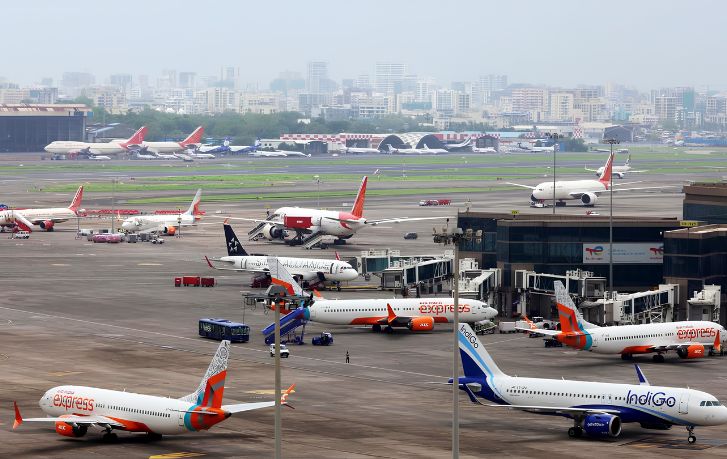
India’s airport ambitions are colliding with a measurable capacity tension: passenger demand has grown slightly faster than airline seating, even as the country plans to more than double its aviation network. The government is targeting 400 airports by 2047, up from more than 166 today, while seeking to raise annual passenger volume from about 240 million to 1.3 billion.
The difference between demand and seating growth is narrow but consequential when sustained over years. Civil Aviation Minister Kinjarapu Ram Mohan Naidu said revenue passenger kilometres paying passenger traffic multiplied by distance grew at a compound annual rate of 7.3% over the past decade. Available seat kilometres, which measure airline seating capacity over distance, increased by 7% annually.
That 0.3-percentage-point gap indicates demand has been edging ahead of capacity over the longer period. It does not mean every airport or flight is continuously constrained, but it helps explain why adding runways and terminal space alone will not satisfy the 2047 goal. Airlines must also provide enough aircraft, seats and scheduled service to use the new infrastructure.
Construction is underway, but much remains planned
Naidu said 66 airports are under development and another 100 are planned over the next decade. The government also says it is adding a new airport or terminal approximately every 40 to 45 days. Those figures show active construction, but they should not be read as confirmation that all 400 facilities are funded, completed or certain to enter service by 2047.
The current baseline also carries a small accounting uncertainty. Naidu described the network as having more than 166 airports, while Civil Aviation Secretary Sameer Kumar Sinha said it had expanded from 74 operational airports in 2014 to 165. No explanation was provided for the difference, which may reflect timing or definitions. Either count still places the 400-airport objective at roughly 2.4 times the present network.
Passenger throughput is expected to rise much faster. Moving from 240 million to 1.3 billion annual passengers would be an increase of more than fivefold. That mismatch means the average facility would need to process substantially more traffic unless the final network exceeds the target or passenger growth falls short. Terminal expansion, ground access, baggage handling, security processing and aircraft stands therefore matter alongside the headline airport count.
Airport capacity and airline capacity are separate systems
An airport can be open without supporting a large schedule, while an airline can add flights only where aircraft, crews, operating rights and commercially viable demand align. India is addressing the international side partly through bilateral air-service arrangements administered by the Ministry of Civil Aviation.
Weekly service entitlements with Azerbaijan increased from seven to 21, while the Uzbekistan entitlement rose from 18 to 28. India’s arrangement with Indonesia shifted from frequency-based limits to a seat-based allowance of as many as 15,000 seats in each direction. Direct scheduled flights between India and China have also resumed, and Crisil data indicated that Indian aviation added 55 international routes over 15 months.
Those changes can unlock more scheduled capacity, but traffic rights do not guarantee that airlines will operate every permitted seat. Fleet availability and market conditions remain separate constraints. Regional connectivity programs can similarly extend access to smaller cities without ensuring that each airport immediately carries high passenger volumes.
Short-term data also show why the 2047 plan should not be treated as a straight-line forecast. The International Air Transport Association reported that Indian domestic passenger demand fell 7.5% year over year in August 2026, while capacity declined 1.2%. One weak month does not overturn a decade-long growth pattern, but it demonstrates that airline demand and scheduling can fluctuate sharply even within an expanding market.
The decisive challenge is synchronization. India has 66 airports under development and another 100 planned, but reaching 1.3 billion annual passengers will require terminals, ground systems and airline seats to arrive in step. If one part trails, travelers can still face capacity pressure even as the national airport count moves toward 400.
| More aerospace and engineering stories, right in your MSN feed. Follow AMI on MSN |
By Thomas Caldwell — AMI’s senior editor for mechanical and mobility engineering, covering vehicle electronics, systems integration, electrification, chassis systems, propulsion, and safety policy.