


Anduril Announces $3.7 Billion Baltimore Submarine Plant, but Output Remains Unspecified
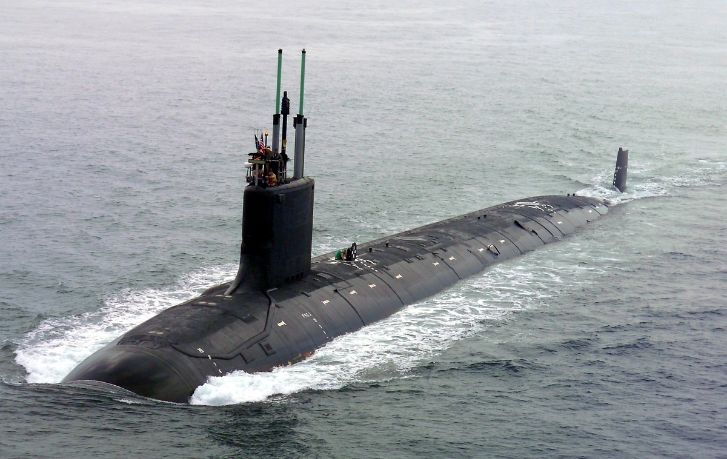
Anduril Industries has put a large number behind its move into submarine manufacturing: $3.7 billion. What remains less definite is the volume of finished hardware that the planned Baltimore County facility will deliver. The company announced the private investment on October 6 for a new Sparrows Point shipyard that will manufacture components and large assemblies for Virginia-class nuclear-powered submarines.

Called Arsenal-2, the facility is expected to begin initial operations in 2030 and scale progressively afterward. Anduril has not published a component-by-component production rate or a delivery schedule showing when additional hardware will reach the Navy’s two primary submarine builders. That leaves a critical distinction between planned industrial capacity and measurable submarine output.
A supplier yard, not a complete submarine builder
Anduril plans to construct the facility on 187 acres at Tradepoint Atlantic. The shipyard would cover more than two million square feet and include fabrication, assembly, testing and integration areas, along with a 1,200-foot graving dock and road and rail connections.
The Baltimore operation is not intended to build complete submarines. It will supply complex components and large assemblies to General Dynamics Electric Boat and Huntington Ingalls Industries’ Newport News Shipbuilding, which perform final construction of Virginia-class boats.
That supplier role matters because submarine production is distributed across a broad network. Adding another source for major assemblies could allow more work to proceed in parallel rather than waiting for the two final-assembly yards to absorb every production task. Whether that potential becomes a sustained increase in delivered submarines will depend on qualified output, reliable schedules and integration with the existing builders.
An administration official estimated that Arsenal-2 could add nine million labor hours annually, equivalent to about a 15% capacity increase for the Virginia-class program. That is an estimate of available industrial labor, however, not a disclosed annual count of torpedo tubes, modules or completed submarines. Labor hours do not translate automatically into deliveries when material availability, certification, inspection and downstream assembly also govern the schedule.
Production qualification comes before scale
Anduril says it will begin with components including torpedo tubes and work toward larger submarine modules. Before the Maryland yard opens, the company plans to use a separate 160,000-square-foot facility in Orange County, California, to develop manufacturing methods, train an initial workforce and validate quality systems. That operation is intended to provide roughly a two-year head start.
The sequence reflects the demands of submarine manufacturing. Software, factory layout and automation can improve work visibility and reduce unnecessary material movement, but they do not remove the need to qualify processes and document safety-critical work. Anduril’s planned ArsenalOS platform is designed to connect fabrication workflows, inspections, documentation and material movement so workers and managers can track production status.
That digital backbone may help standardize work and preserve manufacturing records, particularly as the company recruits and trains thousands of employees. Its practical value will still be determined by whether the resulting components consistently meet Navy requirements and arrive when the final shipyards need them.
Jobs are projected, while incentives await approval
Maryland and Baltimore County expect the project to create more than 3,100 permanent jobs and support over 11,000 indirect jobs. Officials also project more than $2 billion in annual economic output, including approximately $312 million in wages.
The $3.7 billion is described as Anduril’s private capital investment. Separately, the Navy has awarded the company a contract worth up to $2.9 billion, with payments tied to demonstrated production outcomes. Together, the company and Navy describe the commitments as a $6.6 billion expansion effort.
State and county governments have also committed to match up to 13% of Anduril’s anticipated private investment through existing incentives and new appropriations. Some of those public commitments still require approval from the Maryland General Assembly and Baltimore County Council, so the final incentive total is not yet fixed.
Permitting and site preparation are set to precede construction, with work beginning after the necessary approvals. The decisive milestone will not be the investment announcement or the size of the proposed building. It will be qualified components leaving the production line on a repeatable schedule and Anduril has not yet disclosed that delivery rate.
| More aerospace and engineering stories, right in your MSN feed. Follow AMI on MSN |
By David Whitaker — Associate editor for AMI’s aerospace and drone systems desk, translating flight systems, aircraft programs, spaceflight, and UAV developments into accessible technical stories.



