Strategic Petroleum Reserve Needed Repairs at One-Fifth Its Maximum Withdrawal Rate
The 2022 Strategic Petroleum Reserve drawdown became an unplanned stress test: leaking pipes and pump problems required repeated emergency repairs even though oil was being withdrawn at just over one-fifth of the system’s nominal maximum rate of 4.4 million barrels per day. That demonstrated gap between design capacity and sustained performance matters because the reserve is now at its lowest inventory in more than four decades.

The 2026 release adds a second constraint time. It is being conducted through exchanges that require participating companies to return crude, rather than through outright sales, but refilling is substantially slower than withdrawal. Repayments could keep the reserve in fill mode for more than a year, prolonging the period in which another supply disruption would encounter a depleted and maintenance-constrained system.
The central issue is not whether the reserve still contains a large volume of oil. It is whether its wells, pumps, pipes, caverns and distribution connections can reliably deliver enough crude at the required rate, then accept replacement oil without extended outages. Inventory is a stored quantity; emergency capability is a system-level performance measure.
The 2022 drawdown tested sustained delivery
The Department of Energy lists the reserve’s maximum nominal drawdown capability as 4.4 million barrels per day. Its operating description says that rate can be maintained for up to 90 days when the reserve is at or near full capacity, after which output declines as caverns empty.
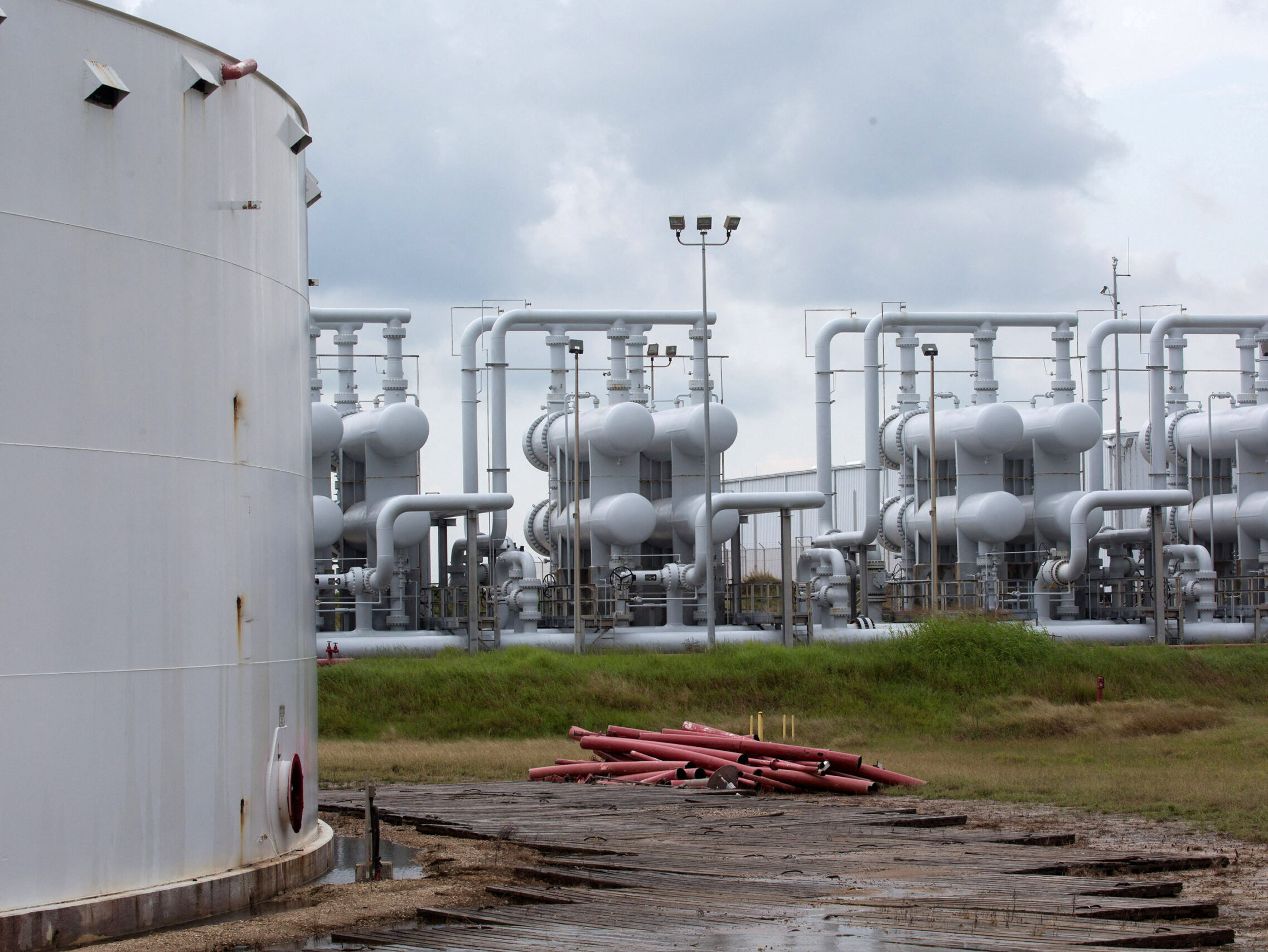
Yet the 2022 release the largest sustained drawdown in the reserve’s history encountered repeated leaks and pump problems at only a little more than 20% of that nominal rate. Emergency repairs kept the operation moving, but the episode showed that a nameplate withdrawal figure does not by itself establish how a decades-old storage and delivery network will perform under prolonged demand.
This distinction becomes more important as inventory falls. Lower cavern volumes can reduce withdrawal capability, while construction outages and deferred maintenance can remove parts of the network from service regardless of how many barrels remain elsewhere. A Government Accountability Office assessment cited in the technical review found that, as of December 2025, effective withdrawal capability was 61% of the designed rate and fill capability was 56%. More than a quarter of the inventory was then unavailable for drawdown, largely because of construction and cavern outages.
Exchanges secure repayment but extend the recovery
An exchange differs from a sale because companies must return oil of similar quality, plus additional premium barrels, on a negotiated schedule. The Energy Department explains that this mechanism can provide crude after a commercial disruption while eventually acquiring oil for the reserve without a conventional purchase.
That repayment obligation is useful, but it does not restore readiness immediately. The reserve was designed to release oil much faster than it can take oil back: stated peak rates are approximately 4.4 million barrels per day for withdrawal and 785,000 barrels per day for filling. Actual fill capability can be lower because of construction, maintenance or limits at individual sites.
More than 133 million barrels had been awarded through completed 2026 exchanges before the latest solicitation. Under optimum combined filling conditions described in the technical assessment, returning that volume alone would require at least 198 days. Other required additions could push continuous filling to a minimum of roughly 220 to 230 days, while operational constraints could extend the process to a year or longer.
The reserve held 283.8 million barrels in the week ending September 25, according to the cited industry update, and a further offer of as much as 40 million barrels could temporarily lower the total to roughly 244 million if companies take the full amount before returning replacement crude. Actual participation is uncertain: an earlier 40-million-barrel offer attracted an agreement for only about 500,000 barrels.
Stored oil is not the same as deliverable oil
The same qualification applies globally. Industry executives estimated that commercial inventories had fallen below 6 billion barrels, but said 10% or less might be practically available. Those figures are industry assessments rather than independently established measurements. Tank-bottom volumes, oil needed to keep pipelines filled, emergency-stock rules and withdrawal limits can all separate headline inventory from oil that can promptly reach refineries.
For fuel consumers, transportation operators and energy-dependent businesses, the relevant buffer is therefore deliverable flow over time not simply barrels recorded in storage. The reserve’s next test is whether a system that needed emergency repairs during the 2022 drawdown can sustain the 2026 withdrawal, reverse into a long refill cycle and remain available if another disruption arrives before those exchange barrels return.
| More aerospace and engineering stories, right in your MSN feed. Follow AMI on MSN |
By Thomas Caldwell — AMI’s senior editor for mechanical and mobility engineering, covering vehicle electronics, systems integration, electrification, chassis systems, propulsion, and safety policy.