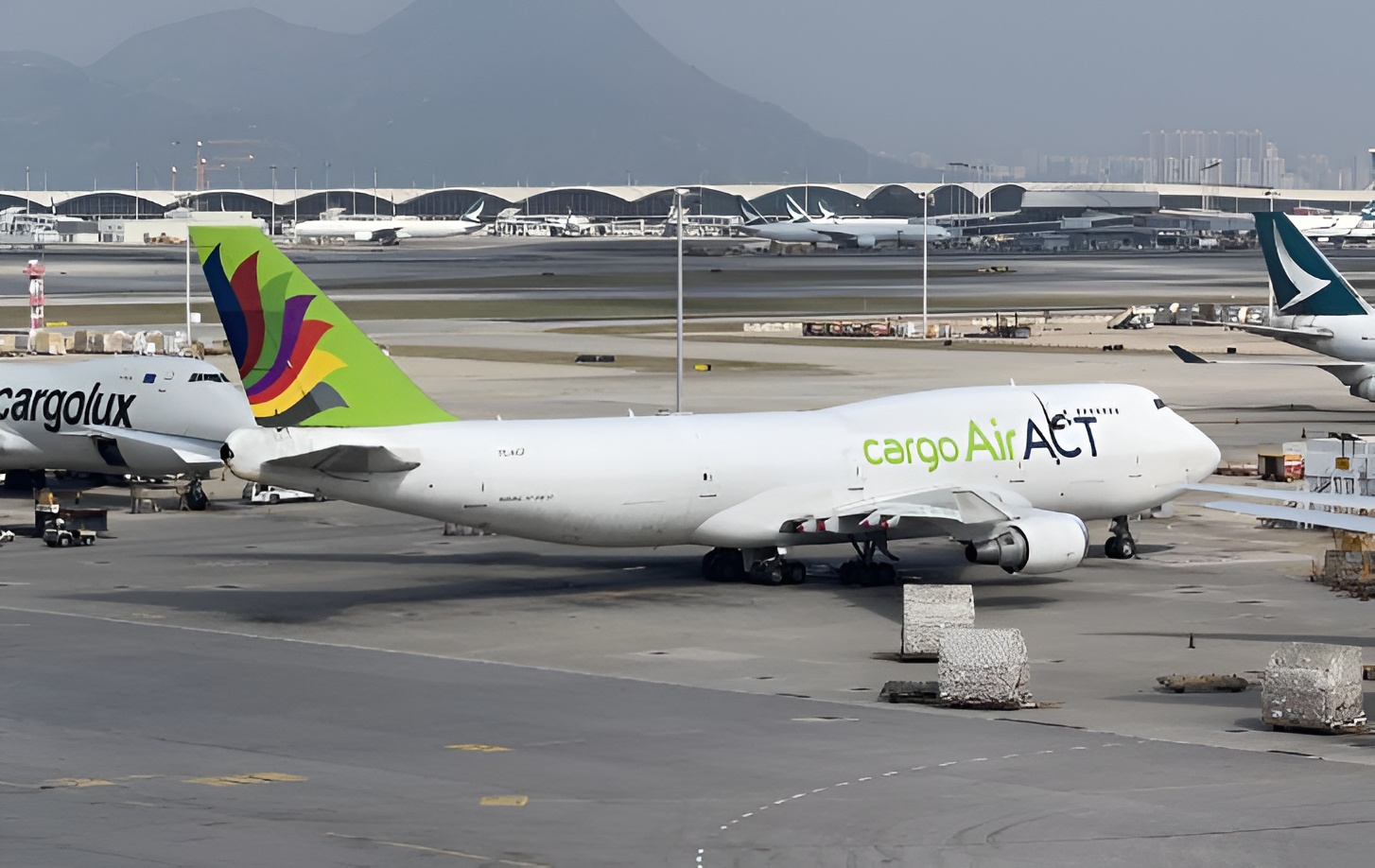
Hong Kong Probes Unexplained Thrust-Lever Movement in Fatal Boeing Runway Crash
Hong Kong investigators have identified a cockpit-control movement that preceded a Boeing cargo freighter’s fatal runway departure, but they have not determined what initiated it. During the October 2025 landing at Hong Kong International Airport, an engine thrust lever moved forward, and the aircraft turned left and left the runway, according to an interim investigation update.

The freighter struck a ground security patrol vehicle and then plunged into the sea. Two security personnel in the vehicle were killed. The aircraft was owned by Turkish cargo carrier ACT Airlines and operated on behalf of Emirates SkyCargo.
The forward lever movement is the newest confirmed technical finding, not a final determination of the accident’s cause. Hong Kong’s Air Accident Investigation Authority, an independent body under the Transport and Logistics Bureau, is still examining why the control moved. No conclusion has been established about crew input, a mechanical issue, automation, maintenance or any other possible initiating factor.
What the control movement explains
An engine thrust lever commands thrust from its associated engine. If one engine produces more forward thrust than the thrust available on the other side, the imbalance can generate a turning tendency, or yaw, around the aircraft’s vertical axis. During a landing roll, that directional effect must be managed alongside braking, aerodynamic control and other systems used to keep the aircraft aligned with the runway.
The interim finding therefore connects two parts of the recorded sequence: the forward movement of an engine thrust lever and the aircraft’s subsequent left turn off the runway. It gives investigators a specific control event to examine and establishes its directional consequence in this accident.
That finding does not, by itself, explain why the lever moved. The distinction is central to accident investigation. Identifying the system response answers what happened at one point in the sequence; identifying the initiating cause requires investigators to establish how and why the control reached that position. Treating the lever movement as the complete cause would skip the question the inquiry is now trying to resolve.
The investigation must work backward
The next analytical task is to reconstruct the inputs, aircraft condition and control behavior surrounding the movement without assuming an explanation in advance. Investigators can then compare the available records with aircraft documentation and component information. The supplied interim findings do not establish which person or system, if any, commanded the movement, so assigning responsibility would be premature.
This boundary also matters for any future safety response. A recommendation can only be properly targeted once investigators know whether the relevant issue concerns equipment, procedures, training, design, oversight or another factor. The same observable movement could demand very different corrective action depending on its origin. Until that origin is established, there is no supported basis for prescribing a specific remedy or extending the finding to other aircraft.
The accident also illustrates why runway safety extends beyond the aircraft itself. The fatal consequences occurred in a ground security patrol vehicle, placing airport workers as well as flight crews and aircraft within the investigation’s safety context. Any final recommendations concerning flight or ground safety will depend on the complete sequence established by the inquiry, not solely on the cockpit-control finding.
A final report is targeted for 2026
Hong Kong’s Transport and Logistics Bureau has urged the authority to complete the investigation by the end of 2026. The bureau said the technical analysis is complex and that some work must be conducted overseas. The inquiry requires coordination with authorized representatives and technical advisers, including the US National Transportation Safety Board, Boeing and aircraft-component manufacturers.
The aircraft was registered in Turkey, and Hong Kong authorities have also been coordinating with Turkish officials. That international work is important because investigators must reconcile information held by the operator, manufacturer, component organizations and participating states before settling on findings and safety recommendations.
The final report is expected to establish the accident’s causes and set out recommendations intended to prevent a recurrence. Until then, the firm conclusion remains deliberately narrow: a thrust lever moved forward, the freighter turned left and departed the runway, and two people in a patrol vehicle were killed. Why that cockpit control moved remains the investigation’s decisive unanswered question.
| More aerospace and engineering stories, right in your MSN feed. Follow AMI on MSN |
By Thomas Caldwell — AMI’s senior editor for mechanical and mobility engineering, covering vehicle electronics, systems integration, electrification, chassis systems, propulsion, and safety policy.