Mithril Defense Drones Enter At Least Nine Schools With Pepper Gel and Ramming
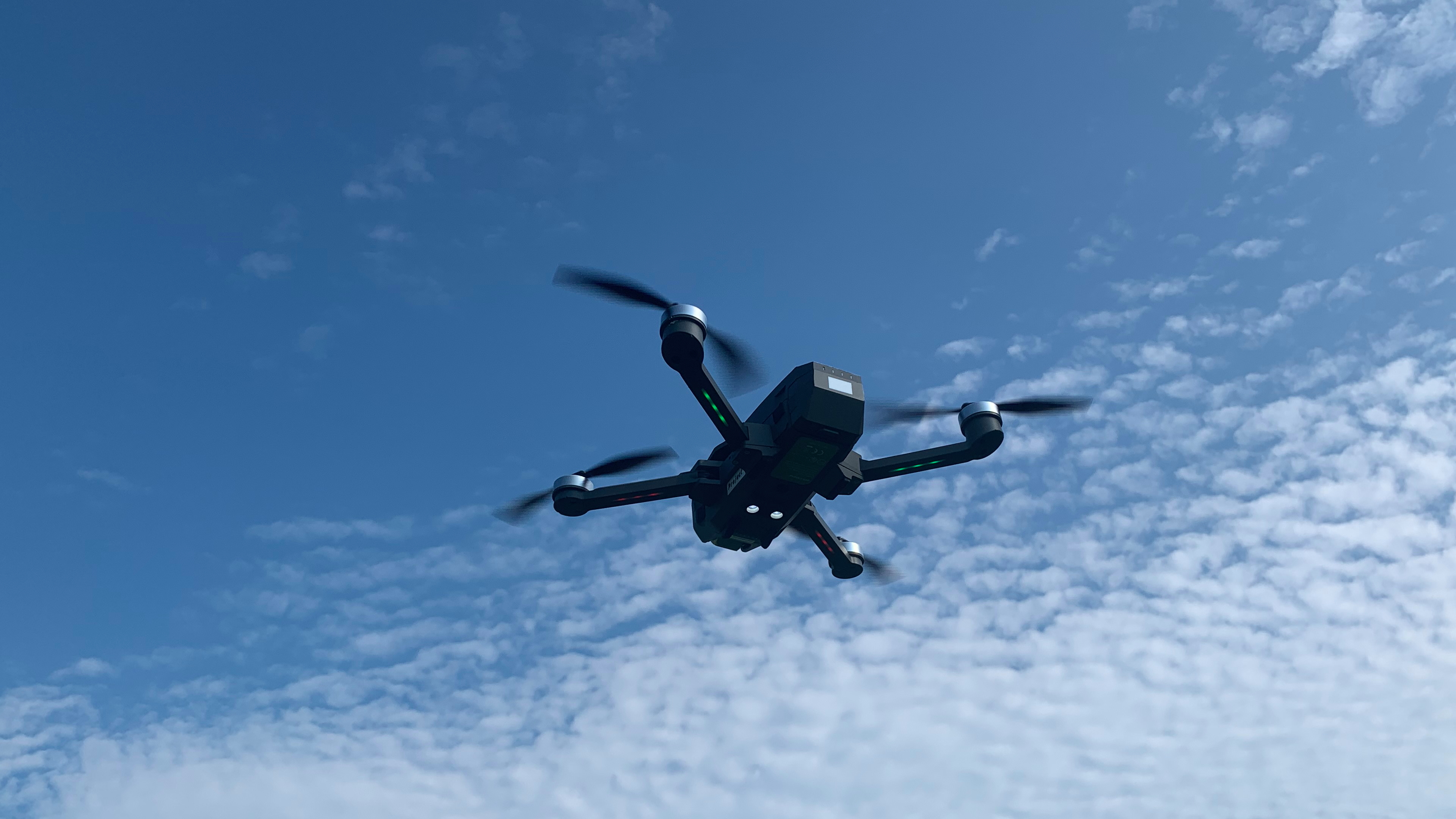
A teacher presses a panic button or uses a mobile app. A drone leaves a ceiling-mounted charging station, while personnel potentially located hundreds of miles away connect to the school’s cameras and assess an identified threat. Mithril Defense’s Campus Guardian Angel can then activate sirens and strobes, deploy pepper gel or be directed to ram that target.
That remotely controlled use-of-force system has been installed or is scheduled for installation at at least nine public schools across Florida, Georgia and Colorado. The rollout is supported partly by $1,671,500 in state appropriations: Florida provided $1,121,500 over two fiscal years, while Georgia appropriated $550,000 for a drone pilot program.
The system’s architecture is designed to move part of an emergency response away from the school itself. The drones remain in ceiling-mounted charging units described as roughly the size of pizza boxes. Once an emergency response is activated, remote personnel can access participating schools’ existing security-camera feeds. Mithril says those feeds are accessed only during an activated response.
A designated tracker follows the person identified as the threat, while another operator monitors video for the response team and law enforcement. Remote operators can be as far as 1,000 miles away. The company says the drones can ram an identified target at speeds up to 60 mph, making identification and authorization controls central safety questions rather than secondary software details.
False alarms are part of the expected workload
Campus Guardian Angel materials anticipate “far more false alarms than real events” and acknowledge the possibility of “mistaken actions.” Those statements define the system’s most important operating boundary: it must make consequential decisions in an environment where most activations may not involve a genuine attack.
A false alarm does not automatically mean force will be used. It does mean the response process must reliably separate mistakes, misunderstandings and ordinary school activity from an actual emergency. The available information does not fully explain the identification threshold operators must meet, who authorizes pepper gel or physical interception, or what independent safeguards apply before those actions occur.
Remote operation creates both a potential benefit and a control challenge. Off-site personnel may provide dedicated attention without requiring a drone pilot at every campus. But they also depend on camera positioning, image quality, communications and the information supplied when the alarm is activated. Students and employees moving through a crowded building could further complicate interpretation. These are general system-level constraints, not evidence that an error has occurred at a participating school.
School-safety consultant Michael Dorn called the approach “a really impractical approach” and said he would ask participating schools, Have you done all of the other things that are far more likely to prevent deaths? His criticism points to a public-spending tradeoff: every dollar directed to a drone pilot is a dollar unavailable for another security measure unless the state or district increases the overall budget.
The federal Cybersecurity and Infrastructure Security Agency’s K-12 School Security Guide treats protection as a layered process based on campus assessment and coordinated physical-security planning. Measures cited in school-security guidance include controlled entrances, locked doors, access monitoring, visitor procedures and reinforced openings. The drone program therefore needs to be evaluated as one layer within a larger system, not as a substitute whose presence alone establishes campus readiness.
Camera access expands the oversight burden
The drones are only one part of the technology being introduced. Mithril’s operators also receive private access to participating schools’ existing camera networks during an activated response. Marketing materials say school-camera imagery, drone recordings, chats and voice communications are recorded during the response and stored afterward.
That creates questions extending beyond immediate emergency control: how long each category of record is retained, whether access is logged, who owns the files, who can obtain copies and how records involving identifiable students are handled. No use of Guardian Angel recordings in an immigration investigation has been documented, and broader claims about such use should not be presented as an established outcome.
Other school systems show what detailed camera governance can look like, although their rules do not establish the policies governing these three states. Harford County Public Schools in Maryland, for example, defines authorized users and viewers, requires documentation of access and exports, maintains a chain of custody and generally retains exported recordings for about 30 days unless a legal, investigative or administrative reason requires longer storage. Comparable published controls would help families assess what private emergency access means in the participating districts.
The state appropriations establish public support for testing the system, but they do not by themselves answer whether districts completed vulnerability assessments, prioritized conventional improvements or established independent review of force decisions. Nor do they explain how performance will be measured across schools with different layouts, staffing and camera coverage.
Mithril co-founder Justin Marston has described a future in which the drones could operate “anywhere there’s a mass gathering.” Before that wider vision can be judged, the school pilots must confront a narrower and more immediate requirement: demonstrating that remote operators can manage expected false alarms without turning mistaken identification, private camera access or retained recordings into new risks for the people the system is intended to protect.
| More aerospace and engineering stories, right in your MSN feed. Follow AMI on MSN |
By Stephen Wallace — Editor for AMI’s aerospace integration and unmanned mobility coverage, focused on drone manufacturing, VTOL systems, autonomous networks, and air-ground mobility links.