RAF Protector Tracks Russian Frigate for 10 Hours on First UK Missions
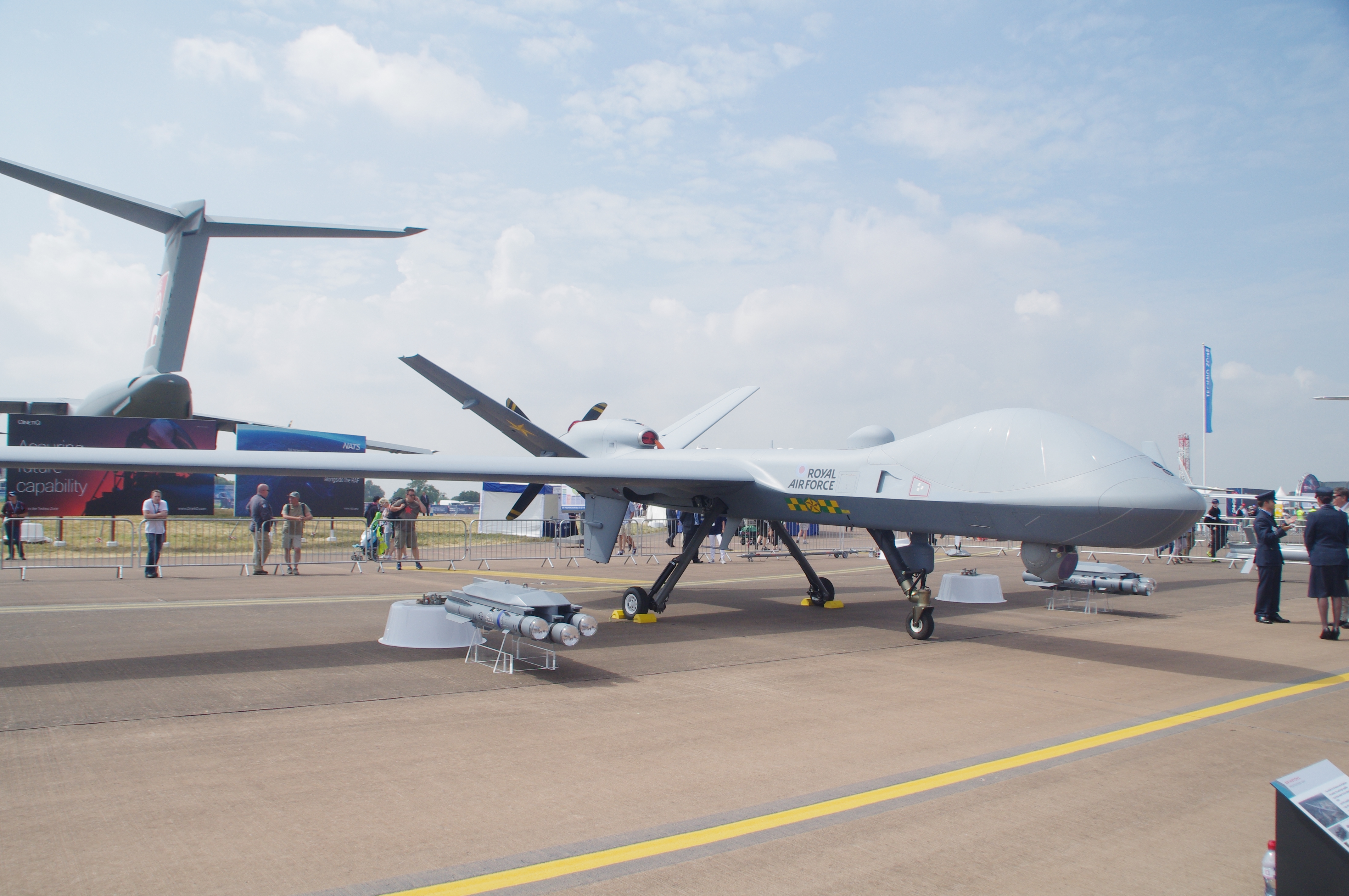
The Royal Air Force’s previous surveillance drone could fly missions overseas but was not certified to operate over Britain alongside civilian aircraft. Its Protector RG1 successor has now crossed that boundary, spending more than ten hours monitoring the Russian frigate Neustrashimy and accompanying merchant ships during its first operational missions in UK airspace.

The unarmed flights over the English Channel, disclosed by the UK Ministry of Defence on October 31, 2026, placed Protector above a region used extensively by military and civilian traffic. Royal Navy vessels HMS Dauntless and HMS Tyne monitored the Russian group between October 1 and 14, with the drone adding prolonged airborne surveillance to the established use of ships and helicopters.
The ministry did not disclose how many Protector sorties were flown, which sensors were used or precisely how much of the passage the aircraft covered. It did confirm more than ten hours of intelligence, surveillance and reconnaissance support. That duration is well within Protector’s stated endurance of more than 30 hours, giving commanders the option of maintaining observation for long periods without keeping an aircrew aboard the surveillance aircraft.
Certification separates Protector from Reaper
The contrast with the MQ-9A Reaper is central to the mission. Reaper served the RAF on operations over Afghanistan, Iraq and Syria, but it did not fly in British airspace during its RAF career because it lacked certification to share that airspace with civilian airliners. Protector is the RAF version of General Atomics’ newer MQ-9B and was designed around a more demanding airworthiness framework.
The UK Military Aviation Authority issued Protector its Military Type Certificate on April 29, 2025. The certification followed an airworthiness assessment and cleared the aircraft to operate without geographic restrictions in UK airspace, including over populated areas. The RAF declared it in service that June.
Reaching that point required more than proving that the aircraft could remain aloft or carry useful sensors. According to General Atomics, the certification design includes lightning and fire protection, anti-icing equipment and a fatigue- and damage-tolerant airframe approach. Flight-critical software is separated from mission software, limiting the extent to which a problem in surveillance equipment can affect the systems responsible for safe flight.
Those features address the less visible challenge of domestic drone operations: integration rather than basic aircraft performance. A remotely piloted aircraft crossing shared airspace must satisfy airworthiness and traffic-management requirements comparable in rigor to those governing crewed aircraft. The Channel operation turned that certification work into an operational result rather than a test conducted inside specially restricted airspace.
Long endurance adds another surveillance layer
Protector can operate at up to 40,000 feet and has access to full-motion video, infrared cameras and synthetic aperture radar, although the ministry did not identify the equipment used for these missions. XIII Squadron operates the aircraft from RAF Waddington in Lincolnshire. Britain has ordered 16 Protectors, and the Daily Express reports that 11 have been delivered.
Its endurance allows the drone to supplement rather than replace the ships and helicopters building the broader maritime picture. A surface vessel can remain close to a transit and perform functions an aircraft cannot, while helicopters provide a different combination of mobility, crew judgment and sensor positioning. Protector contributes the ability to stay overhead for extended periods, with its operators remaining on the ground.
That arrangement may reduce the need to commit a crewed patrol aircraft to every hour of a long observation mission, but no published cost comparison establishes that these Channel flights were cheaper. Operating economics depend on staffing, ground-control infrastructure, maintenance, communications and the mix of other aircraft or ships required. Endurance creates the opportunity to use resources differently; it does not by itself prove a lower mission bill.
The flight was also unarmed, despite Protector having undergone qualification work with Paveway IV and Brimstone weapons. Its significance here was surveillance and airspace access. The RAF moved from a Reaper fleet that could operate abroad but not over Britain to a successor able to spend more than ten hours watching a passing warship above the UK’s busy southern approaches and still retain considerably more endurance on paper.
| More aerospace and engineering stories, right in your MSN feed. Follow AMI on MSN |
By Stephen Wallace — Editor for AMI’s aerospace integration and unmanned mobility coverage, focused on drone manufacturing, VTOL systems, autonomous networks, and air-ground mobility links.