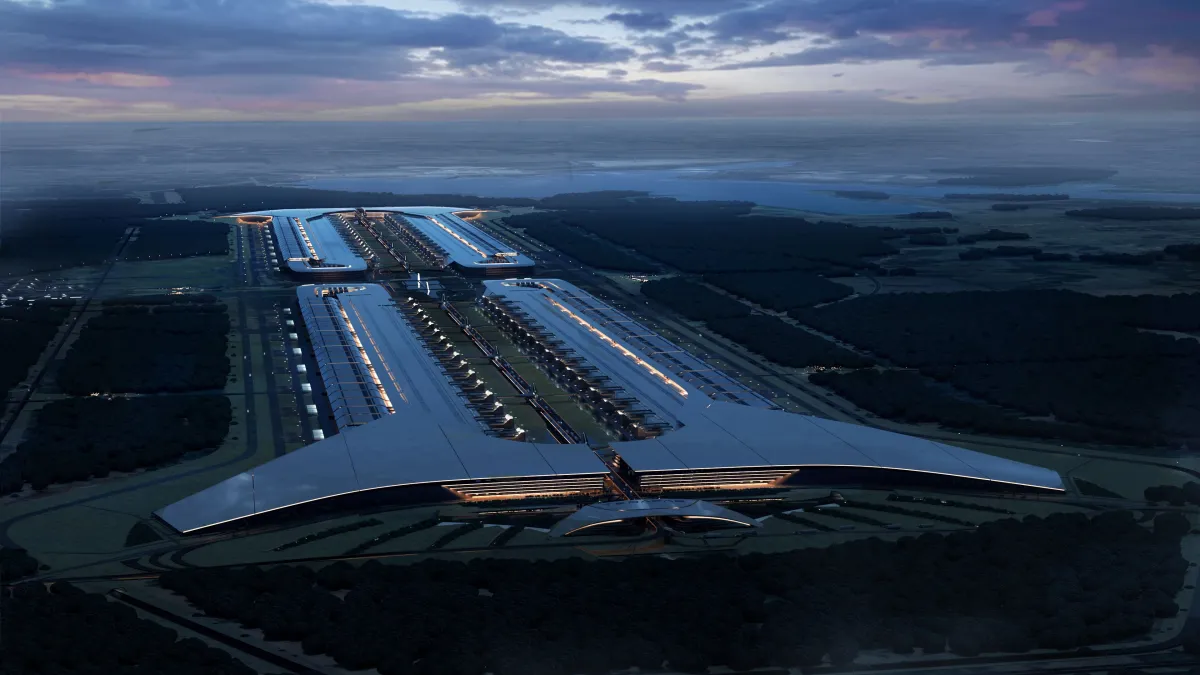
Terafab Filings Reveal Conditional $119 Billion Texas Buildout Through 2036
Terafab could become a four-phase, $119-billion semiconductor complex in Grimes County, Texas, under newly disclosed filings that extend construction through 2036. Only the $16.8-billion first phase, scheduled for 2026-28, has been announced. The documents assign $38.6 billion to Phase 2 in 2029-31, another $38.6 billion to Phase 3 in 2032-34 and $25.3 billion to Phase 4 in 2035-36. Each phase would be able to manufacture semiconductors independently, and Tesla and SpaceX would make a separate decision on whether to proceed after completing each preceding phase.
The project filings also expose a much broader infrastructure scope than chip-fabrication buildings alone. Listed systems include onsite power generation, substations, water treatment and recycling, industrial wastewater treatment, battery storage, backup generation, cooling equipment and chemical-distribution infrastructure. At the same time, SpaceX is seeking to prevent the release of additional records covering project costs, land acquisition, structural details and tax-incentive negotiations after a state open-records ruling ordered most requested material released.
That creates the project’s central policy tension: a privately operated manufacturing campus is being proposed with the physical scale and utility demands of major regional infrastructure, while later phases remain conditional and parts of the underlying negotiations are contested. The distinction matters because the headline total is not a committed construction budget. It is the sum of four potential investment stages, three of which require future authorization by the applicant.
A factory plan built around independent expansion
Dividing Terafab into independently functioning phases reduces one form of execution risk. The first plant would not have to wait for the full decade-long campus to be completed before beginning semiconductor work. If later demand, financing or technical progress fails to justify expansion, the filings indicate that an earlier phase could still operate on its own.
That modularity does not make the later schedule certain. Semiconductor facilities require coordinated delivery of cleanrooms, process equipment, power, cooling, water, wastewater treatment and specialized material-handling systems. A delay or redesign in those supporting systems can affect manufacturing readiness even when the main building is structurally complete. The proposed onsite generation and water-reuse systems therefore are not peripheral amenities; they are part of the production architecture.
Reliable power and water are particularly important in semiconductor manufacturing. A CSIS assessment of the Texas semiconductor ecosystem identifies both resources as necessary conditions for large-scale fabrication, noting that modern plants can consume substantial electricity and water. Terafab’s filings address those dependencies through onsite power plants, surface water from Gibbons Creek Reservoir, recycling systems and onsite wastewater treatment. They do not, however, provide demonstrated operating performance for those systems.
The development target remains unproven
The physical buildout is tied to an unusually aggressive engineering objective. Elon Musk has described a model in which Tesla and SpaceX would fabricate and test approximately 10 chip designs annually, using a co-located workflow for design, photomask generation, wafer fabrication, testing, packaging and system integration. The target concerns successive design iterations, not mass production of 10 separate chip products every year.
In principle, putting those functions together could shorten the feedback loop. Engineers could test a design, revise its photomasks and fabricate another version without waiting for a conventional handoff among geographically separated suppliers. Mainstream semiconductor programs can take as long as two years to move a major design from development into mass production, so a faster internal cycle could benefit custom chips for transportation, robotics and aerospace systems.
But the proposed cadence must be separated from demonstrated capability. Musk has acknowledged that Tesla and SpaceX do not yet know how to manufacture chips and that reaching their objectives could take several years. No operating output, completion schedule, process node, chip specification or quantified production capacity has been disclosed. Tesla initially plans to modify conventional semiconductor equipment for greater capacity and later develop custom machinery around identified bottlenecks.
The first phase is projected to begin commercial operations in 2028, but even that remains a forward schedule rather than an operating result. For public oversight, the consequential question is not simply whether Terafab can eventually reach $119 billion in investment. It is whether each independently approved expansion is matched by transparent information about incentives, utility obligations and completed manufacturing capability before the next multibillion-dollar phase proceeds.
| More aerospace and engineering stories, right in your MSN feed. Follow AMI on MSN |
By Thomas Caldwell — AMI’s senior editor for mechanical and mobility engineering, covering vehicle electronics, systems integration, electrification, chassis systems, propulsion, and safety policy.