Ukraine Says Starlink Speed Limit Caused Dropouts and Canceled Drone Missions
Some Ukrainian interceptor drones can exceed 600 kilometers per hour, but officials say their satellite communications are now restricted to 160 km/h. That mismatch is already affecting availability: Ukraine’s 7th Rapid Reaction Corps told Reuters that communications interruptions had led one unmanned-systems unit to cancel several missions.
The reported restriction was introduced overnight on October 13–14 without advance warning to Ukrainian forces, according to presidential defense-technology adviser Serhii Beskrestnov. He described it as a 100-mph, or 160-km/h, mobility limit affecting Starshield, the government and military service related to SpaceX’s better-known Starlink network.
The immediate concern is not whether the aircraft can continue flying. The corps said affected drones remained airborne when their connections dropped for 10 to 20 seconds at reported speeds of 110–120 km/h. The problem was maintaining operator control during those interruptions. A separate claim of failures at 60–70 km/h has not been independently established and should not be treated as a confirmed threshold.
A fast aircraft still depends on its communications architecture
A drone’s maximum airspeed and its usable mission speed are not necessarily the same. If an aircraft relies on a satellite link for continuous human control, a communications service that stops working reliably above a defined ground speed can become the practical limit even when the propulsion system and airframe are capable of much more.
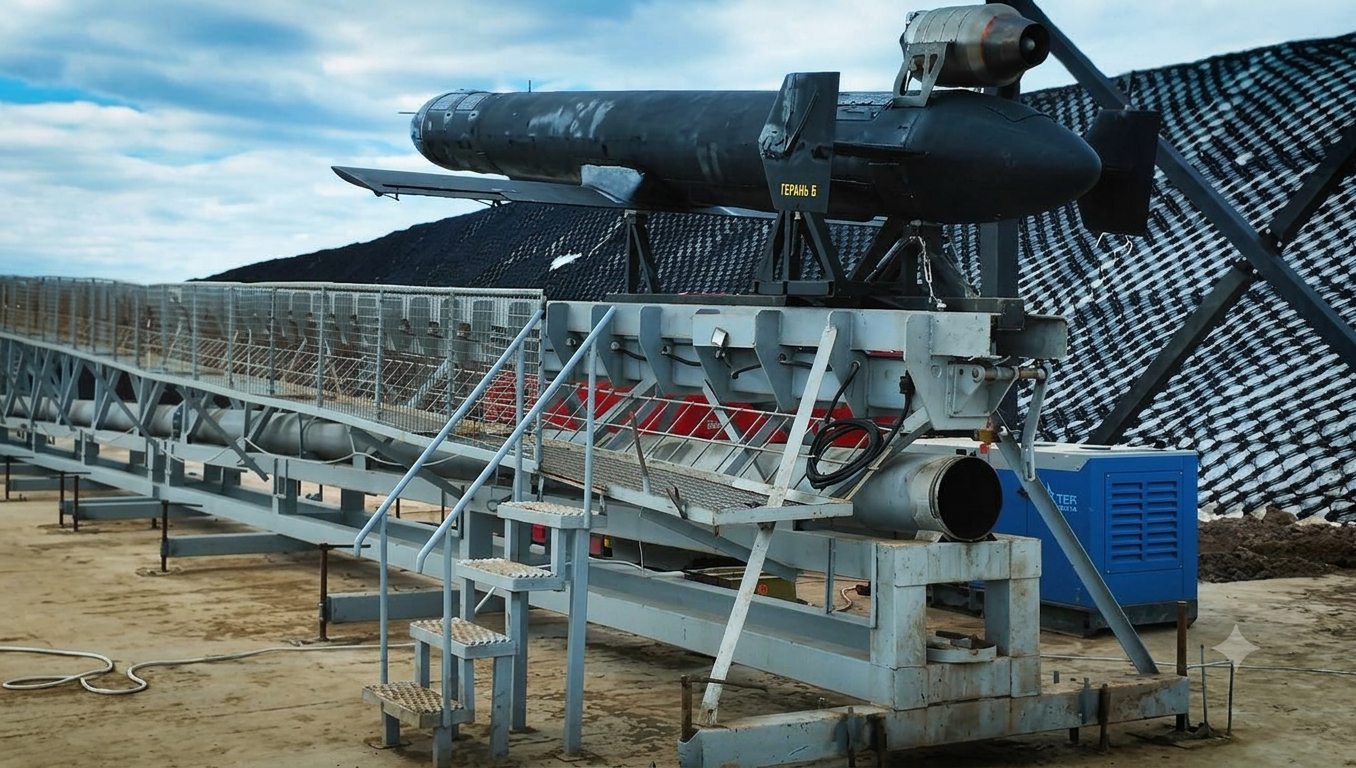
That distinction matters for Ukraine’s effort to counter faster, jet-powered Shahed-derived drones. Ukraine’s Defense Intelligence says the Geran-4 typically travels at 300-400 km/h, while Ukrainian manufacturers have developed interceptor models capable of exceeding 600 km/h. A satellite link capped at 160 km/h would not support continuous connected operation across that speed range.
The precise impact, however, will vary by aircraft. An interceptor with greater onboard autonomy may be able to continue portions of a flight through a temporary loss of connectivity. A system that depends heavily on a remote pilot and continuous data transfer has less tolerance for the same interruption. Redundant communications could also change the result, but no public information provided a model-by-model assessment of which Ukrainian aircraft were affected or how their control systems responded.
This means the reported speed limit should not be interpreted as mechanically slowing every drone to 160 km/h. It restricts the conditions under which the satellite service operates. Operators may then have to reduce speed, accept periods without the link, use a different communications arrangement or keep an aircraft unavailable. The confirmed cancellations show that, for at least one unit, the restriction could not simply be absorbed without changing planned operations.
A security control has become a readiness constraint
The development also reverses an earlier communications-control problem. Ukraine introduced a terminal whitelist and restrictions on terminals operating in motion on February 2, 2026, after officials discovered Russian drones using Starlink terminals. Those measures were intended to distinguish authorized equipment and constrain hostile use.
The newly reported Starshield restriction appears broader from the Ukrainian operator’s perspective because it reaches services used for faster missions. This illustrates a difficult systems-engineering tradeoff: mobility controls can help enforce who or what is allowed to use a satellite network, but a limit applied too broadly can also exclude authorized aircraft whose normal operating envelope exceeds the threshold.
By late October 14, operators were reporting improved connections at speeds up to about 161 km/h, according to the Associated Press. That indicated some service improvement, but it did not resolve the central mismatch with interceptors designed to fly several times faster.
SpaceX had not publicly explained the reported change by early afternoon on October 14. Elon Musk later said Starshield systems were owned and controlled by the U.S. government and that limits on speed or usage were government decisions, but he did not confirm the restriction’s technical basis. Claims that the change was motivated by current political pressure remain speculation rather than an established finding.
The next meaningful milestone is therefore not merely restoring connectivity at the stated threshold. It is determining whether authorized defensive aircraft can retain reliable communications across their required speed envelope or whether greater onboard autonomy and alternative links must compensate for a satellite service boundary far below the aircraft’s performance.
| More aerospace and engineering stories, right in your MSN feed. Follow AMI on MSN |
By Stephen Wallace — Editor for AMI’s aerospace integration and unmanned mobility coverage, focused on drone manufacturing, VTOL systems, autonomous networks, and air-ground mobility links.