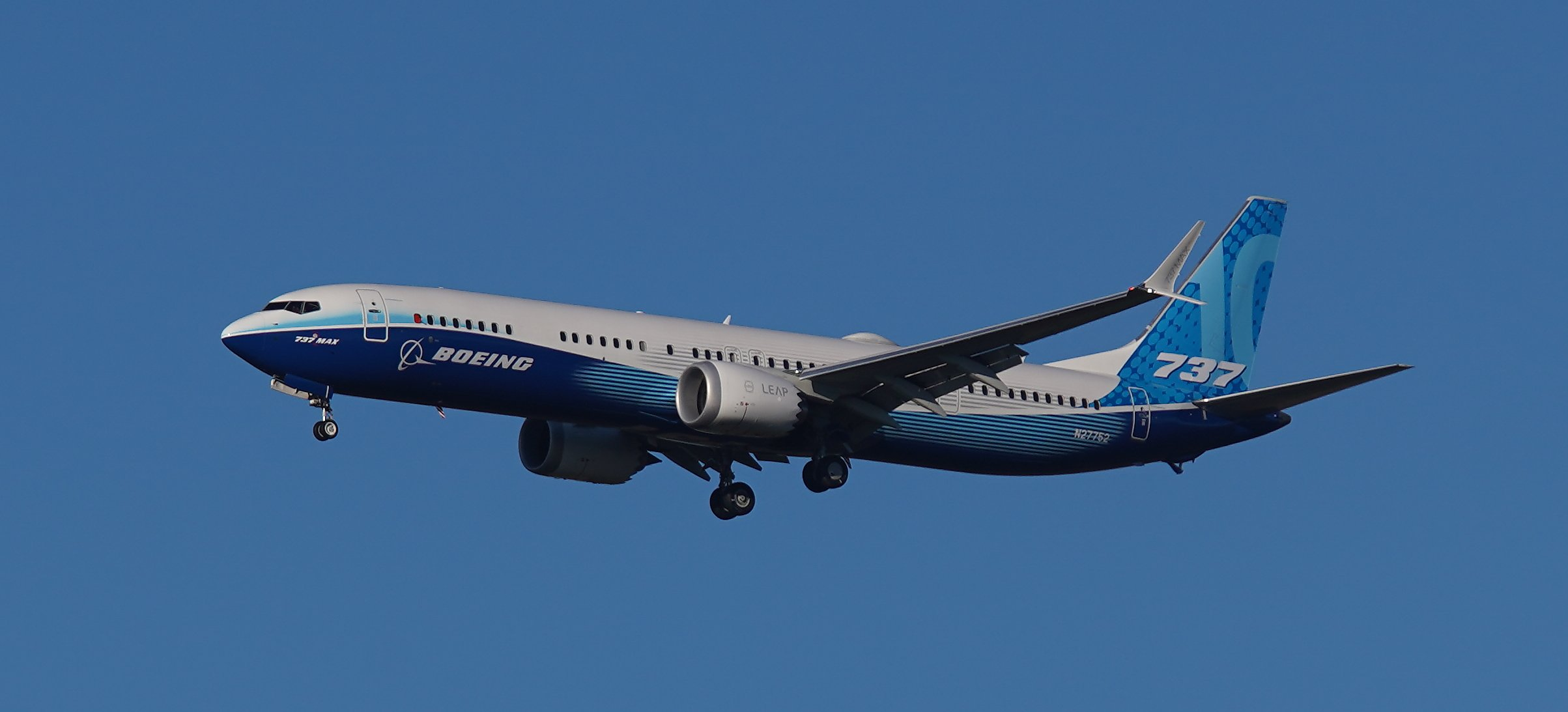
FAA Certifies Boeing 737 Max 10, Completing Family Approvals Before Deliveries
The Federal Aviation Administration has certified Boeing’s 737 Max 10, completing US design approvals for the Max family and allowing the largest variant to move toward customer deliveries. The agency’s October 20 certification action followed thousands of hours of test flying and required the aircraft to incorporate safety improvements, including an enhanced angle-of-attack system.

The approval is a major program milestone, but it is not the same as placing every Max 10 immediately into passenger service. The FAA issued an amended type certificate confirming that the design complies with applicable safety requirements. It also updated Boeing’s Production Limitation Record, authorizing production of the model.
Those actions clear two system-level gates: approval of the aircraft design and authorization to manufacture it under the approved production framework. Finished airplanes still move through conformity, inspection, airline acceptance and airworthiness processes before carrying passengers. Foreign regulators also must approve the model for operators under their jurisdictions.
The highlighted safety change
The FAA said it required the Max 10 to incorporate improvements addressing the Aircraft Certification, Safety, and Accountability Act and National Transportation Safety Board recommendations. The specified changes include updates to the flight-control system with an enhanced angle-of-attack sensor.
Angle of attack describes the relationship between an aircraft’s wing and the airflow approaching it; the FAA’s announcement characterizes it more simply as airplane pitch. Its value to a flight-control architecture depends on more than the sensing element alone. Certification work must consider how sensor information is validated, how connected systems use it, how failures are identified and communicated, and how flight crews interact with the resulting indications or control behavior.
The publicly released certification announcement does not provide the detailed architecture or describe precisely how the enhanced system differs from equipment on other Max variants. It does establish that the change was part of the Max 10’s approved flight-control design rather than an optional feature added after certification.
Boeing says the enhanced angle-of-attack system will become standard across the Max family. That creates a broader integration task beyond the newest model: applying a common safety enhancement across aircraft already in service requires approved engineering changes, coordinated maintenance planning and operator implementation. The timing and detailed retrofit arrangements were not specified in the FAA announcement.
What the amended certificate represents
The Max 10 is the first commercial airplane Boeing says was certified to the full extent of the 2020 Aircraft Certification, Safety, and Accountability Act. That law increased expectations for documenting safety assessments and evaluating human factors. The company reports that the Max 10 program included more than 2,000 flight-test hours and 1,000 ground-test hours, along with extensive design reviews and documentation.
That policy framework makes system interaction a central concern. The FAA’s broader certification reforms call for more detailed examination of how aircraft systems affect one another, greater use of independent technical reviews and consideration of pilots with differing experience levels when training requirements are evaluated. For an automated transport aircraft, certification therefore covers not only whether individual components meet specifications, but whether the aircraft, crew procedures, maintenance requirements and training provisions work as a coherent operating system.
The Max 10 also carries a substantial capacity consequence for airlines. Boeing says it will typically accommodate 185 to 210 passengers in a two-class layout and as many as 230 in its maximum configuration. That gives carriers more seats within a single-aisle aircraft, potentially reducing operating cost per seat. Passenger access and fares, however, will depend on where airlines deploy that capacity and the level of competition on those routes.
More than 30 customers have ordered 1,555 Max 10s, according to Boeing, representing more than 30% of the Max program’s unfilled orders. The scale explains why certification matters operationally: it releases a long-delayed aircraft design into the delivery pipeline, but also transfers attention from certification testing to repeatable production quality and airline introduction.
Boeing expects deliveries to begin in the coming months. Certification by Transport Canada and the European Union Aviation Safety Agency is expected to follow, with WestJet slated to receive the first aircraft in early 2027. The amended type certificate closes the Max 10’s US design-approval phase; the next measurable test is whether production, individual aircraft clearance and airline acceptance can convert that approval into dependable commercial service.
| More aerospace and engineering stories, right in your MSN feed. Follow AMI on MSN |
By Thomas Caldwell — AMI’s senior editor for mechanical and mobility engineering, covering vehicle electronics, systems integration, electrification, chassis systems, propulsion, and safety policy.