BAE Could Build 35,000 Drone-Defense Rocket Guidance Kits Yearly, Contract Pending
BAE Systems is preparing to raise annual production of laser-guidance kits used in counter-drone missions from at least 25,000 to as many as 35,000, a potential 40% increase. The expansion is not yet backed by a finalized multiyear purchase contract: BAE and the Pentagon have signed a long-term procurement framework, but they are still negotiating the contract that would turn projected demand into funded orders.
That gap between production planning and procurement certainty is central to the deal. The framework provides a structure for as many as seven years of purchases, while the Pentagon says the buy remains subject to congressional authorization and funding. It creates a path for BAE to sustain or expand output, but it does not mean that 35,000 kits have already been ordered or will be delivered immediately.
A guidance section turns an existing rocket into a precision weapon
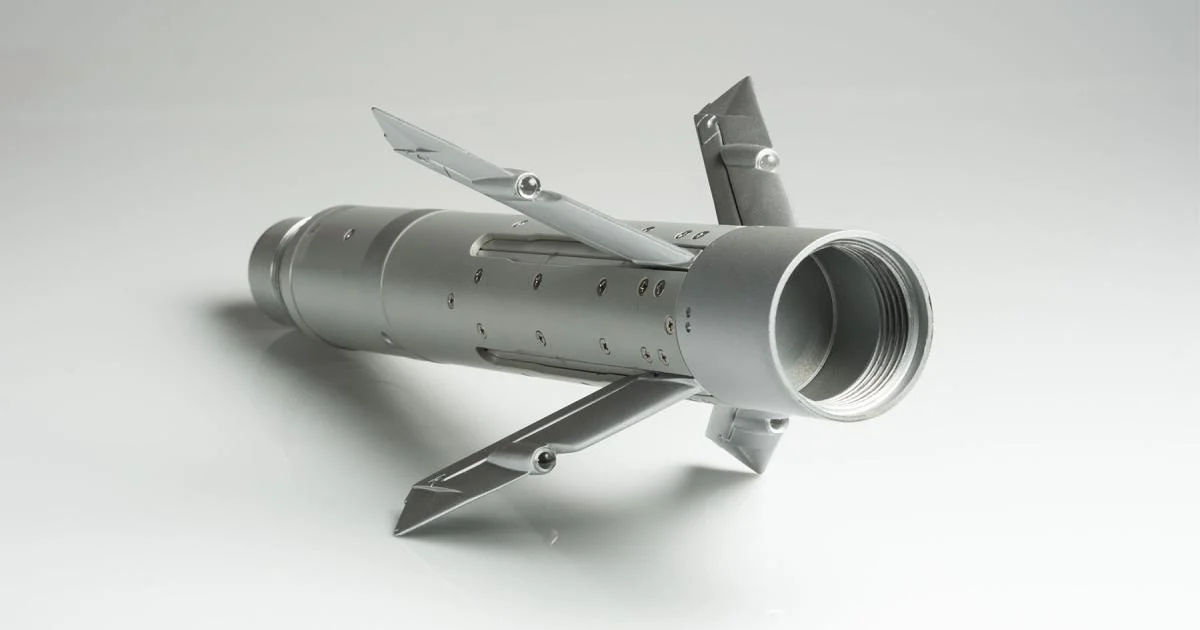
The Advanced Precision Kill Weapon System, commonly called APKWS, is not a complete rocket built from scratch. It is a guidance section inserted into an unguided 2.75-inch, or 70-millimeter, rocket such as the Hydra 70. The conversion gives existing rocket inventories a laser-guided precision option without moving directly to a larger, higher-end missile for every engagement.
BAE says the system uses optics distributed across four guidance wings to acquire and track a laser-designated target after launch. The kits support several launch and engagement configurations, including air-to-surface, surface-to-surface, surface-to-air and air-to-air use. The U.S. Air Force, Army, Marine Corps and Navy field the system, and it is also available to allied countries.
For counter-drone defense, the attraction is the cost relationship rather than a claim that one interceptor fits every situation. Militaries face the practical problem of engaging relatively inexpensive uncrewed aircraft without rapidly consuming limited stocks of more sophisticated air-defense missiles. Converting a widely used rocket into a guided weapon provides a comparatively affordable precision layer between unguided fire and larger interceptors.
Capacity is rising, but demand must remain dependable
BAE reports that its facilities in Hudson, New Hampshire, and Austin, Texas, can currently produce at least 25,000 guidance kits annually. Raising that figure to 35,000 would add 10,000 kits of yearly capacity, or 40% over the stated baseline. The company says its supply chain is largely based in the United States and that it has invested more than $100 million in production infrastructure.
Those investments can increase physical capacity, but a multiyear contract provides a different requirement: predictable demand. Suppliers need enough certainty to order long-lead material, retain skilled workers and keep production equipment operating at useful rates. A framework communicates the desired direction and establishes a contracting route; a funded order determines how much output the government is actually committed to buying.
The first 25,000 kits per year would support anticipated Pentagon procurement under the framework. The route toward 35,000 also depends on allied demand, with additional capacity expected as partner countries formally request kits through the U.S. Foreign Military Sales process. That makes the upper figure a capacity target tied to future orders, not a guaranteed annual production result.
BAE has manufactured the guidance system since 2008 and says more than 100,000 kits have been sold worldwide. That production history reduces the challenge of introducing an entirely new weapon, but increasing output still requires the company and its suppliers to align labor, components and government demand over several years.
The framework does not set a delivery timeline for Ukraine
Supporters tracking military aid to Ukraine have an immediate question: how quickly can the United States build additional counter-drone weapons? The production framework shows the scale the industrial base could pursue, but it does not provide a Ukraine allocation or delivery schedule. Procurement, production capacity and delivery are separate stages, and the agreement presently addresses the first two without establishing the third for any particular recipient.
The unresolved milestone is therefore the multiyear purchase contract. If completed and funded, it could give BAE the sustained demand needed to move beyond its current annual capacity and make 35,000 kits a year achievable when U.S. and allied orders support that level. Until then, the most consequential number remains conditional: 35,000 is the planned ceiling, while at least 25,000 is the company’s stated capacity today.
| More aerospace and engineering stories, right in your MSN feed. Follow AMI on MSN |
By Stephen Wallace — Editor for AMI’s aerospace integration and unmanned mobility coverage, focused on drone manufacturing, VTOL systems, autonomous networks, and air-ground mobility links.