Ukrainians Strike Heart of Russian Tech with Drones, Causing Significant Disruption, Caught on Video
As the war of attrition grinds across hundreds of miles of fortified frontline trenches, the wider battle space has increasingly migrated toward strategic infrastructure deep inside adversary territory. Contemporary military commands now recognize that computational capacity, automated logistics engines, and sovereign algorithmic models are just as critical in prolonged industrial warfare as fuel storage or artillery depots. This operational reality has turned high-capacity server farms and supercomputing clusters into primary military objectives in the campaign to degrade an opponent’s economic endurance, digital command structures, and machine-learning capabilities.
For years, the Kremlin mandated aggressive data localization laws that forced Russian tech firms to keep sensitive databases and computing assets entirely within the nation’s borders under state oversight. While aimed at securing digital sovereignty, this hyper-centralized network topology created an acute architectural bottleneck by clustering vast national computing power into a handful of known physical nodes. Unlike petrochemical facilities and frontline ammunition parks, massive commercial computing warehouses offer soft, expansive surface targets that remain highly vulnerable to long-range unmanned aerial vehicles.
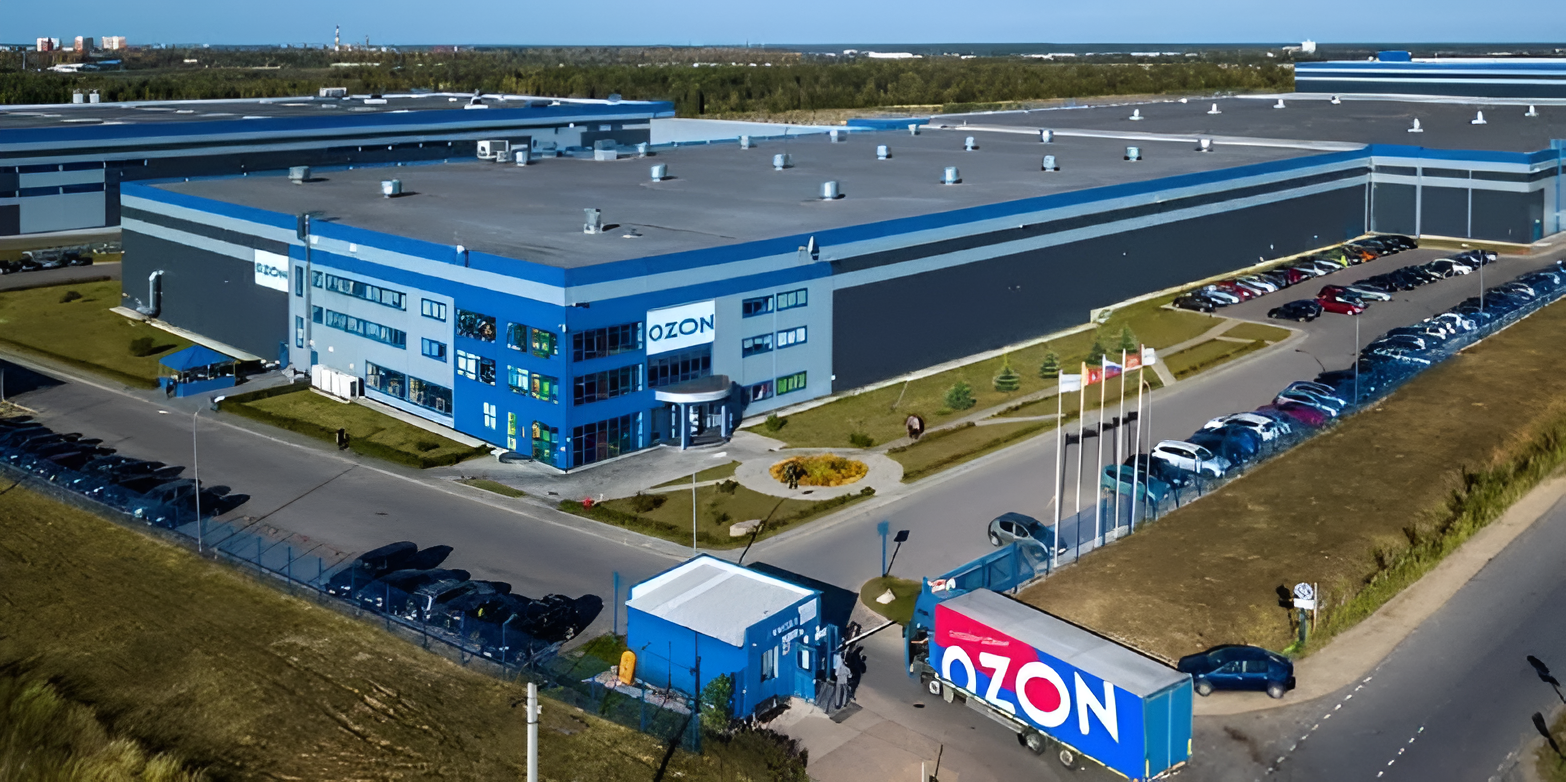
Ukrainian forces launched an overnight attack on Yandex’s data centre in Russia’s Vladimir Region, marking the third such strike on Yandex’s data centers. Yandex, known as the “Google of Russia,” offers a wide range of digital services, including the country’s leading search engine. Video by: @Exilenova_plus
— Faytuks Network (@FaytuksNetwork) October 11, 2026
That vulnerability collapsed into an operational crisis this month when Ukrainian strike drone squadrons launched a sustained deep-strike campaign directly targeting Russia’s core computing architecture. Wave after wave of low-flying kamikaze drones successfully penetrated regional air defenses to strike three primary facilities belonging to tech giant ‘Yandex’, alongside server hubs owned by state lender ‘Sberbank’ and social network ‘VKontakte’. The precision strikes pounded computational installations across the Ryazan, Kaluga, and Vladimir regions, before follow-up operations struck a ‘Sberbank’ facility in Balakovo and a ‘VKontakte’ center in St. Petersburg.
The structural impact on Russia’s digital landscape was immediate, knocking out large swathes of commercial cloud services, automated retail pipelines, and federal arbitration databases. In the city of Vladimir, an explosive drone strike completely shut down an essential 50-megawatt data hub, as confirmed by the Kyiv Post, cutting off more than 80 digital platforms, taxi dispatch modules, and cloud applications. At the Sasovo hub in the Ryazan region, a resultant blaze inflicted heavy infrastructure damage, directly compromising server modules that house two of the primary supercomputing clusters used to train proprietary machine-learning software.
Ukrainian long-range drones also struck a VK data center near St. Petersburg, with a fire reported at the facility. The center houses 640 server racks and more than 20,000 servers. VK services are currently reported to be down. #Russia https://t.co/xGjpabTjua
— NOELREPORTS 🇪🇺 🇺🇦 (@NOELreports) October 18, 2026
The destruction of specialized computing hardware creates an immediate roadblock for Moscow’s ambitions to field domestic frontier artificial intelligence models capable of competing with American and Chinese platforms. Training large language models and neural computer vision systems requires high-density arrays of imported microprocessors, such as Nvidia A100 GPUs that power systems like ‘Chervonenkis’ and ‘Christofari Neo’. Under stringent Western tech sanctions, replacing charred chip racks, custom liquid-cooling piping, and specialized electrical switchgear is extraordinarily difficult through illicit parallel-import networks.
The fallout extends past commercial inconveniences, directly degrading the high-performance computing bandwidth required for electronic warfare modeling, computer-aided weapons simulations, and automated telemetry processing. Mikhail Klimarev, head of the Internet Protection Society activist group, stated in an assessment published by the Associated Press, “This effectively sets Russia far behind in the AI race.” Industry specialists emphasize that restoring destroyed facilities could take months or even years, forcing Russian entities to contemplate leasing computing capacity abroad and eroding years of digital isolationism.
🔥 There is a high probability that the Mega-Data Center of Sberbank in Balakovo is under attack, – Exilenova The project, worth 122.2 billion rubles (over $1 billion), involves the creation of one of the largest data centers in Russia: about 3,000 server racks, up to 120,000 servers and electrical capacity of up to 82 MW. Or the energy infrastructure in the area could be under attack.
— MAKS 26 🇺🇦👀 (@Maks_NAFO_FELLA) October 14, 2026
Kyiv’s targeted assault on server clusters represents an evolution in asymmetric deep-strike doctrine, systematically neutralizing the adversary’s cognitive and technical capabilities from hundreds of kilometers away. By transforming physical data halls into combat zones, Ukrainian operators have proved that modern cloud networks cannot escape physical geography. As Russian tech enterprises attempt emergency migrations to secondary backup servers, the vulnerability of the Kremlin’s sovereign digital foundation has been laid bare on the modern battlefield.