Drone Pilot Flies ‘Mini 4 Pro’ at Alien Spaceport, Then Unexpectedly Loses It
Across the rugged expanses of the American West, hundreds of remote backcountry
airstrips serve as vital auxiliary infrastructure for civilian aviators,
emergency search operations, and tactical military training. Within this
sprawling network of mountain airfields, remote pilot Ken Heron set out to
conduct an aerial survey of Wyoming’s intergalactic spaceport using a
lightweight unmanned aerial system. The mission sought to document an
unconventional federally recognized airfield where desolate topography converges
with institutional aviation history.
Carved into the sagebrush plateau of South Hill roughly five miles outside Green
River, Wyoming, the facility is cataloged by regulators as public airstrip 48U.
Established in 1963, the high-altitude airstrip was initially created as a
modest municipal diversion runway sitting at an elevation of 7,182 feet. Over
the subsequent decades, the strip primarily functioned as an unattended landing
ground for backcountry flyers navigating the unpredictable crosswinds of the
high desert basin.
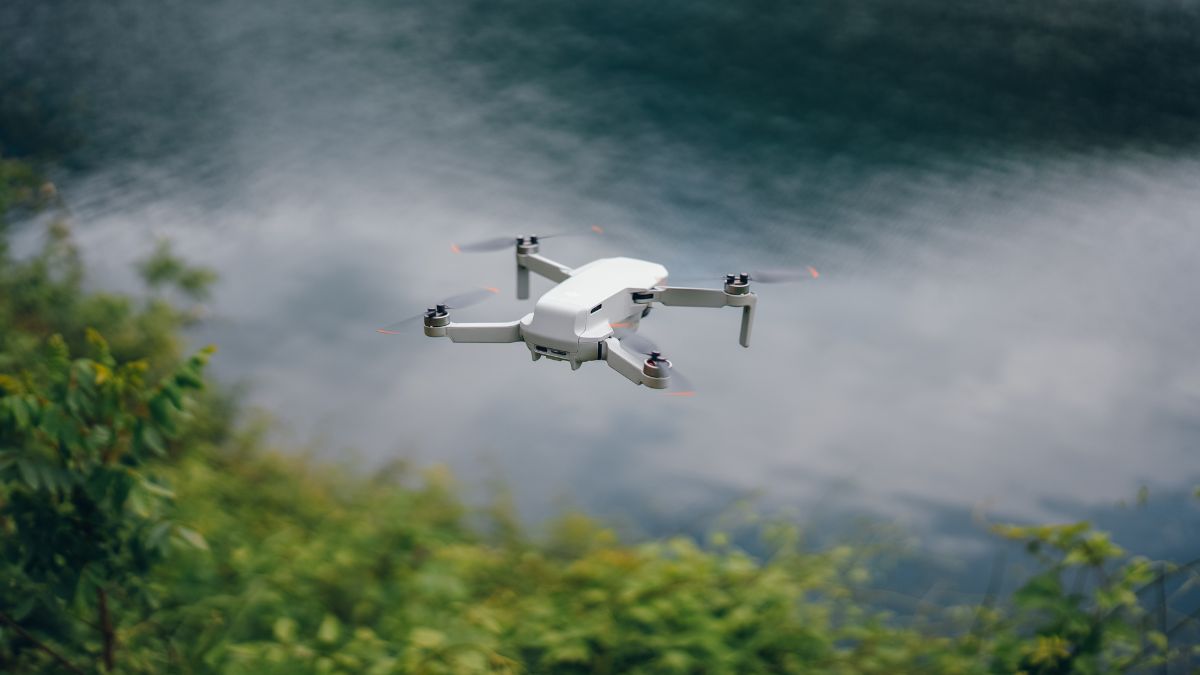
The core expedition materialized when drone specialist Ken Heron piloted his
mobile patrol vehicle on a cross-country transit from Tennessee to inspect the
site firsthand. Operating from the unimproved perimeter of the facility, Heron
launched a DJI ‘Mini 4 Pro’ quadcopter into the desert air to record
comprehensive visual telemetry of the grounds. The low-altitude flight revealed
a barren expanse bordered by cattle fences, a lone windsock, and a solitary
shot-up sedan resting beside the graded threshold.
Heron guided the unmanned aerial vehicle along the entire length of
the 5,652-foot dirt and gravel landing strip to analyze its operational
condition. General aviation pilots routinely conduct touch-and-go maneuvers on
the unpaved surface, enabling them to log landings at the remote coordinates
within their personal flight records. Despite the austere environment, the
corridor remains an active public-use asset that requires continuous maintenance
to avoid reverting to federal jurisdiction under the Bureau of Land Management.
The airfield attained its peculiar designation in July 1994, when astronomical
observatories monitored fragmented debris from Comet Shoemaker-Levy 9 colliding
with Jupiter. Seeking to inject humor into local municipal governance, the Green
River City Council passed a formal resolution designating the strip as an open
refuge for displaced Jovian extraterrestrials. Former Green River mayor George
Eckman drafted the tongue-in-cheek measure, declaring that “so the neighborly
thing to do would be to offer potential Juvians a place to go,” as he later told
Cowboy State Daily.
Anticipating bureaucratic rejection, municipal officials were surprised when the
Federal Aviation Administration formally approved the paperwork and updated
sectional charts to list the ‘Greater Green River Intergalactic Spaceport’. The
federal classification recognized the strip as a legitimate public-use waypoint
on official navigational charts, as documented by Atlas Obscura. Beyond its
satirical origins, the facility has hosted municipal flight events and supported
logistical runway-grading exercises executed by the Wyoming Army National
Guard’s 133rd Engineering Company.
Following an overnight stay coordinated with local law enforcement, Heron
concluded the Wyoming reconnaissance before transporting his equipment westward
toward the Pacific Northwest. During a transit stop along an Oregon highway, the
‘Mini 4 Pro’ was inadvertently left atop the vehicle trunk and fell onto the
roadway pavement at highway speeds. Although vehicular traffic crushed the
lightweight composite airframe, Heron recovered the internal microSD card
intact, successfully retrieving the high-resolution aerial telemetry captured
over Wyoming’s legendary desert strip.