Silverado EV Owner Unhitched His Airstream at Nine Charging Stops
The Chevrolet Silverado EV reportedly handled a 7,500-pound Airstream well, but the charging sites along one owner’s roughly 1,200-mile trip often could not handle the complete 52-foot combination. Reddit user spivenheimer said only two of 11 charging stops let him keep the trailer attached, forcing nine unhitching and rehitching cycles in three days.

The trip from Joshua Tree, California, to Olympia, Washington, exposes a distinction that charger maps do not always communicate: A working plug is not necessarily an accessible plug. For drivers towing long trailers, the site must also provide a usable approach, sufficient turning room, suitable cable reach and an exit path that does not require backing into traffic or blocking other stalls.
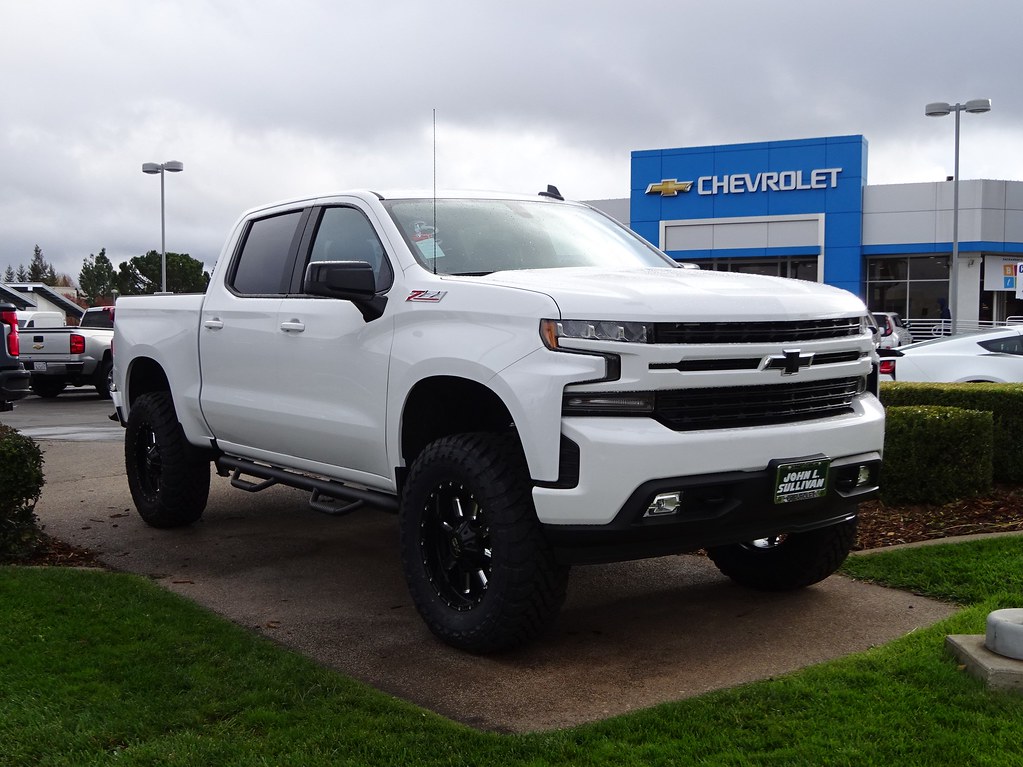
The owner was towing a loaded 31-foot 1979 Airstream Sovereign with a 2025 Chevrolet Silverado EV LT Extended Range. He lives in the trailer full time, making the repeated disconnecting more than an occasional inconvenience. “I travel within the Airstream full time, so wherever I go it goes,” he wrote.
His account separates the truck’s towing behavior from the infrastructure around it. After previously pulling the same Airstream with a 2020 Ford F-150 equipped with a 5.0-liter V8 and a 2022 Silverado 2500 diesel, he said the electric truck “felt as good as the 2500 diesel, and leagues better than the F-150.” That is one owner’s comparison, but it shows why conventional towing specifications alone cannot describe the complete electric-towing experience.
A charger can be available but physically inaccessible
Most fast-charging stalls use parking-space layouts designed for an unhitched passenger vehicle. A truck and travel trailer instead benefit from a pull-through arrangement resembling a fuel island. Even a location advertising many chargers may have only one or two stalls that a connected combination can use, and those stalls may already be occupied when the tow vehicle arrives.
Cable placement adds another constraint. Depending on where the vehicle’s charging port sits, a driver may need to approach from a particular direction or park close to the dispenser. A trailer can prevent that alignment even when the parking area appears spacious. Curbs, overhead clearance, landscaping and one-way traffic paths can further reduce the usable length.
Publishing a charger’s operating status and power level therefore answers only part of the towing driver’s question. Trailer-compatible listings would be more useful if they included the number of pull-through stalls, verified combination-length limits and any restrictions on entry or exit. That information could reduce unnecessary stops and allow drivers to distinguish a genuinely accessible site from one where they must first find a safe place to leave the trailer.
The Silverado EV itself was not operating near its cited maximum trailer weight in this example. A 2025 model towing chart lists the LT Extended Range at up to 12,500 pounds, or 10,500 pounds with the Premium Package. The reported Airstream weighed about 7,500 pounds loaded. Weight capacity, however, does not account for the physical length that charging sites must accommodate.
Conservative charging legs added resilience
The owner said he was comfortable traveling 150 to 160 miles between charges while towing, although he chose shorter legs on this first extended trip. Across approximately 1,200 miles and 11 charging stops, the reported average was about 111 miles per stop. That conservative approach left useful reserve when a nonfunctional Electrify America charger at a Walmart required a reroute.
He reported efficiency of about 1.2 miles per kilowatt-hour, with one logged segment at 1.0 mile per kilowatt-hour, and said public charging cost $362.92. Those figures describe this truck, trailer, route and driving approach; they are not a universal range or cost result. His comparisons with previous gasoline and diesel expenses relied on estimated fuel economy and regional fuel prices rather than matched receipts from equivalent trips.
The account also does not identify every charging location, so another route might have reduced the number of disconnects. Yet the nine reported unhitching cycles illustrate a systems-integration problem that vehicle range alone cannot solve. The Silverado EV could move the owner’s full-time home, but at most stops the charging site could not accept that home and truck as one connected vehicle.
| More aerospace and engineering stories, right in your MSN feed. Follow AMI on MSN |
By Thomas Caldwell — AMI’s senior editor for mechanical and mobility engineering, covering vehicle electronics, systems integration, electrification, chassis systems, propulsion, and safety policy.