Florida Poly Police Add Jetson ONE, but Federal Approval Blocks Missions
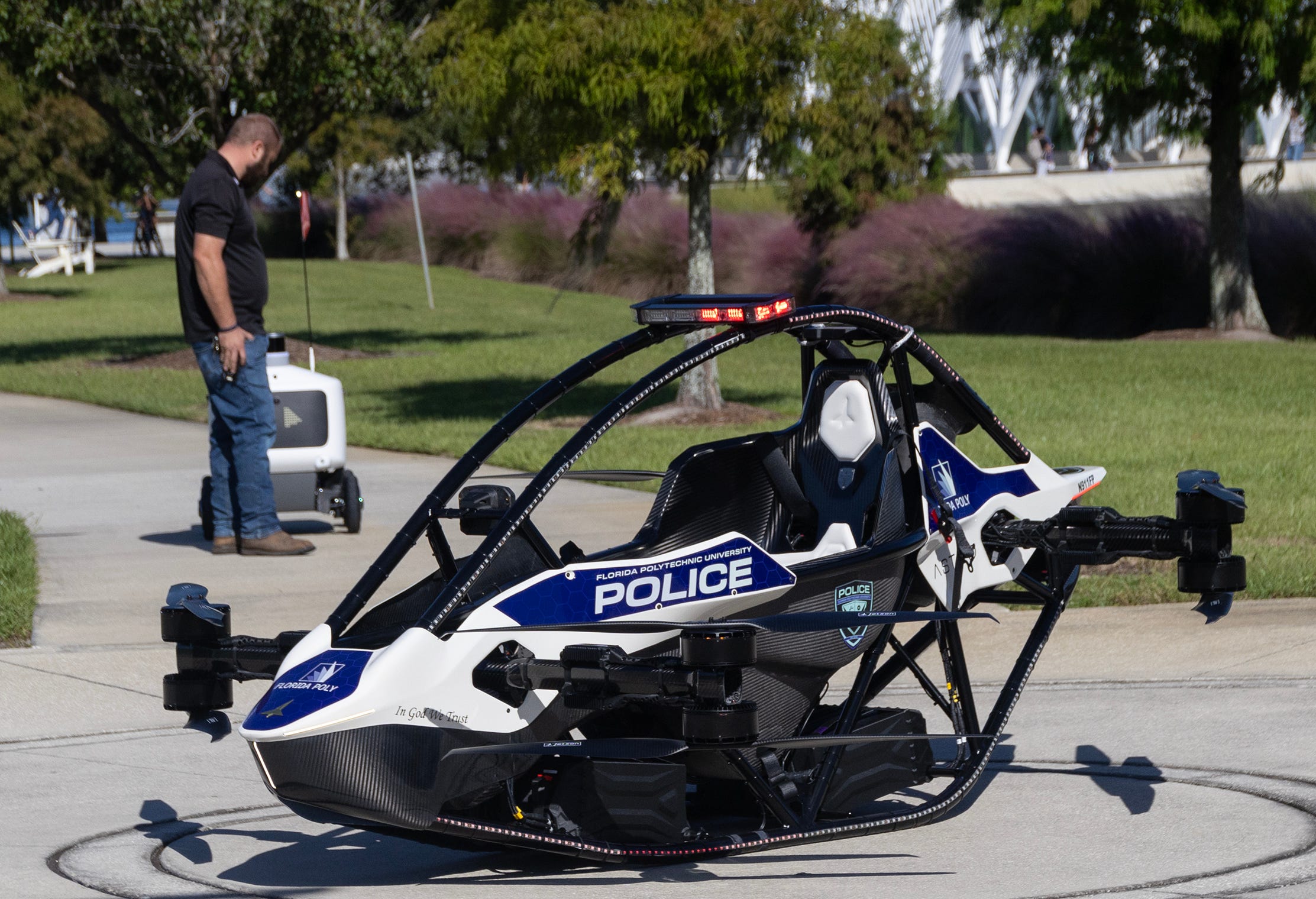
Florida Polytechnic University Police has acquired a Jetson ONE piloted electric aircraft, but the vehicle remains grounded for police missions while the university awaits final Federal Aviation Administration approval. The department has nicknamed the single-seat aircraft “Astro” and described itself as the first U.S. law-enforcement agency to integrate a piloted electric vertical-takeoff and landing vehicle, although acquisition has not yet produced an operational police capability.
The obstacle is rooted in how the Jetson ONE enters the aviation system. Jetson presents the aircraft as an ultralight recreational platform, a category that can operate in the United States without aircraft registration, an airworthiness certificate or a pilot certificate when it meets federal requirements. Those privileges come with strict boundaries: the ultralight rules cover vehicles used only for recreation or sport, not police patrols or other governmental missions.
Moving Astro beyond that recreational framework requires a different federal authorization path. Jetson has said Florida Poly sought approval under the general operating rules commonly known as Part 91, while government agencies also can qualify for public-aircraft operations when they own an aircraft and use it for a governmental function such as law enforcement. Florida Poly has not publicly specified which final route it expects the FAA to approve or when that decision could arrive.
The difference is more than paperwork. The recreational ultralight category limits powered vehicles to one occupant, an empty weight below 254 pounds and a maximum full-power level-flight speed of 55 knots. It also restricts operations over congested areas and between sunset and sunrise. Jetson lists an approximately 20-minute flight time and a single seat, giving Astro a considerably different operating envelope from a conventional police helicopter or from the uncrewed aircraft in Florida Poly’s recently established drone unit.
Police Chief Aaron Murray has outlined several possible uses after approval: monitoring the campus and surrounding property, reaching places that conventional vehicles cannot easily access, supporting operations after hurricanes and other storms, and delivering emergency supplies. The department also wants to explore emergency-response deployments with regional law-enforcement agencies. These remain proposed missions rather than active operations.
Putting an officer aboard creates both a potential advantage and an engineering cost. A pilot at the scene could make immediate observations and decisions without relying entirely on a remote video link. That seat, however, consumes payload capacity and exposes every mission to human-carrying-aircraft requirements that a small uncrewed drone does not face. A roughly 20-minute endurance also makes flight planning, reserve energy and charging availability central constraints rather than secondary details.
Surveillance policy will require attention alongside airworthiness and pilot qualifications. Police aircraft can collect information from a viewpoint unavailable to ground patrols, while civil-liberties organizations have raised concerns about how law-enforcement agencies use aerial sensors and retain collected data. Clear limits on deployment, sensor use, data storage and access would therefore be part of operational readiness, even though Astro carries a pilot rather than operating as a conventional drone.
Florida Poly also plans to use the aircraft as an academic platform. The university launched an aerospace engineering degree program this fall, and faculty members and students are developing ways to incorporate Astro’s flight and operational data into research and senior capstone projects. That work can proceed as a controlled engineering effort while the proposed police role remains pending, giving students access to questions involving propulsion, energy management, flight controls, human factors and airspace integration.
Jetson CEO Stéphan D’haene said the company advanced Florida Poly’s order despite an approximately three-year waiting list because the project supports uses beyond recreation. That decision delivered the hardware early, but it could not remove the regulatory boundary attached to the aircraft’s original operating category.
The project is unfolding as Florida takes part in the FAA’s broader electric-aircraft integration pilot program. That three-year effort is intended to collect operational data, evaluate safety risks and help shape future policy for advanced aircraft. Nearby, the SunTrax facility in Auburndale expects electric vertical-flight testing to begin by the end of 2026.
For Astro, however, the next meaningful milestone is narrower and more immediate: an FAA decision that defines whether and under what operating framework a recreational-origin personal aircraft can become a police vehicle. Until then, Florida Poly owns a flying research platform with proposed public-safety missions, not an active aerial patrol aircraft.
| More aerospace and engineering stories, right in your MSN feed. Follow AMI on MSN |
By Stephen Wallace — Editor for AMI’s aerospace integration and unmanned mobility coverage, focused on drone manufacturing, VTOL systems, autonomous networks, and air-ground mobility links.