Reported Drone Attack Damages Novoshakhtinsk Terminal, Stops Trains Both Ways
A fire at the Novoshakhtinsk oil-loading terminal and damage to a nearby railway bridge disrupted two forms of transport in Russia’s Rostov region after a reported drone attack overnight on October 9-10. Rostov Governor Yuri Slyusar confirmed the fire, bridge damage and suspension of train traffic in both directions, although responsibility for the attack had not been conclusively established.
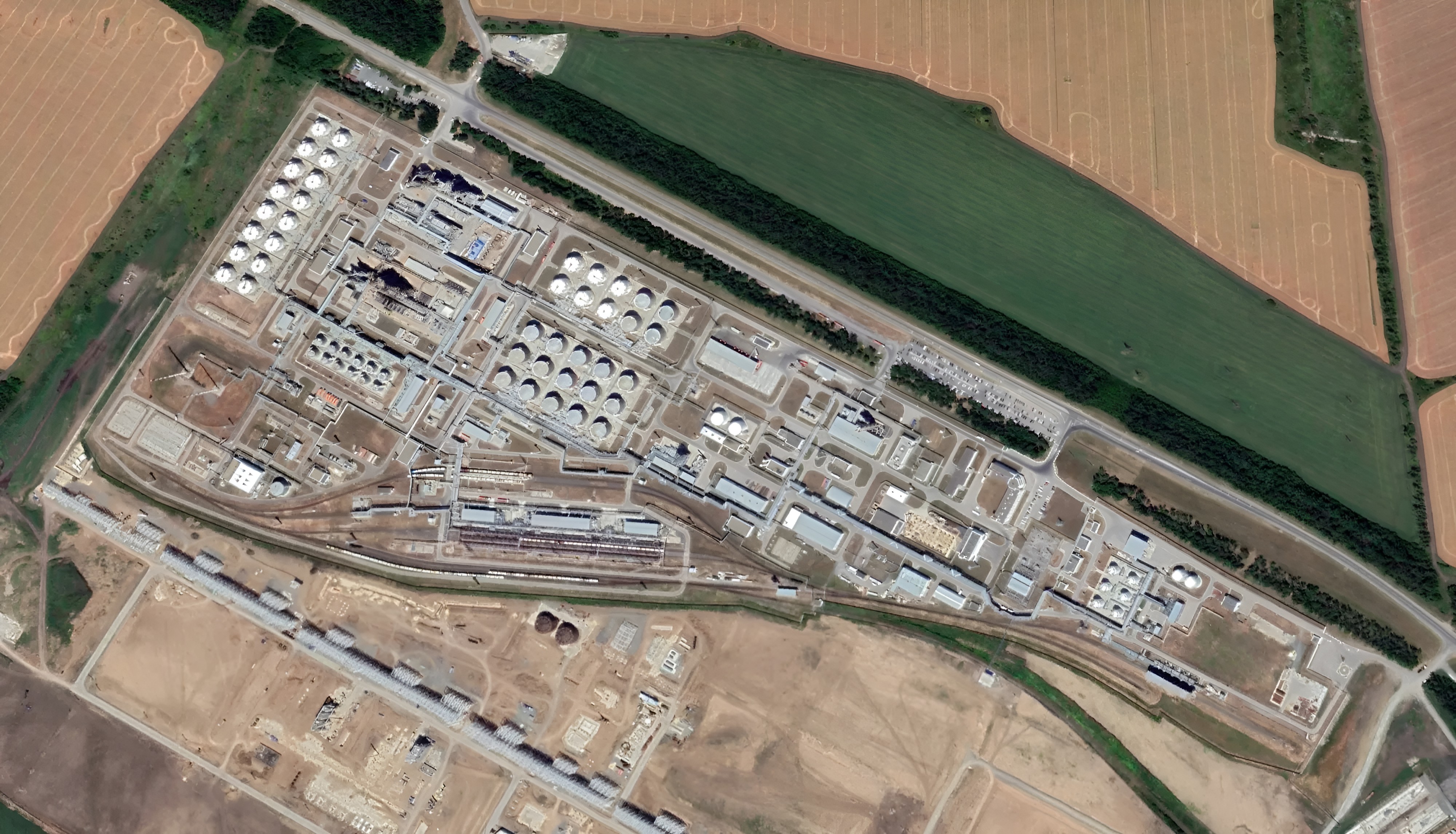
A subsequent satellite-imagery assessment provided a clearer, though not official, indication of the terminal damage. Imagery published by the Exilenova+ monitoring group was assessed as showing damage to at least eight of the facility’s 12 large storage tanks. The estimate sharpens the initial account of a major fire, but it still does not quantify how much petroleum-handling capacity has been taken offline.
Eight damaged tanks do not equal a measured supply loss
The facility, also known as the Yug Rusi terminal, is a transfer and storage site rather than the Novoshakhtinsk refinery’s main processing plant. It receives petroleum products from that refinery and other suppliers before cargo is stored and transferred onward, including for export. The terminal has also been described as supporting Russian military fuel supply.
Published specifications place its designed annual handling capacity at approximately 2.5 million metric tonnes. That figure establishes the terminal’s industrial scale, but it cannot be divided into a daily loss estimate. Design capacity represents a planned or maximum annual handling level, not confirmation of the throughput underway when the fire began.
The number of damaged tanks also leaves several operating variables unresolved. Available accounts do not specify whether all eight tanks became unusable, how much product they contained, or whether pumping, pipeline and loading systems remained functional. Nor is it known whether undamaged sections can operate independently or whether shipments can be redirected through other facilities.
Storage capacity and transfer capacity are related but not interchangeable. A terminal can retain some inventory space yet remain constrained by damaged pumps or loading equipment. Conversely, the loss of several tanks may be partly manageable if unaffected equipment, spare storage or alternative transport arrangements are available. Confirmed shipment volumes, operating restrictions or rerouted cargo would therefore measure the petroleum impact more reliably than either the fire’s size or the terminal’s nameplate capacity.
The rail closure is the clearest immediate disruption
The suspension of rail traffic in both directions is a separate and immediately measurable consequence. Trains assigned to the affected section cannot continue normally until railway authorities reopen the bridge or establish another arrangement. No repair estimate, reopening time or breakdown of affected passenger and freight services was provided.
Rail bridges carry concentrated, repeated loads and depend on close control of structural condition and track alignment. Even apparently limited damage can require an inspection before trains are allowed to return, although authorities have not disclosed the condition of this particular bridge or the work it may need.
The fire and bridge damage occurred within the same broader industrial area, but the available information does not establish a single operational failure chain. It remains unclear whether the bridge directly handles the terminal’s normal petroleum traffic or whether its closure will slow the facility’s recovery. What is confirmed is the simultaneous loss of normal rail movement and damage at a petroleum transfer point.
A large interception claim does not measure protection
Slyusar said regional air defenses had intercepted more than 50 unmanned aircraft since the previous evening. That is an official Russian claim that has not been independently verified, and it does not establish the total number launched, how many reached their intended destinations or what caused each reported instance of damage.
At the systems level, an alert involving dozens of reported aircraft places demands across detection, identification, command and control and emergency response. A region containing railways, industrial terminals and populated areas presents a wider protection problem than any single facility. A high claimed interception count can therefore coincide with fires and transport shutdowns without showing precisely where defenses succeeded or failed.
The Novoshakhtinsk network had already faced earlier reported attacks, including a July incident at an oil-loading terminal and a September event that temporarily suspended refinery operations. Those episodes show recurring pressure on the region’s energy logistics, but they do not determine the duration or capacity effects of the October fire.
The next useful measurements are operational: when trains resume, what repairs the bridge requires, whether the terminal is accepting or dispatching cargo, and how much handling capacity remains unavailable. For now, the eight reportedly damaged tanks indicate substantial physical impact, while the two-way rail suspension remains the clearest confirmed measure of disruption.
| More aerospace and engineering stories, right in your MSN feed. Follow AMI on MSN |
By Stephen Wallace — Editor for AMI’s aerospace integration and unmanned mobility coverage, focused on drone manufacturing, VTOL systems, autonomous networks, and air-ground mobility links.