Two Approvals Delay Air New Zealand’s Six Economy Sleep Pods Past Summer
Air New Zealand’s newest Boeing 787-9 will carry passengers through the Southern Hemisphere summer peak, but without the unusual economy-class sleeping system designed for it. The airline has delayed the December 2026 debut of its six-bunk Skynest into 2027 because two regulatory approvals remain outstanding.
The decision separates the aircraft’s entry into service from the cabin product passengers had expected to use on selected ultra-long-haul flights. Economy and Premium Economy customers will retain conventional seating options, but they will not be able to reserve a lie-flat Skynest session during the peak season. Air New Zealand has not set a replacement launch date.
One overseas certifying authority has been unable to complete its approval on the original schedule because of resource constraints, according to the airline. A separate process involving a local regulator is progressing well. Air New Zealand said it will confirm the launch date once the certification timeline becomes clear.
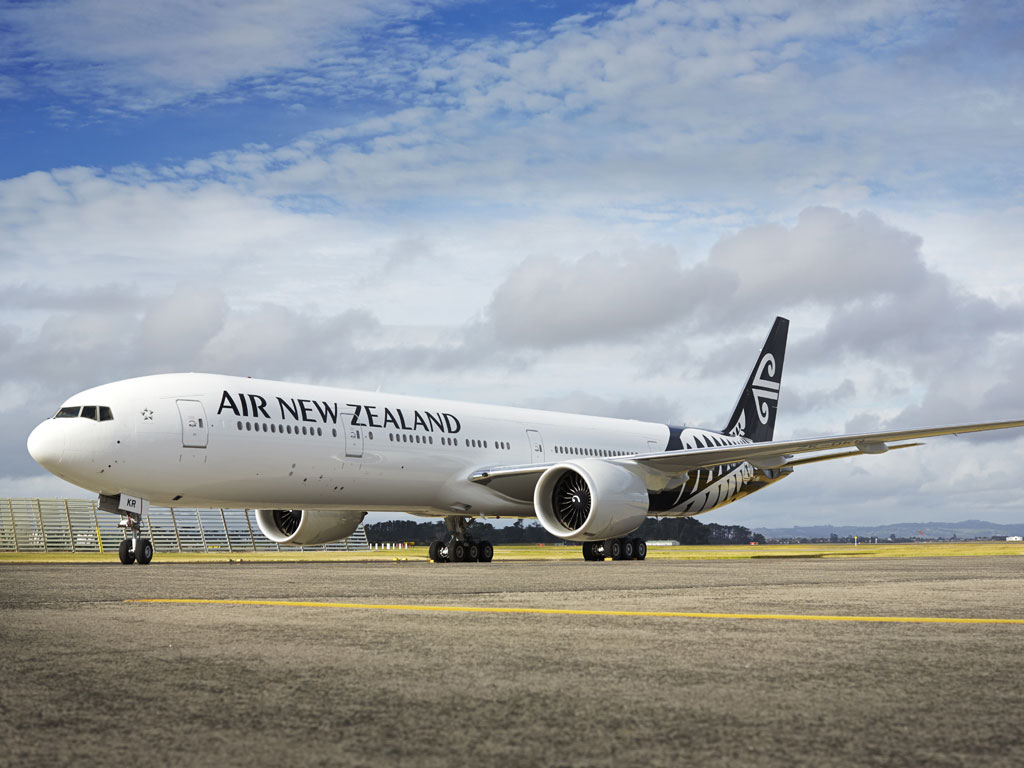
Holding the entire aircraft out of service would have imposed a much larger capacity penalty. The new 787-9, registered ZK-NZT, arrived in Auckland from San Antonio, Texas, on October 29. It is Air New Zealand’s first new Dreamliner delivery since 2019 and has 219 seats: eight Business Premier Luxe, 34 Business Premier, 52 Premium Economy and 125 Economy seats.
“Rather than hold back a brand-new aircraft while the final approvals are completed, we’ve decided to get it flying and bring Skynest onboard after the summer peak,” Air New Zealand Chief Customer and Digital Officer Jeremy O’Brien said.
Why a bed requires more than ordinary cabin approval
Skynest is a compact six-pod sleep zone arranged in three tiers between the Premium Economy and Economy cabins. Each approximately 2.03-metre pod has a mattress, seatbelt and privacy curtain. Passengers would keep their assigned seats and reserve a four-hour session between meal services rather than occupy a bunk throughout the flight.
That operating concept creates a different certification problem from installing another row of seats. A passenger can be asleep, behind a curtain and in a horizontal position when turbulence, decompression or another abnormal condition occurs. Access, restraints, crew monitoring, emergency communication and the passenger’s ability to leave the pod therefore become part of the system rather than secondary comfort details.
Air New Zealand’s customer guidance already reflects some of those human-factors boundaries. Users must be able to enter and leave a pod independently or with help from their own safety assistant. Cabin crew can provide a briefing and conduct checks, but they will not provide lifting or transfer assistance. The lower and middle bunks are generally more accessible than the upper pair.
A previous Federal Aviation Administration special-conditions proposal for a different passenger sleeping compartment illustrates the breadth of issues novel onboard beds can raise. That unrelated Boeing 747-8 installation required consideration of restraints, emergency lighting, oxygen, fire detection, communications and evacuation. It is not the certification basis stated for Skynest, but it shows why a sleeping compartment cannot automatically be assessed as an ordinary seat or cabin monument.
The aircraft can work without the pods
Air New Zealand can defer Skynest because the sleeping zone is a distinct cabin installation rather than a capability needed to operate the Dreamliner. ZK-NZT can therefore begin revenue service while the remaining approvals continue, preserving summer capacity and avoiding an extended period on the ground for a newly delivered aircraft.
The jet also introduces increased maximum take-off weight capability, providing more flexibility to carry passengers, baggage and cargo on long sectors, particularly Auckland–New York. That operational advantage does not give passengers the promised lie-flat economy option, however. The aircraft and its headline cabin feature have reached different points in their approval schedules.
The delay extends an already long development path. Air New Zealand unveiled Skynest in 2020 and initially expected it to enter service in 2024, before Dreamliner delivery delays moved the schedule. A second new 787-9, ZK-NZS, was expected within days of ZK-NZT’s arrival, but the airline’s six bookable bunks will remain unavailable until both outstanding approvals are complete and installation can proceed after the summer peak.
| More aerospace and engineering stories, right in your MSN feed. Follow AMI on MSN |
By Thomas Caldwell — AMI’s senior editor for mechanical and mobility engineering, covering vehicle electronics, systems integration, electrification, chassis systems, propulsion, and safety policy.