Air Force Recovers Starfall Test Cargo From 2,200-Pound Reentry Capsule
The U.S. Air Force Research Laboratory has recovered military-supply test pods that traveled through launch and atmospheric reentry inside a Starfall capsule capable of carrying as much as 2,200 pounds. The recovered hardware gives researchers physical payloads and sensor data from a complete flight experiment not just a capsule design study or a high-altitude drop.
AFRL conducted the Rocket Cargo experiment on Oct. 20 aboard SpaceX’s Falcon 9 Bandwagon-5 rideshare mission from Cape Canaveral Space Force Station. The Starfall capsule later reentered the atmosphere and splashed down in the Pacific Ocean. SpaceX supported the recovery of the laboratory’s cargo pods after splashdown.
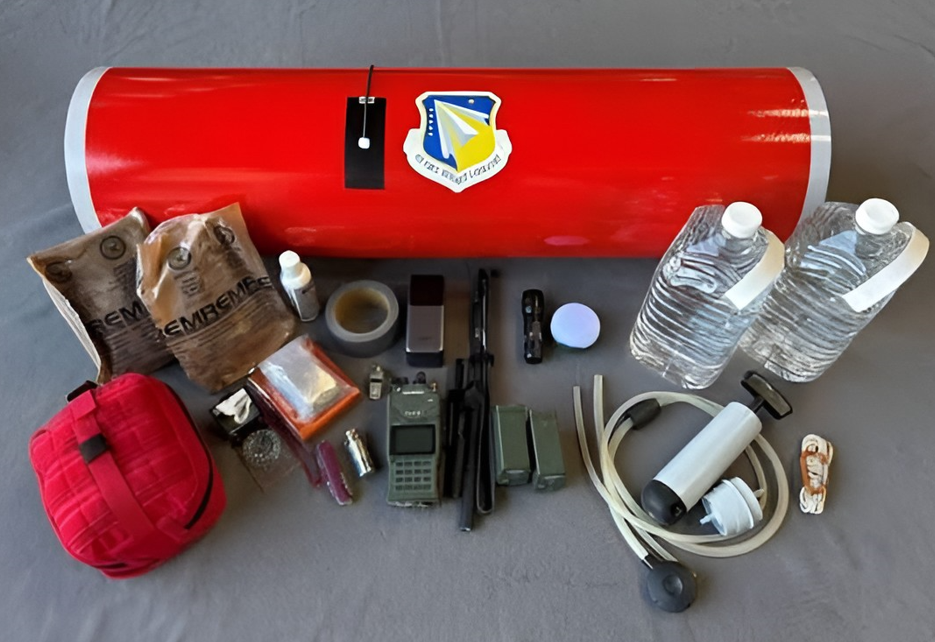
The pods carried representative supplies and equipment rather than a single inert test mass. Listed contents included meals ready to eat, bottled water, spare batteries, survival and medical equipment, a reverse-osmosis desalinator and a tracker with satellite-communications capability. Environmental sensors were installed to measure the temperature, shock and vibration imposed on the cargo during launch and reentry.
Recovery is what turns those payloads into useful engineering evidence. Researchers can compare recorded loads with the condition and performance of the returned equipment, identifying whether packaging, mounting or component selection needs to change. Electronics and batteries can be checked after exposure to vibration and thermal cycling, while survival equipment can be examined for damage that might not be apparent from sensor readings alone.
The experiment also tested AFRL’s agile cargo-pod designs, which are intended to accommodate different loads inside a reentry vehicle. Engineers conducted a fit check with a UNI-PAC III life raft for possible use on a future test. A successful fit does not demonstrate that the raft can withstand flight, but it helps establish whether the capsule’s internal volume and pod arrangement can accept larger, awkwardly shaped equipment.
How the Starfall capsule returns cargo
Starfall is described as a puck-shaped capsule approximately 10 feet across. Its carbon-fiber heat shield protects the vehicle and payload during atmospheric reentry, when aerodynamic heating becomes the dominant environmental challenge. Compressed-gas thrusters control the capsule’s attitude in flight, and parachutes reduce its descent speed before splashdown.
That architecture divides the return problem into distinct jobs: thermal protection for reentry, attitude control to keep the capsule properly oriented and parachutes for terminal descent. The recovered pods allow AFRL to assess the combined cargo environment produced by all those stages rather than evaluating each system only in isolation.
The capsule also illustrates the appeal of separable cargo vehicles. A commercial rocket can provide the energy required for launch, while a smaller return capsule handles atmospheric entry and recovery. Rideshare missions can support experiments without requiring the cargo program to procure an entire dedicated launch, although an operational point-to-point service would involve different scheduling, destination and recovery demands.
A completed test, not an operational delivery service
The flight advanced AFRL’s Rocket Cargo research, but it did not demonstrate routine delivery to a remote destination. The capsule returned to a planned Pacific splashdown area, and the payloads were recovered with SpaceX support. Operational logistics would also require repeatable launch preparation, destination planning, cargo handling and reliable recovery or unloading under the conditions expected at the receiving location.
Capacity is the clearest unresolved issue. Starfall can carry up to 2,200 pounds, or a little more than one ton. The broader Rocket Cargo concept has discussed moving tens of tons per launch, a scale that would depend on much larger launch systems such as SpaceX’s still-developing Starship. This experiment did not demonstrate that larger capacity.
Other companies are pursuing smaller cargo-return vehicles as well. Sierra Space, for example, is developing its Ghost reentry vehicle and has conducted drop tests from 35,000 and 68,500 feet. Those tests can develop descent and recovery systems, but an orbital-class launch and atmospheric reentry expose cargo to a more complete sequence of thermal and mechanical loads.
Starfall has now supplied AFRL with something more concrete than a projected logistics capability: returned equipment that experienced launch, spaceflight and reentry. The next engineering challenge is converting those measurements and inspections into repeatable cargo standards and determining whether an architecture demonstrated at 2,200 pounds can grow toward a requirement measured in tens of tons.
| More aerospace and engineering stories, right in your MSN feed. Follow AMI on MSN |
By David Whitaker — Associate editor for AMI’s aerospace and drone systems desk, translating flight systems, aircraft programs, spaceflight, and UAV developments into accessible technical stories.