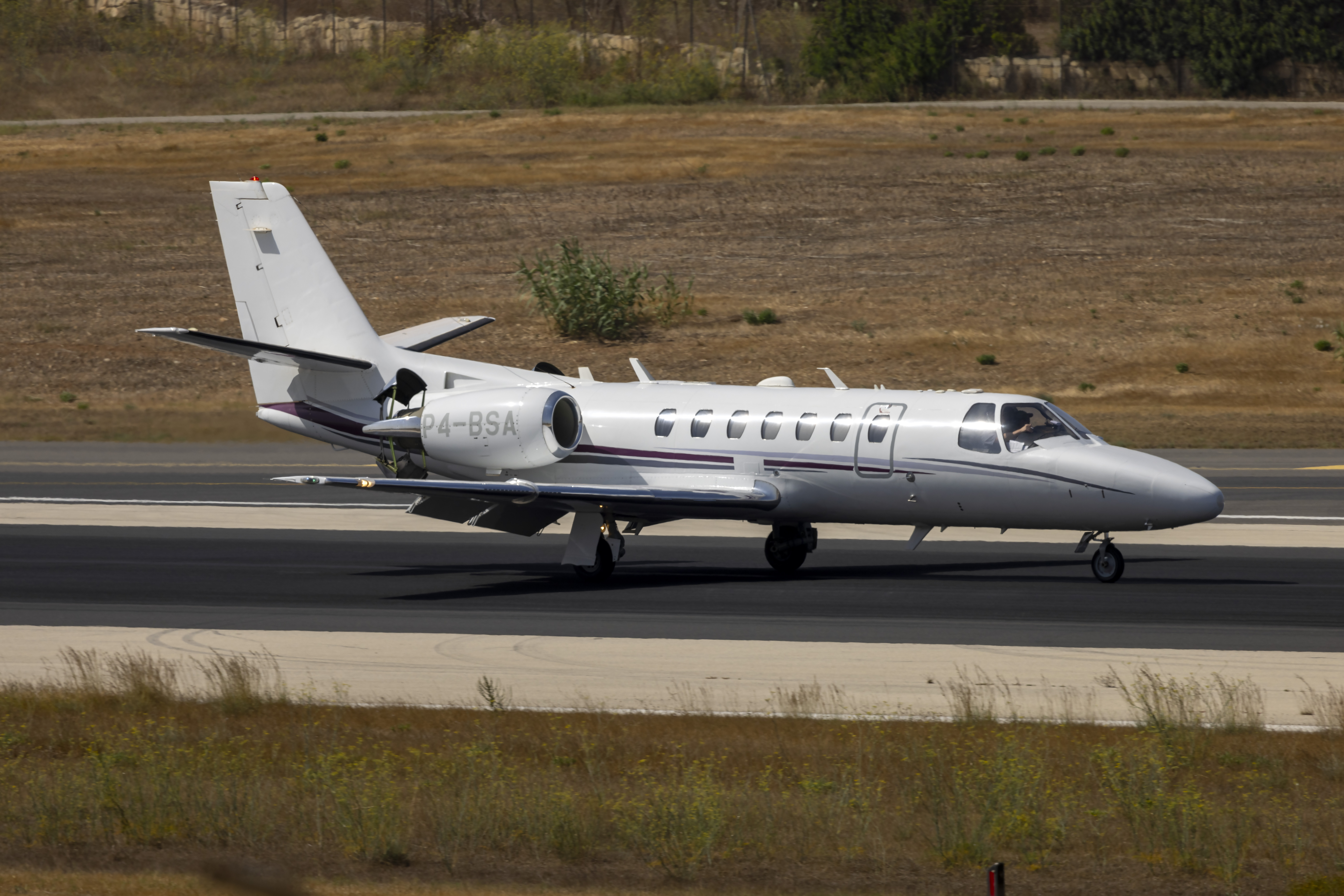
Justice Department Seeks Deer Jet Gulfstream After Alleged Six-Day Tehran Stay
The Justice Department is seeking permanent ownership of Deer Jet’s seized Gulfstream G550 after alleging that the Chinese-registered aircraft spent approximately six days in Tehran without the required U.S. authorization. The October 28 forfeiture complaint begins a process that Deer Jet and other interested parties may contest; no final forfeiture judgment or criminal charge against the owner has been announced.

The aircraft’s foreign registration and foreign-to-foreign itinerary are central to the case. The government argues that the 2012 business jet remains covered by U.S. sanctions and export controls because it was manufactured in the United States, including in Long Beach, California. If that position prevails, the practical consequence is significant: moving an American-made aircraft between two foreign countries can expose the asset itself to seizure and permanent loss under U.S. law.
The flight behind the complaint
Investigators allege that the Gulfstream departed Beijing on December 13, 2024, flew to Tehran and remained there until December 19. According to the complaint, the Treasury Department’s Office of Foreign Assets Control did not issue a license allowing it to remain in Iran for longer than 72 hours. The alleged six-day stay was roughly twice that stated limit.
Prosecutors also allege that the Commerce Department’s Bureau of Industry and Security did not authorize the aircraft’s reexport from China to Iran. Those are related but distinct parts of the government’s theory: Treasury administers Iran sanctions and licensing, while Commerce maintains export and reexport restrictions covering controlled U.S.-origin goods.
The complaint does not identify the passengers, disclose the purpose of the Tehran visit or establish whether Chinese or Iranian officials were aboard. Its case against the aircraft instead turns on the alleged movement and duration of the stay, the absence of claimed authorizations and the jet’s U.S. manufacturing origin.
Why Chinese registration did not end the U.S. connection
Aircraft registration identifies the national registry under which an aircraft operates, but it does not necessarily remove restrictions attached to the aircraft’s origin or controlled content. In this case, federal officials are treating the Gulfstream as a U.S.-manufactured item whose later reexport remained subject to American controls.
That creates a compliance boundary extending beyond a conventional export from an American airport. Foreign owners and operators of U.S.-built aircraft must account for destination restrictions when planning later international movements, even when the aircraft is already registered and based abroad. The tradeoff is broad regulatory reach intended to preserve sanctions enforcement, paired with a substantial compliance burden for operators working across multiple jurisdictions.
The 72-hour threshold also shows why operational details can carry legal consequences disproportionate to their apparent size. A temporary visit may fit within a specified authorization only while all applicable conditions are met. The government alleges that the G550 crossed that boundary by remaining in Iran for about three additional days. The claimed violation is therefore tied to elapsed time and authorization status rather than an allegation about who traveled aboard or why.
Seizure and forfeiture are separate stages
Federal officers seized the Gulfstream under a warrant when it landed in Anchorage, Alaska, on May 24, 2026. The aircraft was subsequently placed in FBI custody in Virginia while prosecutors pursued forfeiture proceedings in California. Physical custody prevents the aircraft from leaving while the government asks a court to transfer ownership permanently.
The complaint itself does not complete that transfer. Interested parties are entitled to notice and an opportunity to challenge the requested forfeiture, and the government must establish that the property is legally forfeitable. Deer Jet may therefore dispute the allegations, the legal basis for forfeiture or the claimed connection between the aircraft and the violations.
The Justice Department has used the same broad enforcement architecture in other aviation cases. It previously filed a forfeiture complaint involving a Dassault Falcon 900EX over alleged sanctions and export-control violations, and it sought forfeiture of Boeing 737 landing gear valued at $1.55 million after authorities alleged an attempted prohibited transfer. These proceedings show that enforcement can follow either an entire aircraft or a major aircraft component, depending on what property is connected to the alleged transaction.
For the Deer Jet Gulfstream, the next decisive step is judicial rather than operational. The FBI already holds the aircraft, but permanent U.S. ownership depends on what the government can prove in the forfeiture proceeding and on whether Deer Jet or another interested party mounts a challenge.
| More aerospace and engineering stories, right in your MSN feed. Follow AMI on MSN |
By Thomas Caldwell — AMI’s senior editor for mechanical and mobility engineering, covering vehicle electronics, systems integration, electrification, chassis systems, propulsion, and safety policy.