NASA Restores Voyager 1 Contact After Offline Thruster Group Triggers Backup Switch
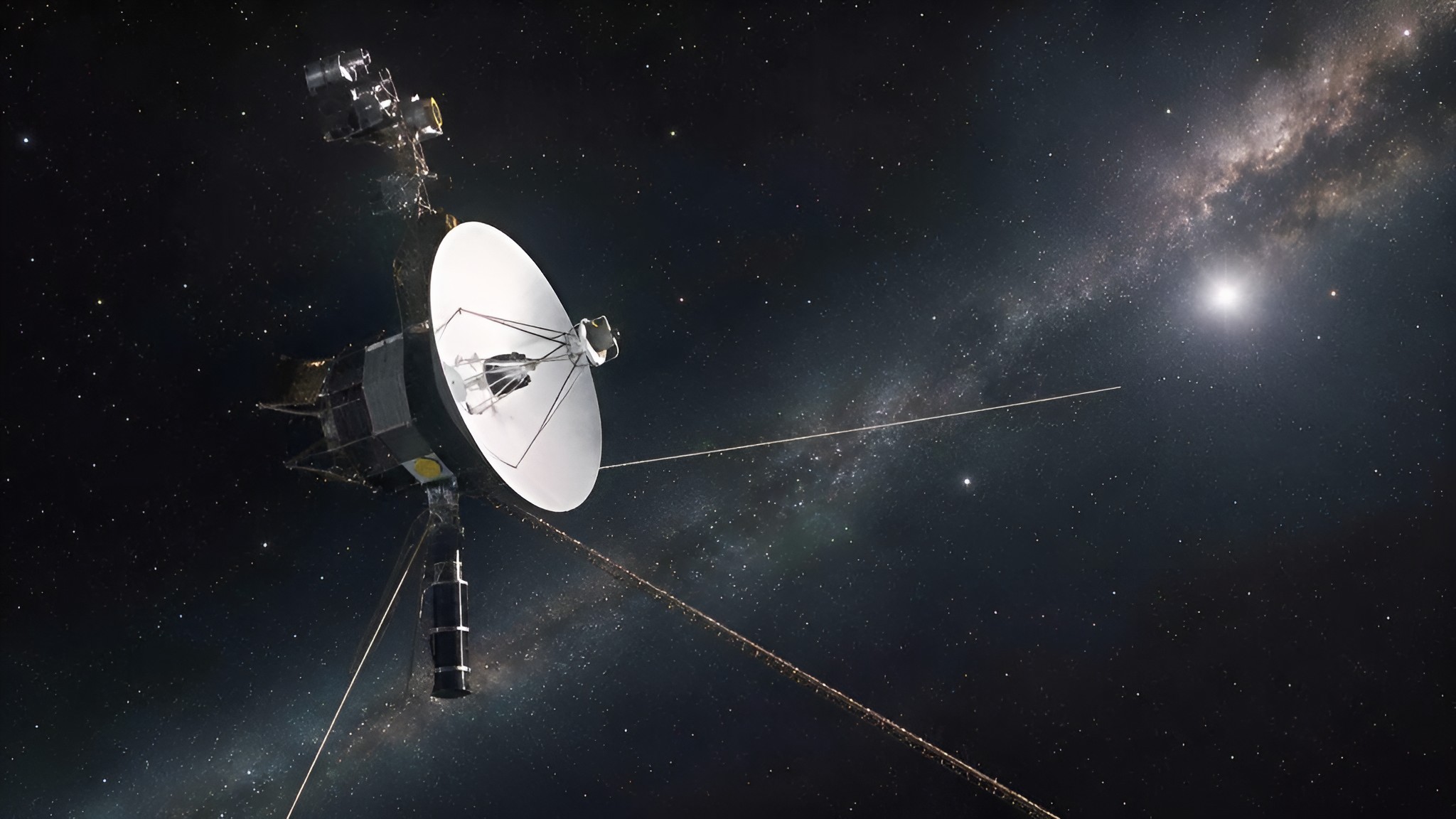
NASA has restored contact with Voyager 1 after an offline thruster group prompted the nearly five-decade-old spacecraft to switch automatically to backup thrusters. The probe’s signal returned on October 20, 2026, following two scheduled communications attempts during which NASA’s Deep Space Network could not detect it.
Engineers found that one group of thrusters had gone offline, activating Voyager 1’s onboard fault-protection system. The spacecraft paused normal operations, moved into a stable configuration and transferred control to a backup thruster set. NASA is now investigating why the original group went offline; the mission team has not yet identified an explanation.
“This is the first time we’ve seen the spacecraft do something like this, but we are also at a point in the mission where we have to expect the unexpected,” Voyager mission manager Kareem Badaruddin said. “We’re relieved to be back in contact with Voyager 1 and are eager to understand what happened.”
Backup hardware bought engineers time
The response illustrates the purpose of fault protection on an unserviceable spacecraft. Voyager 1 could not wait for ground controllers to assess the loss of communications and then issue an immediate correction. Its computers instead placed the probe in a condition intended to remain stable while the team on Earth worked through the problem.
That autonomy is especially important at Voyager 1’s distance. The probe, identified as the farthest human-made object, is expected to be 16.09 billion miles from Earth on November 18. At that distance, it will be one light-day away: a radio command needs about a day to arrive, and a response needs another day to return.
“If you want to say ‘hello’ to Voyager, you send your message and then you go home and you wait two days before you finally get a response,” project manager Suzanne Dodd said.
The delay turns even a basic troubleshooting exchange into a multiday procedure. Controllers must prepare commands with limited opportunities for rapid correction, while the spacecraft must keep itself pointed, powered and thermally controlled without real-time assistance. In this case, the backup thrusters and stable operating configuration preserved that margin until communications resumed.
Power is the other tightening constraint
Redundancy can keep Voyager 1 operating only while the spacecraft has enough electricity to run essential hardware. Its radioisotope thermoelectric generators convert heat from decaying plutonium-238 into electrical power using thermocouples and have no moving parts that can wear out. NASA says the Voyager generation of these units produced 158 watts each at the beginning of the mission.
Available electrical power nevertheless declines as the fuel decays and the conversion system ages. Voyager 1 is losing roughly 4 watts annually, forcing engineers to decide which heaters, instruments and supporting systems can remain active. Science instruments have already been switched off to conserve power.
In early September 2026, the team simultaneously replaced three warming devices with three lower-power alternatives in an operation nicknamed the “Big Bang.” Voyager 2 underwent a similar change about six weeks earlier. The Voyager team hopes those savings will delay another science-instrument shutdown that otherwise could be required as early as summer 2027.
The power work and the October communications interruption expose two different limits of an aging deep-space platform. Backup components can absorb a hardware anomaly, but every additional load competes for a shrinking electrical supply. Fault protection can preserve the spacecraft during an unexpected event, but controllers still face a roughly two-day command and response cycle when diagnosing what happened.
Voyager 1 launched on September 5, 1977, originally carrying 10 dedicated science instruments. It and Voyager 2 are now beyond the heliosphere in interstellar space, the only human spacecraft reported to have directly reached that region. Voyager 1 remains in contact on its backup thrusters, but explaining why the primary thruster group went offline is now the next engineering task.
| More aerospace and engineering stories, right in your MSN feed. Follow AMI on MSN |
By David Whitaker — Associate editor for AMI’s aerospace and drone systems desk, translating flight systems, aircraft programs, spaceflight, and UAV developments into accessible technical stories.