Tesla Expands Device Power in U.S., Mexico; Canadian Model 3, Y Excluded
Tesla has widened access to one of an electric vehicle’s most practical secondary functions, but the rollout stops at a conspicuous market boundary. New Teslas in the United States and Mexico can use their traction batteries to power external devices through Powershare, while Canadian Model 3 and Model Y vehicles remain excluded with no announced arrival date.
The company announced the broader availability on October 27, saying every new Tesla could power tools or gadgets. Tesla subsequently defined the geographic scope as the United States and Mexico and said owners need its Mobile Connector and Outlet Adapter. The adapter connects through the vehicle’s charging port, turning stored battery energy into usable power for compatible external equipment.
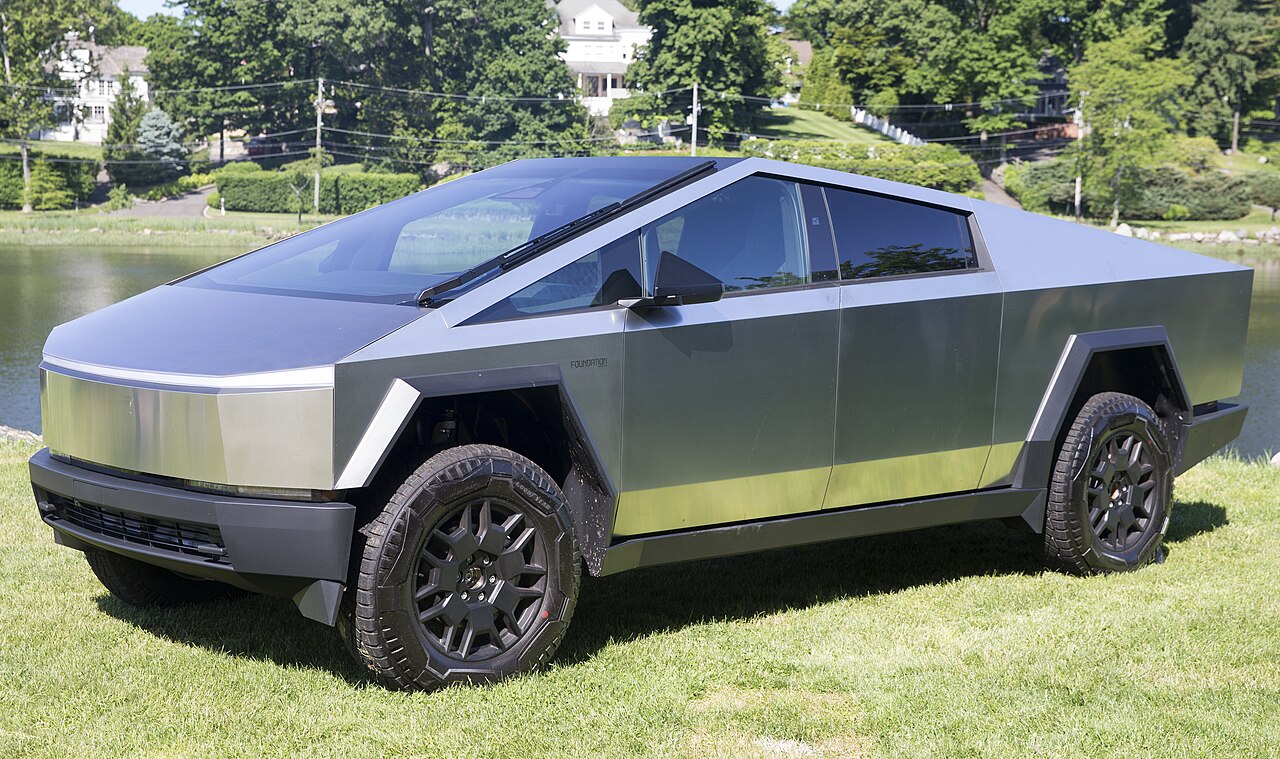
For U.S. buyers, the latest announcement builds on an October 6 expansion covering the Model 3 and Model Y. Tesla’s support information lists Model 3 and Model Y vehicles ordered in the United States and Puerto Rico after October 1, 2026, as Powershare-capable. All Cybertruck trims are also listed as supporting the system.
Device power and home backup are different systems
The basic Powershare function is vehicle-to-load power: energy flows from the battery to tools, gadgets or other electrical loads. This gives the vehicle a role similar to a portable battery when it is parked, although the available connections and supported equipment determine what an owner can operate.
Home backup adds another layer. Tesla says a compatible vehicle in the United States can power a home when paired with Powerwall 3. That is not equivalent to plugging a device into an outlet adapter. A home installation must coordinate the vehicle, charging equipment, power conversion, controls and the building’s electrical system.
That separation is important because bidirectional energy systems are evaluated as more than a single vehicle feature. As Intertek’s overview of bidirectional charging standards explains, SAE J3072 addresses onboard grid-support inverter functionality and communication with charging equipment. UL 9741 covers the safety of off-board bidirectional charging equipment, while UL 1741 Supplement SC addresses grid-interactive equipment used with compatible vehicle inverters.
In practical terms, powering a standalone tool is a narrower task than supplying a residence or operating alongside an electrical grid. The latter functions introduce additional requirements involving backfeed protection, abnormal operating conditions, communication, authorization and grid interaction. Consequently, Tesla’s U.S. statement about Powerwall 3 should not be read as a promise that the same home-backup arrangement is available wherever adapter-based Powershare reaches vehicles.
Canada remains the unresolved part of the rollout
Canadian Model 3 and Model Y vehicles currently lack vehicle-to-load capability, even though both models were briefly advertised there with the feature. Tesla has not announced a Canadian launch date or explained why these vehicles remain outside the expanded availability.
The gap is vehicle- and market-specific rather than a complete absence of vehicle-to-load technology in Canada. Cybertruck and several electric vehicles from other manufacturers already offer external-power capability in the country. Their availability does not identify the reason for Tesla’s Model 3 and Model Y delay, but it shows that the Canadian market can support the general function.
Hardware configuration, software enablement, accessory support and certification all can affect a bidirectional-power rollout, but Tesla has not identified which factor applies here. That leaves Canadian owners without a firm technical explanation, despite the capability now extending across Tesla’s new-vehicle range in two neighboring North American markets.
The expansion makes Tesla batteries more useful when their vehicles are parked, particularly for owners who need portable power away from a conventional outlet. For Canadian Model 3 and Model Y buyers, however, the defining detail is still an omission: the feature was briefly advertised, is operating elsewhere in North America, and has no announced Canadian delivery date.
| More aerospace and engineering stories, right in your MSN feed. Follow AMI on MSN |
By Thomas Caldwell — AMI’s senior editor for mechanical and mobility engineering, covering vehicle electronics, systems integration, electrification, chassis systems, propulsion, and safety policy.