U.S. Plans Early $3.8 Billion Aid Cutoff, Putting Israel’s Arms Purchases at Risk
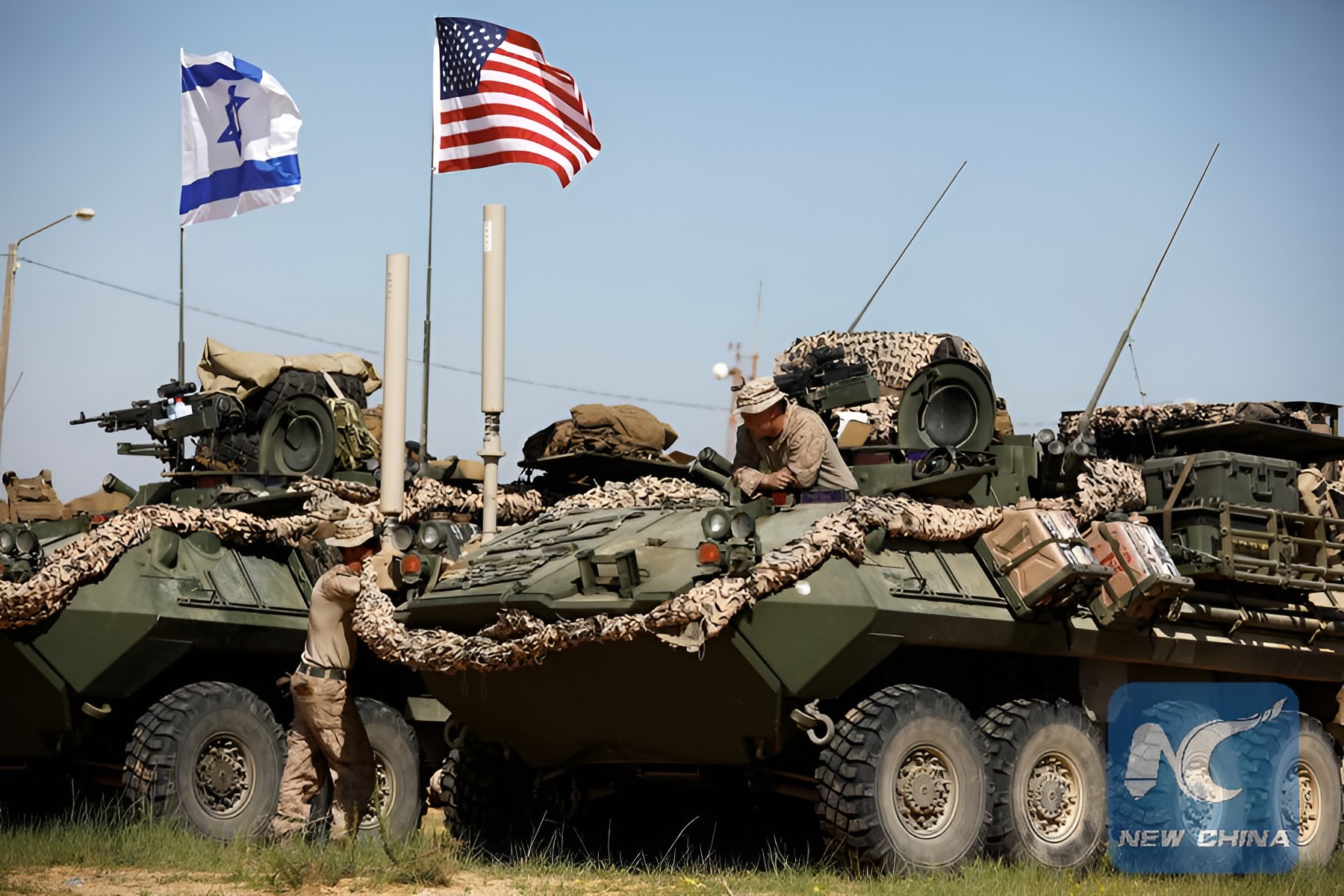
Israel was preparing to reduce its dependence on U.S. military assistance gradually. It may now have to absorb the cost in a matter of weeks. President Donald Trump announced on November 3 that nearly $4 billion in annual military aid would end by the close of 2026, almost two years before the current agreement expires. Implementation remains uncertain, but an early cutoff would force Israel to self-fund, delay, stretch out or cancel purchases of American aircraft, munitions and other defense equipment.
The existing 10-year arrangement runs through September 2028 and provides $3.8 billion annually. According to the U.S. State Department’s description of the program, that consists of $3.3 billion in foreign military financing and $500 million for cooperative missile-defense programs. Israeli finance, defense and military officials were reportedly caught off guard by the announced timetable.
An aid cutoff would become a budget problem first
The immediate constraint is not whether Israel can operate American-built equipment without U.S. assistance. It is whether the government can replace the financing behind planned acquisitions while meeting its other spending commitments. Nearly all of the foreign military financing is used to purchase U.S.-made weapons, making the aid package both an Israeli defense resource and a substantial channel of demand for American manufacturers.
Israel’s defense budget is already under pressure. The Knesset approved a record NIS 143 billion defense allocation in March, equal to about 17 percent of the total spending bill. The Finance Ministry subsequently agreed to transfer another NIS 15 billion in July, while defense officials still report an NIS 40 billion deficit.
Replacing $3.8 billion every year would therefore require more than moving money within a procurement account. The cost could fall on Israeli taxpayers, come from reductions elsewhere in the national budget or be absorbed by the defense establishment through fewer and slower purchases. Israel has already demonstrated the civilian tradeoff: a separate October decision redirected NIS 2.6 billion from civilian ministries toward urgent defense procurement.
Aircraft programs carry long funding tails
The Israeli Air Force depends heavily on U.S.-built F-15, F-16 and F-35 fighters, along with KC-46 refueling aircraft and other platforms. These are not one-time purchases that can be cleanly switched on or off. Aircraft acquisitions bring multiyear payment schedules, training, support equipment, spares and continuing maintenance requirements. Ending the grant funding early would compel officials to distinguish between commitments that must be preserved and planned additions that can be deferred.
The scale of that procurement relationship makes a quick reset difficult. As of April 2025, the United States had 751 active Foreign Military Sales cases with Israel valued at $39.2 billion. Priority programs included F-35 fighters, CH-53K heavy-lift helicopters, KC-46 tankers and precision-guided munitions. Israel also buys U.S. equipment with its own funds, but replacing the annual grant would increase the domestic cost of maintaining the same acquisition pace.
Stretching contracts across more years could reduce near-term pressure, although it would also delay deliveries and extend the period before a planned fleet reaches its intended size. Canceling purchases would offer more immediate savings but could carry contractual and fleet-planning consequences. Seeking cheaper substitutes may work for some categories of equipment; replacing deeply established aircraft families and their support systems is a much larger industrial and operational change.
Missile defense faces a different constraint
The remaining $500 million is tied to cooperative missile-defense programs rather than the standard foreign military financing account. Its loss could affect joint Israeli-American research, development and production. That creates a different problem from postponing an aircraft order: slowing a jointly developed program can disrupt work shared between two countries and their industrial bases, not merely reduce the number of systems purchased in one budget year.
Domestic production offers Israel a partial hedge. The country has increasingly directed munitions work to local suppliers, and an aid reduction could accelerate that shift. Yet the current agreement has been moving in the opposite direction by phasing out Israel’s special authority to spend part of its U.S. financing on Israeli-origin equipment. Building additional local capacity would require domestic capital, facilities, workers and firm orders; it would not replace billions of dollars in financing immediately.
Israeli and U.S. representatives began talks in June on a successor framework intended to “gradually transition from aid to a completely reciprocal partnership,” according to Israel’s Defense Ministry. Prime Minister Benjamin Netanyahu had likewise discussed ending assistance over roughly a decade. The announced 2026 deadline compresses that transition into a much shorter period.
Until the cutoff is implemented, the existing agreement remains the planning baseline. Procurement officials must nevertheless begin sorting programs by urgency, contractual exposure and availability of domestic financing. The central choice is now concrete: Israel can replace the American funding, spread purchases over longer schedules, or accept that some aircraft, munitions and joint missile-defense work will not proceed as planned.
| More aerospace and engineering stories, right in your MSN feed. Follow AMI on MSN |
By David Whitaker — Associate editor for AMI’s aerospace and drone systems desk, translating flight systems, aircraft programs, spaceflight, and UAV developments into accessible technical stories.