Learjet 60 Elevator Found 3.8 Miles From Fatal Florida Crash
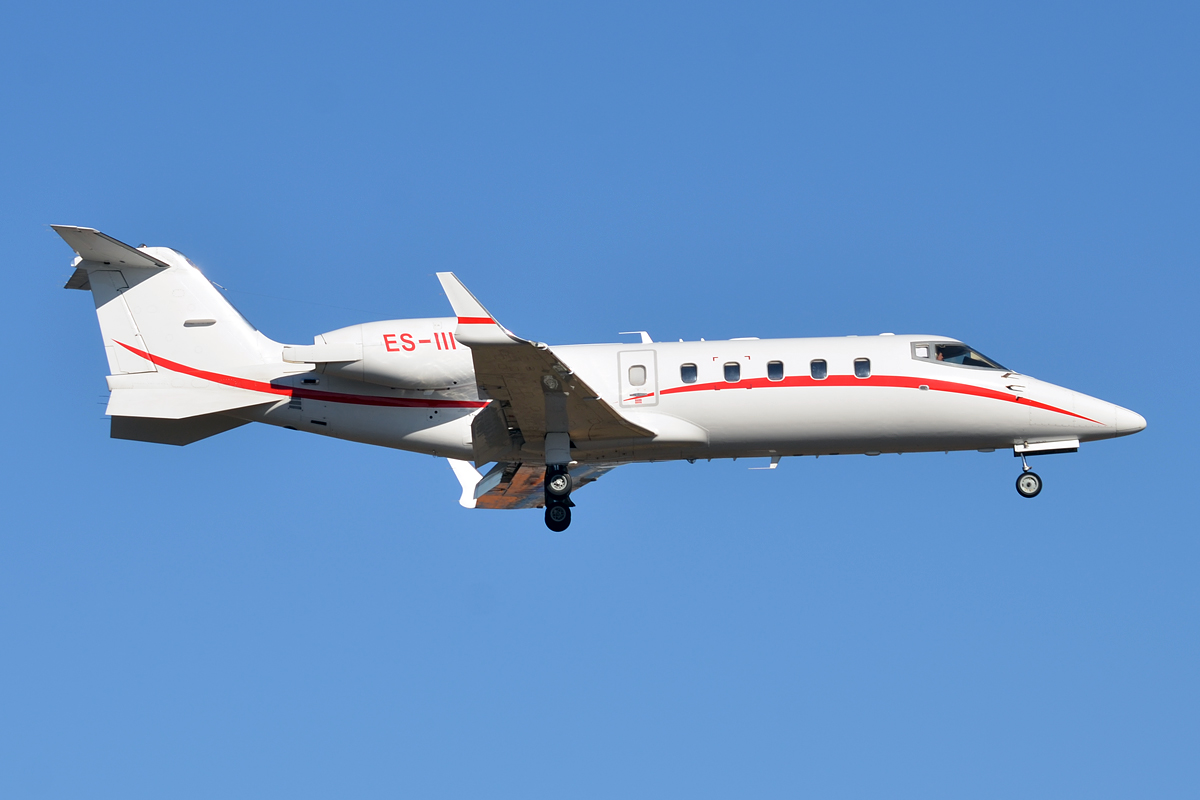
A key pitch-control surface from a Learjet 60 was recovered in three pieces as far as 3.8 miles from the site where the private jet crashed in Palm Beach County, Florida, killing all nine people aboard. The debris field indicates that the left tail elevator likely separated before impact, giving investigators important physical evidence but not yet an answer to what initiated the aircraft’s rapid descent.

National Transportation Safety Board member Thomas B. Chapman called the elevator a “very important piece of evidence.” Pieces were found between 1.3 and 3.8 miles from the impact site, a distribution that investigators will compare with flight data, weather information and the condition of the recovered wreckage. The central question is whether losing the elevator contributed to the crash or whether forces already acting on the Learjet tore it away.
Why the elevator matters
An elevator is a movable surface on the horizontal tail that helps control pitch the aircraft’s nose-up or nose-down attitude. Its position changes the aerodynamic force produced by the tail, allowing pilots and the flight-control system to command changes in pitch. Chapman said that without the elevator intact, the crew would not have been able to pull the Learjet out of its nosedive, although he also cautioned that the surface might not have remained effective at the speeds involved.
The separation location supplies part of the sequence. A component found miles from the main crater did not remain attached through ground impact. Its distance from the crater can also help investigators estimate when it came away, although that analysis must account for altitude, speed, wind and the component’s shape as it fell.
Former NTSB investigator Greg Feith interpreted the scattered elevator debris as evidence of an in-flight breakup. He proposed that an apparent brief leveling near 8,000 feet could represent a pilot trying to regain control, potentially placing enough load on the structure to cause parts to fail. Feith also noted that the pieces were relatively close to the impact area, which in his assessment points to separation at low altitude.
That proposed overstress sequence is an expert hypothesis, not an NTSB finding. Investigators will examine fracture surfaces and other physical traces to determine how the parts separated and whether there were signs of an earlier weakness or a high-load failure during the descent. The position of other wreckage will be needed to establish whether multiple components departed together or in a sequence.
Weather and missing evidence remain central
The Learjet departed Austin-Bergstrom International Airport at about 10:37 a.m. for North Eleuthera Airport in the Bahamas. It crashed shortly before 1 p.m. in Palm Beach County. The seven passengers, captain and copilot were killed.
Before the rapid loss of altitude, the crew reported icing and moderate turbulence at approximately 35,000 feet. Federal investigators have identified weather as a major focus of the inquiry. The Federal Aviation Administration’s icing guidance explains the broader aerodynamic and control hazards associated with ice, but the crew’s report alone does not determine what upset this aircraft. Investigators must correlate the weather encountered by the jet with its flight path, control response and recovered components.
A cockpit voice recorder could help reconstruct what the crew experienced and how the aircraft’s systems behaved. Records indicated that the Learjet was equipped with one, but investigators had not recovered it and could not confirm that it was aboard for the flight. Sounds, alerts and crew discussion could become significant if the recorder is found and its data survived.
Access to the impact crater was also being delayed by utility work, leaving investigators without some potentially critical wreckage. Until the crater is examined, the recovered elevator establishes one consequential fact: a major pitch-control component left the Learjet before impact. Determining whether that separation began the fatal sequence or occurred during an already uncontrolled descent will require the fracture evidence, the remaining wreckage and a fuller reconstruction of the jet’s final minutes.
| More aerospace and engineering stories, right in your MSN feed. Follow AMI on MSN |
By David Whitaker — Associate editor for AMI’s aerospace and drone systems desk, translating flight systems, aircraft programs, spaceflight, and UAV developments into accessible technical stories.