Schaeffler Will Close Five European Sites and Cut 3,460 More Jobs
Schaeffler plans to close five European sites and eliminate a net 3,460 positions in a new restructuring program, even as the automotive and industrial component manufacturer completes an earlier round of workforce reductions. About 2,660 of the additional cuts will fall in Germany, and most of the changes are scheduled for 2027 and 2028.

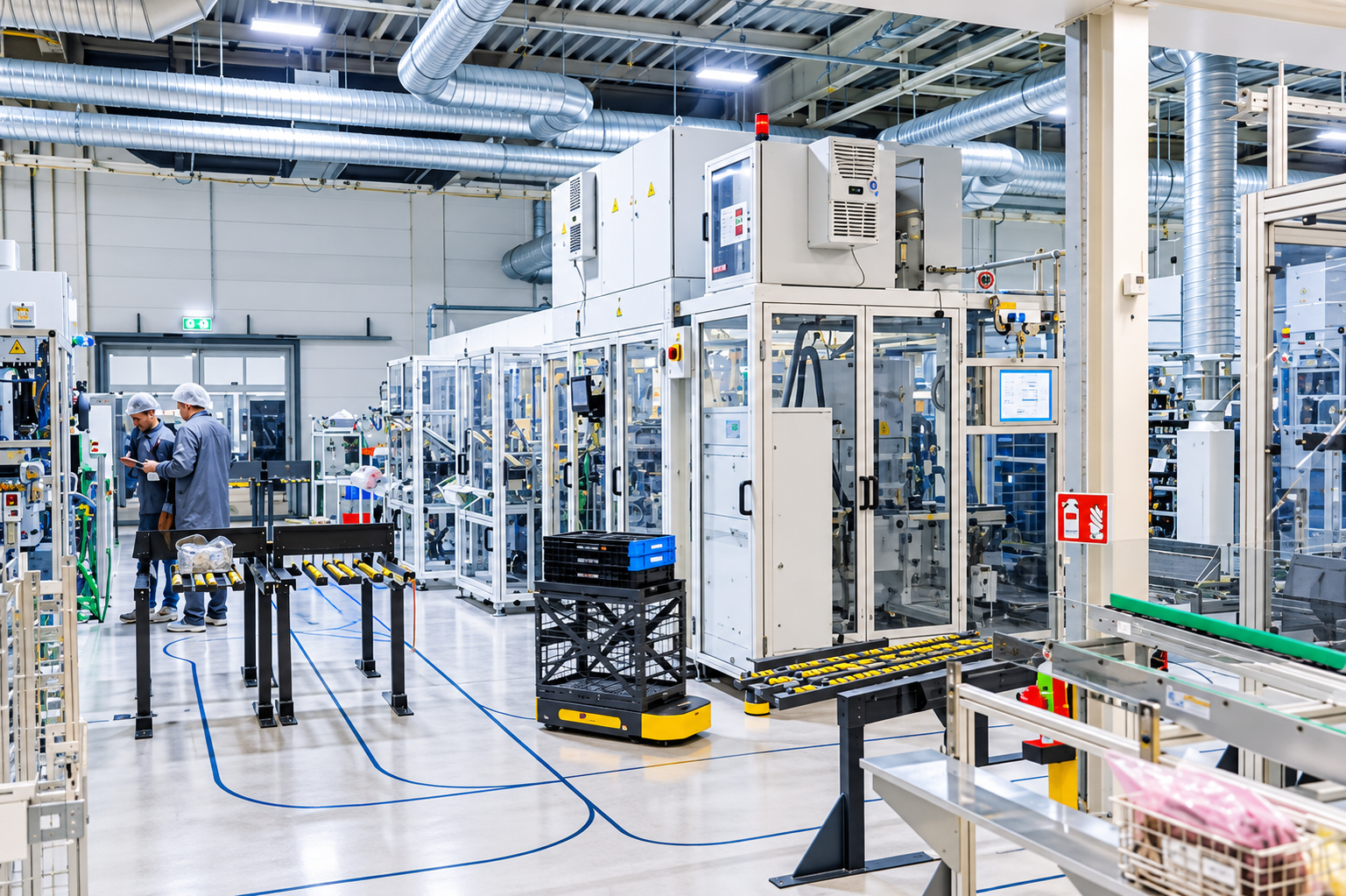
The plan reaches across 16 European locations, but its most visible consequence will be the complete closure of four German facilities Dortmund, Morbach, Berlin and Schwalbach and the Herstal site in Belgium. Approximately half of the affected positions are in manufacturing, 30% are in research and development, and the remaining 20% are in other functions.
Five closures and a wider capacity reduction
Dortmund employs approximately 430 people, while Morbach has around 160 employees. Both facilities make components for traditional internal-combustion engines, placing their closures directly within Schaeffler’s response to declining demand for that technology in Europe and Greater China.
Operations will also end at the Berlin facility, which employs about 270 people. Schwalbach, with roughly 385 employees, is scheduled to close, although many members of its workforce are expected to transfer to Schaeffler’s Frankfurt location. The combined changes at Schwalbach and Frankfurt are expected to produce a net reduction of approximately 190 positions. Herstal, Belgium, the smallest closing operation, employs about 15 people.
The program extends beyond those shutdowns. Schaeffler plans to discontinue toolmaking at Höchstadt, adjust special-machinery manufacturing in Erlangen and Schweinfurt, and make capacity or structural changes at other German locations. Production and development capacity will also be adjusted at Haguenau and Toulouse in France and at Skalica and Kysuce in Slovakia.
This distribution shows that the program is broader than a retreat from combustion-engine components. Manufacturing accounts for the largest share, but nearly one-third of the reductions will come from research and development. Schaeffler says it needs to remove excess development capacity, consolidate production, reduce personnel costs and simplify an organization with too many management layers.
A second program follows 4,700 targeted reductions
The timing increases the impact on employees. Schaeffler announced an earlier restructuring in November 2024 after its merger with Vitesco Technologies, targeting 4,700 gross position reductions, including approximately 2,800 in Germany. By Sept. 30, 2026, the company said 3,715 positions had been eliminated and arrangements had been secured for the remaining 985. It had also concluded approximately 1,800 partial-retirement agreements.
The latest program therefore represents another major contraction rather than the unfinished portion of the earlier plan. Schaeffler says the new reductions are needed because European automotive demand remains weak, combustion-engine business continues to decline and electric mobility is ramping up more slowly than anticipated in parts of its customer base.
The mismatch is visible in the company’s product results. Powertrain and Chassis revenue fell 4.6% at constant currency during the first nine months of 2026, partly because of the continued decline in combustion-engine technology. Schaeffler’s electric-mobility business grew, but lower project volumes involving European automakers particularly in China produced approximately €240 million in impairments and provisions. Much of that charge concerned production equipment made surplus by reduced volumes.
Europe’s broader vehicle market is changing quickly even where total registrations are growing. Battery-electric cars represented 22.7% of new European Union registrations through September 2026, while hybrids held 36.3%. Petrol and diesel together fell to 28.2%, according to the European Automobile Manufacturers’ Association. For a supplier maintaining combustion, hybrid and electric product capacity at the same time, that transition can leave equipment and engineering resources misaligned with actual customer programs.
€480 million now for annual savings from 2030
Schaeffler expects the restructuring to cost approximately €480 million, with most provisions recognized in 2026. It projects about €300 million in annual savings beginning in 2030. The simple comparison suggests recurring savings could exceed the one-time expense after roughly 19 months at the full annual rate, although the benefits are not expected to reach that level immediately.
The company is also seeking temporary, voluntary compensation reductions across management and other employee levels. It says this measure should provide relief in 2027 and 2028 and limit the number of additional job cuts required.
IG Metall and Schaeffler’s group works council have criticized the repeated reductions and called for clearer commitments covering future products, manufacturing investment and employment protection. Those demands focus attention on the unresolved part of the transition: closing excess facilities can lower fixed costs, but replacing declining work requires enough new products and customer volume to support the sites and technical teams that remain.
Schaeffler entered the program with approximately 108,000 employees worldwide. By 2028, the new plan alone is expected to remove about 9% of the company’s German core workforce as measured at the end of September 2026; including legacy reductions and signed partial-retirement agreements, the affected share rises to approximately 18%.
| More aerospace and engineering stories, right in your MSN feed. Follow AMI on MSN |
By Thomas Caldwell — AMI’s senior editor for mechanical and mobility engineering, covering vehicle electronics, systems integration, electrification, chassis systems, propulsion, and safety policy.