Tesla Will Wind Down Texas Cybertruck Production to Build More Cybercabs
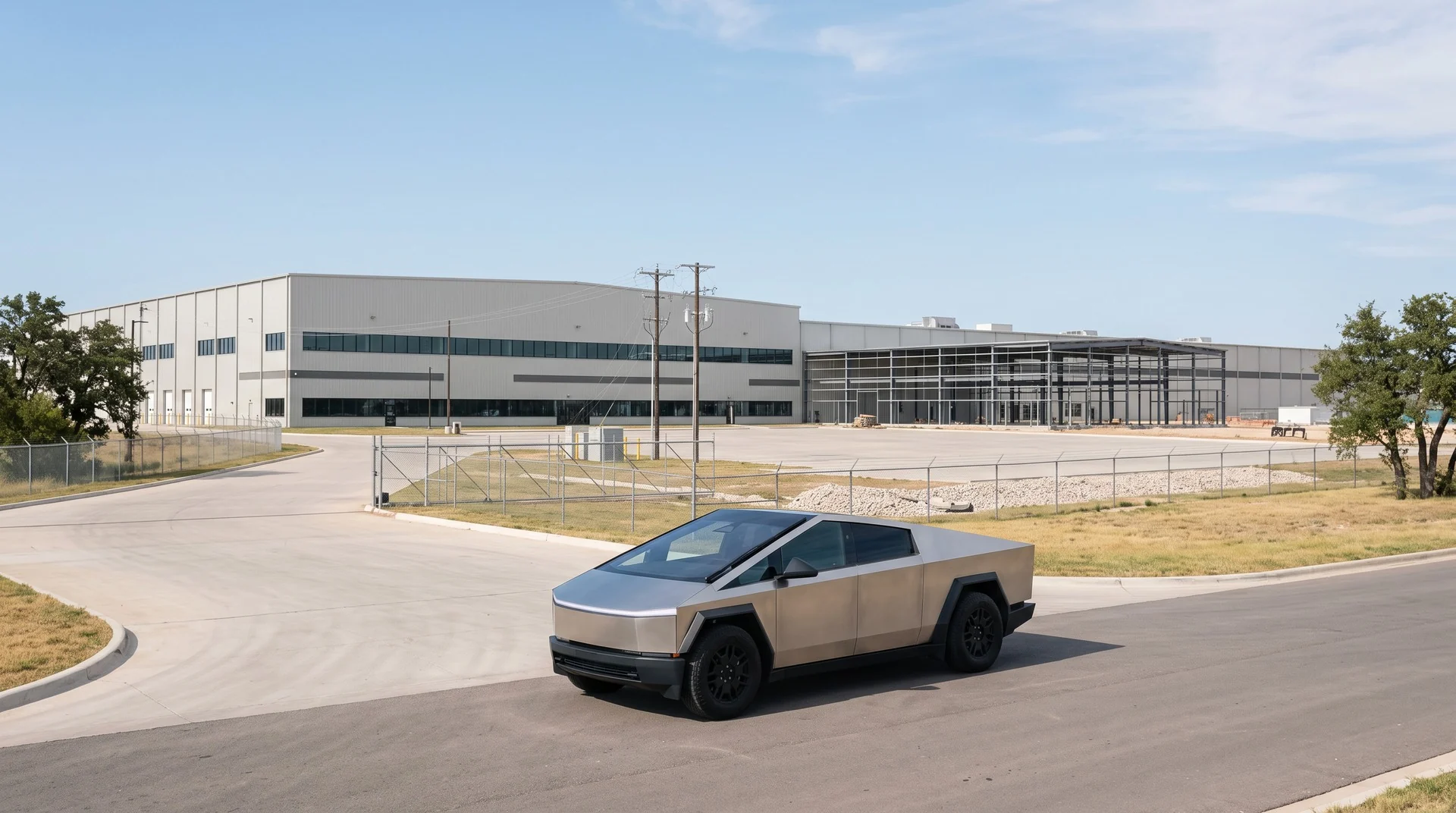
Tesla is preparing to wind down Cybertruck production at its Texas factory in 2027, freeing manufacturing capacity for more Cybercabs. The move gives the highly recognizable stainless-steel pickup a defined endpoint at its current plant only a few years after deliveries began.

What happens beyond Texas remains unresolved. Elon Musk did not specify whether Tesla will end Cybertruck manufacturing completely or transfer it to another location. His statement confirms a factory-level production shift, not a company-wide cancellation, although other remarks point toward a broader conclusion.
Cybertruck lead engineer Wes Morrill described the pickup as an “incredible technology development platform” that “lives on through Cybercab.” Musk also replied “true” to a description of the Cybertruck as being discontinued next year, before adding that the existing fleet would remain in service for a long time. Those comments suggest that Tesla is treating the vehicle’s engineering work as an input to Cybercab, but they stop short of identifying another Cybertruck factory or confirming a permanent end to all production.
A factory-capacity decision with product consequences
Musk said the Texas wind-down is intended to “make room” for additional Cybercab production. In manufacturing terms, that makes the decision a capacity allocation: plant space, equipment, labor and production support assigned to one vehicle cannot be expanded indefinitely without affecting another program.
The consequence for prospective Cybertruck buyers could be reduced availability after the Texas line winds down. Whether that becomes a temporary gap, a smaller production footprint or the end of new Cybertrucks depends on plans Tesla has not yet disclosed. Current owners, meanwhile, would be left with a vehicle whose original manufacturing location is moving on to another product, even as Musk expects the fleet itself to remain on the road.
The shift is also notable because the Cybertruck has been a leading model within the still-small electric-pickup segment. A comparison of electric-pickup sales counted 70,788 Cybertrucks sold from the beginning of 2024 through the third quarter of 2026, ahead of the Ford F-150 Lightning’s 65,587. The totals use estimates where manufacturers do not publish detailed figures.
That segment remains modest beside the broader truck market. The six electric pickups in the comparison accumulated 232,809 sales over nearly three years, while Ford sold 801,525 F-series pickups in 2025 alone. Tesla’s production choice therefore comes as electric pickups continue to occupy a narrow part of the U.S. vehicle market, even with Cybertruck leading its direct rivals over the measured period.
A short and complicated production run
Tesla introduced the Cybertruck publicly in 2019 and launched it in 2023 after development delays. Its production version retained the angular shape and stainless-steel exterior that made the concept immediately recognizable. The 2019 unveiling also included the failed demonstration in which glass presented as resistant to breaking shattered; Musk subsequently said the developing vehicle had received 146,000 orders.
The commercial path after launch was less straightforward. Sales were characterized as disappointing relative to the expectations surrounding the vehicle. Price also moved well beyond Tesla’s earlier emphasis on affordability: a launch configuration with all the “bells and whistles” cost $61,000, while the Cyberbeast is listed at $102,000 in 2026.
A 2025 recall covered more than 46,000 Cybertrucks because of concerns that a piece of exterior trim could detach. The available information does not identify that recall, pricing or the truck’s polarizing styling as the reason for the Texas wind-down. Tesla’s stated reason is the need to accommodate more Cybercab production.
The Cybertruck’s stainless-steel construction made it more than a conventional pickup with unusual bodywork. Stainless steel can provide strength and corrosion resistance, but the material category is generally harder and more expensive to cut than simpler steels because of its toughness, thermal behavior and effects on tooling. Tesla has not detailed how those manufacturing demands weighed against Cybercab in the capacity decision.
The next decisive information will be whether Tesla names another Cybertruck production site or sets a final order and delivery schedule. Until then, the confirmed boundary is clear: Texas Cybertruck production is winding down in 2027, and Cybercab is taking its place on the factory floor.
| More aerospace and engineering stories, right in your MSN feed. Follow AMI on MSN |
By Thomas Caldwell — AMI’s senior editor for mechanical and mobility engineering, covering vehicle electronics, systems integration, electrification, chassis systems, propulsion, and safety policy.