Ford EV Sales Fall 68% Through October as Lightning Disappears
Ford’s U.S. electric-vehicle sales fell 67.7% year over year during the first 10 months of 2026, a much steeper contraction than the 7.9% decline across the company’s entire lineup. The difference reflects a rapidly shrinking electric portfolio: Ford ended production of the battery-electric F-150 Lightning, while sales of the Mustang Mach-E and E-Transit dropped sharply.

The contrast became particularly stark in Ford’s October U.S. sales figures. Ford sold 1,355 fully electric vehicles during the month, down 71.2% from October 2025. Electric vehicles represented only 0.8% of its 174,123 total U.S. sales, compared with 2.7% a year earlier.
Meanwhile, Ford’s non-electrified sales increased 3.6% to 158,950 vehicles. That growth offset most of the decline in electric and hybrid models, limiting the company’s overall October decrease to 0.8%. Ford’s EV collapse therefore did not translate into an equivalent decline across its broader U.S. business.
Three electric models explain the decline
The F-150 Lightning recorded no October sales, compared with 1,543 in October 2025. Through October, Lightning sales totaled 4,770, down 80.6% from 24,577 during the same period last year. Ford has ended production of the battery-electric pickup, removing what had been one of its most recognizable electric products from the lineup.
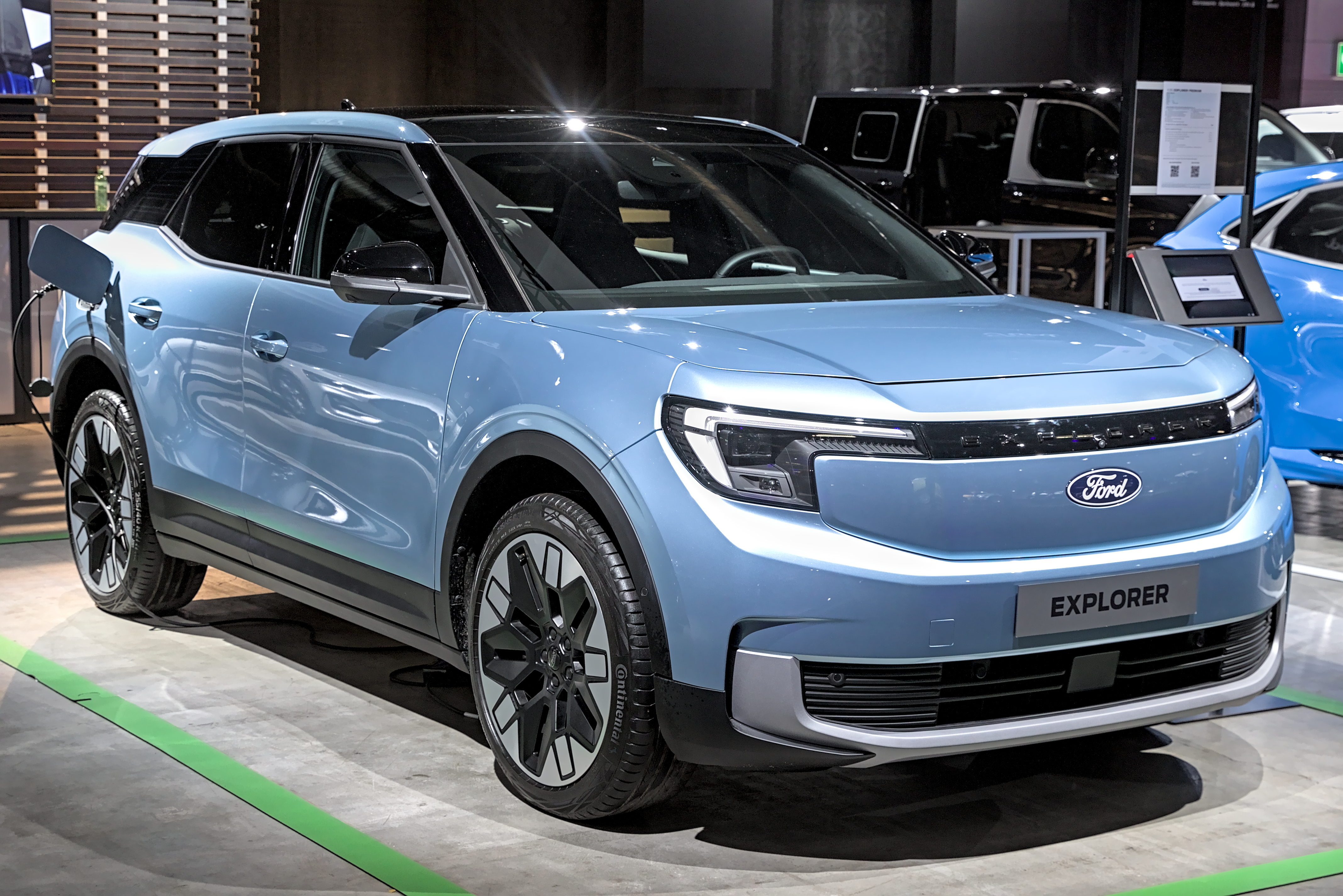
The Mustang Mach-E now carries nearly all of Ford’s remaining U.S. EV volume. It supplied 1,239 of the company’s 1,355 October electric sales, but that result was still down 57.4% from 2,906 a year earlier. Its January-through-October volume fell 58.9% to 18,445 vehicles.
E-Transit contributed the remaining 116 October EV sales, down 55.4%. Its first-10-month volume dropped 83.7% to 793 vehicles. Across all three models, Ford sold 24,008 EVs through October, compared with 74,309 in the corresponding 2025 period.
These figures describe more than a uniform reduction in demand for an unchanged product range. One major model has left production, and the two remaining electric nameplates are selling at substantially lower volumes. That combination has reduced both Ford’s EV scale and the choices available to buyers seeking a fully electric Ford.
Production and inventory show the narrower operating scale
Ford built 3,037 Mach-Es at its Cuautitlán plant in Mexico during October and finished the month with approximately 4,300 in U.S. gross stock. The inventory was roughly three and a half times October’s Mach-E sales, illustrating the balance Ford must manage between factory output and lower retail volume. The figures alone do not establish how quickly individual vehicles will sell, but they show why production planning remains central as the Mach-E becomes Ford’s dominant battery-electric model.
Ford’s electrified total was also affected by product changes outside its fully electric range. October hybrid sales fell 21% to 13,818 as the company wound down the Escape and Lincoln Corsair, both offered with electrified powertrains. Combined EV and hybrid sales declined 31.7% to 15,173. Excluding the discontinued Escape and Corsair, sales across the remainder of Ford’s lineup rose 6.9%.
The broader U.S. market provides an important comparison. Urban Science reported that battery-electric retail sales fell 40.9% in the third quarter of 2026, while conventional hybrid sales increased 28%. Ford’s 67.7% year-to-date EV decline was therefore steeper than that quarterly national battery-electric contraction, with its discontinued Lightning and reduced Mach-E and E-Transit volumes amplifying the effect.
The financial cost remains substantial. Ford’s Model e unit lost $1.06 billion before interest and taxes in the third quarter, although that was a 25% improvement from a year earlier. Ford expects approximately $4 billion in full-year Model e losses.
Ford’s next planned battery-electric expansion centers on its Universal EV platform and the Fathom midsize pickup. The company says production of that truck is targeted to begin at its retooled Louisville plant in the fourth quarter of 2027. Until then, the monthly sales mix shows a pronounced gap: Ford’s non-electrified vehicles are growing, while its fully electric business has narrowed largely to one crossover selling at less than half its year-earlier pace.
| More aerospace and engineering stories, right in your MSN feed. Follow AMI on MSN |
By Thomas Caldwell — AMI’s senior editor for mechanical and mobility engineering, covering vehicle electronics, systems integration, electrification, chassis systems, propulsion, and safety policy.