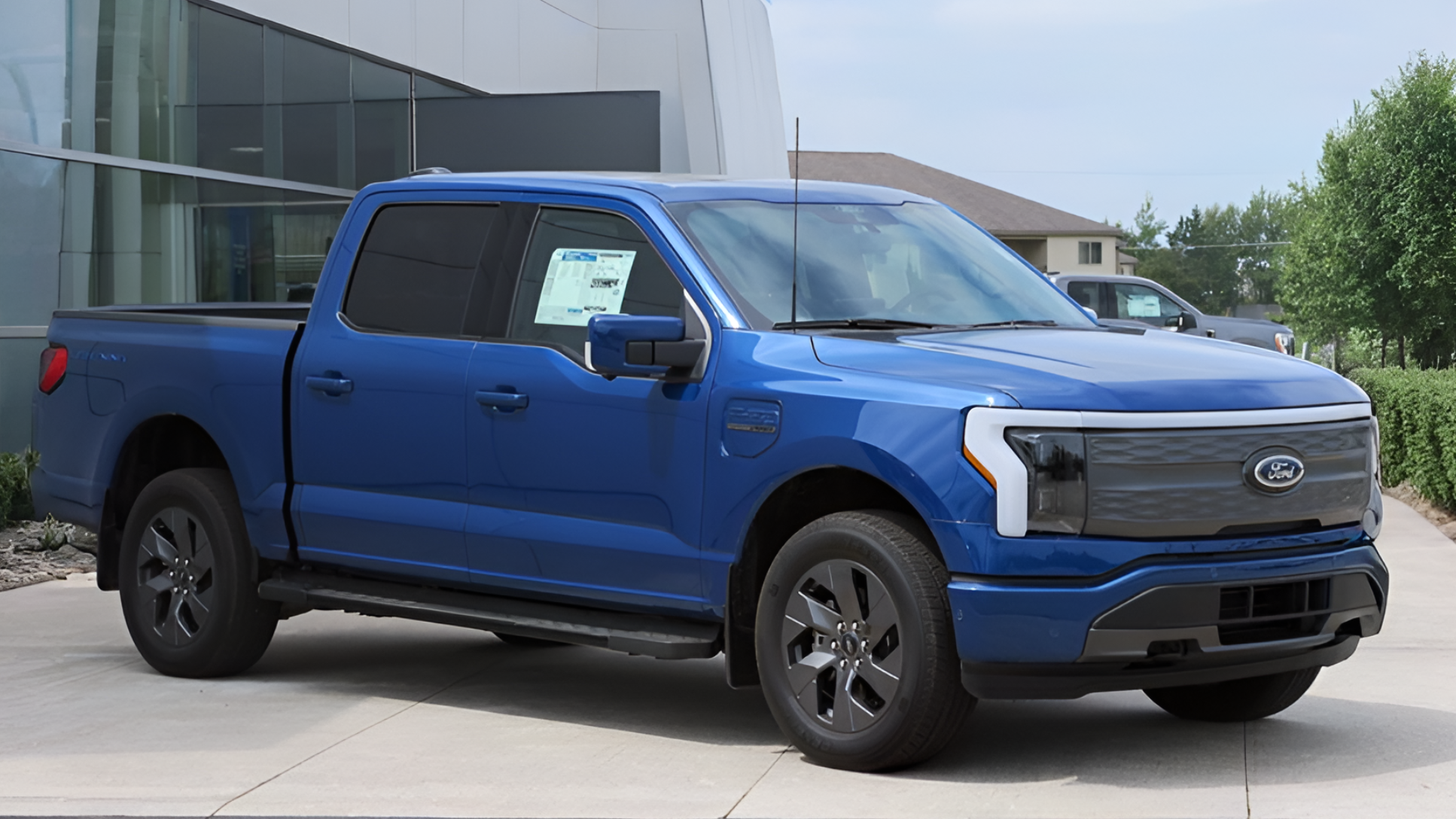
Ford F-150 Lightning Recalls Target Rollaway, Battery Fire and Suspension Risks
Ford F-150 Lightning safety recalls now span three fundamentally different hazards: a park-system fault that could permit rollaway, battery defects that could cause fire or loss of drive power, and a loose suspension fastener that could compromise steering control. The largest Lightning population cited is 104,113 trucks in park-module recall 25V-863, but eligibility for that and the other campaigns depends on the individual vehicle not merely its model year. Owners can enter a license plate or 17-digit vehicle identification number in NHTSA’s recall lookup system.

The recalls illustrate why a single label such as “Lightning problem” is not technically useful. Software, battery cells, high-current connections and suspension joints fail through different mechanisms, create different warning conditions and require different remedies. Some affected trucks need an over-the-air update. Others require physical inspection, fastener work or high-voltage battery replacement.
The largest campaign addresses park engagement
Recall 25V-863 includes 104,113 certain 2022-2026 Lightnings within a larger multi-model Ford recall. The park module may fail to engage properly, creating a rollaway risk. Ford’s specified remedy is a software update delivered over the air or installed by a dealer.
A software remedy is appropriate when the underlying defect concerns how an electronic control system manages or reports its operating state. It also avoids replacing hardware across a six-figure vehicle population. The safety consequence remains mechanical and immediate, however: a driver selecting park expects the truck to remain stationary. Until an affected vehicle receives its remedy, owners should follow the instructions associated with their VIN.
Battery recalls require physical precautions and repairs
The high-voltage battery campaigns cover much smaller groups but involve a different risk profile. Recall 25V-131 originally identified 950 certain 2022-2024 trucks whose battery cells could develop internal short circuits and create a fire risk. The instructions for affected owners included limiting charging to 80% until inspection and any necessary battery-array replacement.
That temporary charging limit is a risk-control measure for the specified vehicles, not evidence that every Lightning should avoid a full charge. Another campaign, 23V-168, covers certain 2023 trucks with cells that may short-circuit near full charge; its remedy is free replacement of the high-voltage battery.
Separate recalls 24V-144 and 25V-272 concern loose or missing fasteners in the battery junction box on certain 2023 trucks. A deficient high-current connection can produce arcing, fire or loss of drive power. Campaign 25V-272 expanded the earlier action by three trucks. Unlike the park recall, these defects cannot be resolved solely by changing control logic because the possible fault lies in a cell or physical electrical connection.
A single nut can threaten suspension integrity
Recall 25V-341 covers 29,501 certain 2024-2025 Lightnings and expands the earlier 24V-949 campaign. An improperly tightened upper control-arm ball-joint nut could allow the joint to separate from the steering knuckle. That connection is part of the wheel-locating and steering structure, so separation could cause a loss of vehicle control. Inspection and hardware correction, rather than a software download, are required.
A much narrower campaign shows how precisely recall populations can be defined. Recall 25V-438 covers five certain 2025 trucks with loose brake-hose bracket screws. The condition could allow a front brake hose to contact a tire, leak fluid and increase stopping distance. Population size does not determine the seriousness of the failure mechanism; it determines how many identified vehicles require the prescribed action.
Service guidance is not the same as a safety recall
Other Lightning documentation addresses powertrain warning lights, gear-shift module faults, active-air-dam warnings, blank center displays and software-related 12-volt battery drain. Technical Service Bulletin 26-2010, for example, directs technicians to reprogram specified diagnostic control modules when certain 2022-2025 trucks display a wrench warning with diagnostic codes P2796 or P2797, followed by checks and further diagnosis as necessary. Customer Satisfaction Program 25B09 addresses a floor-console shifter that may fail to stow or unstow on eligible 2024-2025 trucks.
These notices help technicians diagnose known conditions, but they do not supply a fleetwide failure rate or establish that every truck within those model years has the problem. The same separation is important for ordinary electric-vehicle behavior. Charging normally tapers as a battery approaches full capacity, while cold weather, cabin heating and towing can reduce available driving range. Those operating characteristics are not, by themselves, proof of a defect.
Model-year overlap therefore offers only a starting point. Two visually identical Lightnings built in the same year may have different recall status because of production dates, components or prior repairs. NHTSA says recall repairs are free through the manufacturer’s dealership and advises owners to follow any special instructions attached to an open campaign. For the Lightning, the VIN is what separates a general concern from a specific requirement for software, inspection or replacement hardware.
| More aerospace and engineering stories, right in your MSN feed. Follow AMI on MSN |
By Thomas Caldwell — AMI’s senior editor for mechanical and mobility engineering, covering vehicle electronics, systems integration, electrification, chassis systems, propulsion, and safety policy.