Marine CH-53K Lifts 16,000-Pound Navy Helicopter From 10,000-Foot Mountain Slope
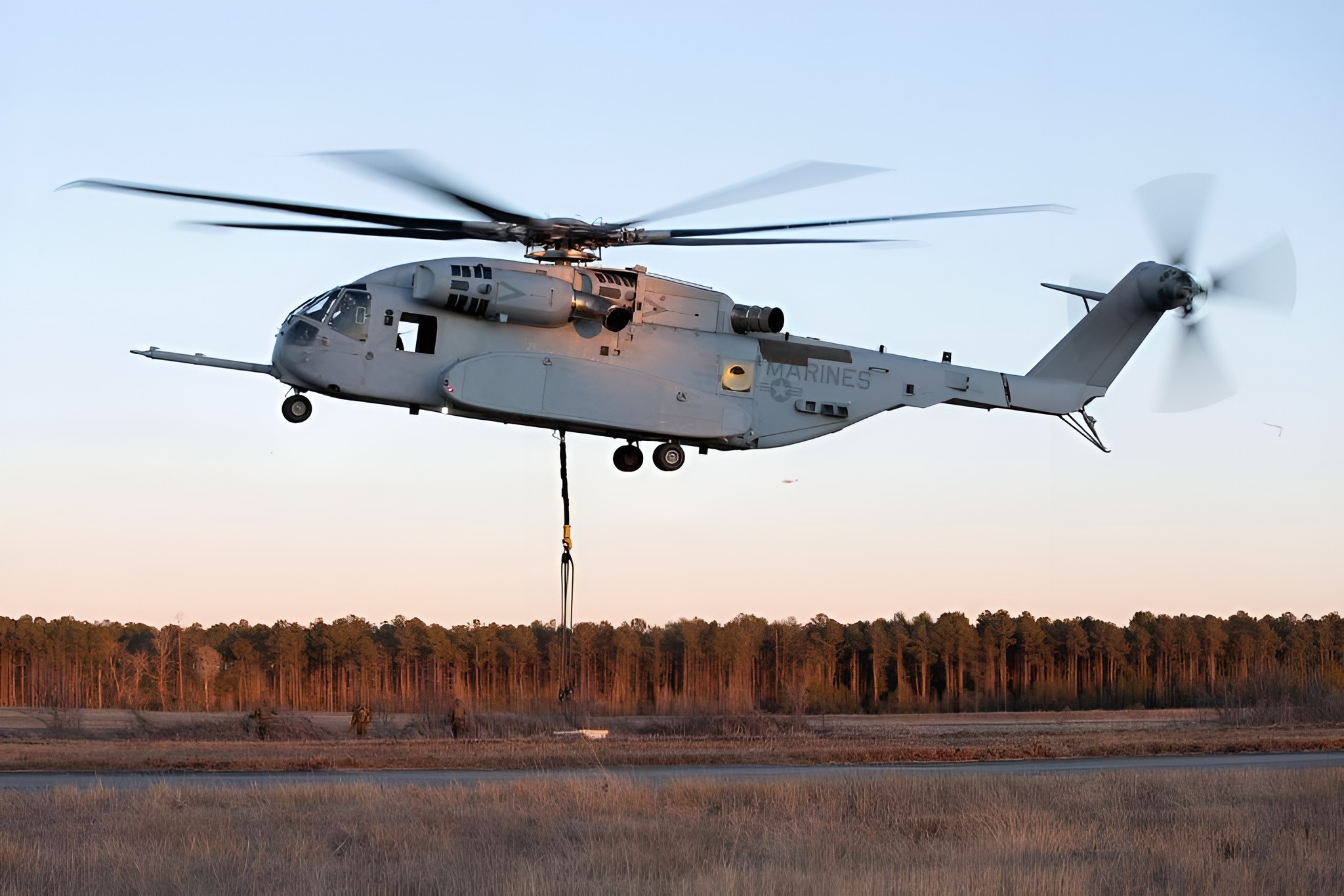
A Marine Corps CH-53K King Stallion lifted an intact 16,000-pound Navy helicopter from a steep Sierra Nevada slope in late September, recovering an aircraft that was capable of flight but trapped by terrain at 10,000 feet. The operation also cleared the heavy-lift helicopter to use a 70-foot external line, adding a longer piece of recovery equipment to its salvage toolkit.

The stranded MH-60S Seahawk, assigned to Air Test and Evaluation Squadron 31, had made a hard landing on the mountainside. It remained undamaged, but the slope prevented it from taking off. That left planners with an unusual problem: remove a largely serviceable helicopter from difficult terrain without turning the recovery itself into an extensive repair job.
“The hardest part of this recovery wasn’t necessarily lifting the H-60,” said Maj. Lee Henderson, the Marine Operational Test and Evaluation Squadron 1 pilot and lead planner. “It was figuring out how to do it safely without causing any additional damage.”
Keeping the Seahawk intact shaped the lift
Engineers rigged the Seahawk through its built-in lift points and designated sling rather than suspending it by the main rotor head. The team removed only the main and tail rotor blades to protect them during the flight. The rest of the aircraft remained substantially intact, avoiding major repairs or the extensive disassembly that would have been needed for another form of transport.
A CH-53K from Marine Operational Test and Evaluation Squadron 1 then carried the Seahawk beneath it on the 70-foot line to Naval Air Weapons Station China Lake, California. The unusually long suspension placed more separation between the two aircraft than the standard sling used by the U.S. military for underslung loads.
The Seahawk’s weight was well below the roughly 28,000-pound CH-53K engineering airframe lifted during a recovery-rigging test in April. But suspended-load missions cannot be judged by weight alone. The Navy said the combined effects of the 10,000-foot altitude, load, flight distance and weather put the King Stallion near its power and fuel limits.
Altitude reduces rotorcraft performance because thinner air gives the rotor less mass to work with for a given blade motion. Fuel also creates a direct planning tradeoff: carrying more extends range and reserve, but every additional pound must be lifted along with the external load. The completed mission therefore demonstrated a specific high-altitude recovery case, not merely the helicopter’s ability to raise a 16,000-pound object.
A new line went from testing to flight in under two weeks
The recovery required equipment outside the CH-53K’s previously cleared standard arrangement. The Structures Lab obtained a commercial 70-foot line and tested it to 20,000 pounds at Naval Air Station Patuxent River. The team secured flight clearance in under two weeks while reusing existing equipment to limit costs.
That clearance is a practical outcome beyond saving one Seahawk. A longer line can give recovery planners another approved configuration when terrain, clearance or aircraft geometry makes the standard sling unsuitable. It does not remove the need to calculate aircraft weight, density altitude, weather, range and fuel margins for each mission, but it expands the equipment available for those calculations.
Aircraft recovery also protects more than the airframe’s replacement value. Returning a helicopter intact can preserve installed equipment, simplify inspection and repair, and avoid the time and labor required to dismantle it in an austere location. The Marine Corps has long treated recovery as a multidisciplinary job involving aviation, engineering, transport and support personnel; its public recovery-training guidance describes the capability as a way for units to retrieve aircraft without relying on outside resources.
The Sierra Nevada mission also advanced earlier CH-53K recovery work. In September 2021, two King Stallions recovered another MH-60S from a 12,000-foot ridge in the White Mountains. This time, one CH-53K removed the roughly 16,000-pound Seahawk while validating the longer line.
Sikorsky’s CH-53K is replacing the CH-53E Super Stallion, and the fleet has accumulated more than 10,000 flight hours. The Marine Corps plans its first operational deployment in fiscal 2027 with the 26th Marine Expeditionary Unit. Before that milestone, the mountain recovery supplied a concrete result: an advanced helicopter that could fly but could not leave its landing site was carried out intact, and the aircraft that recovered it returned with a newly cleared tool for the next difficult lift.
| More aerospace and engineering stories, right in your MSN feed. Follow AMI on MSN |
By David Whitaker — Associate editor for AMI’s aerospace and drone systems desk, translating flight systems, aircraft programs, spaceflight, and UAV developments into accessible technical stories.