Yangwang U9X Reaches 312.65 MPH, Raising Its Production-Car Speed Mark
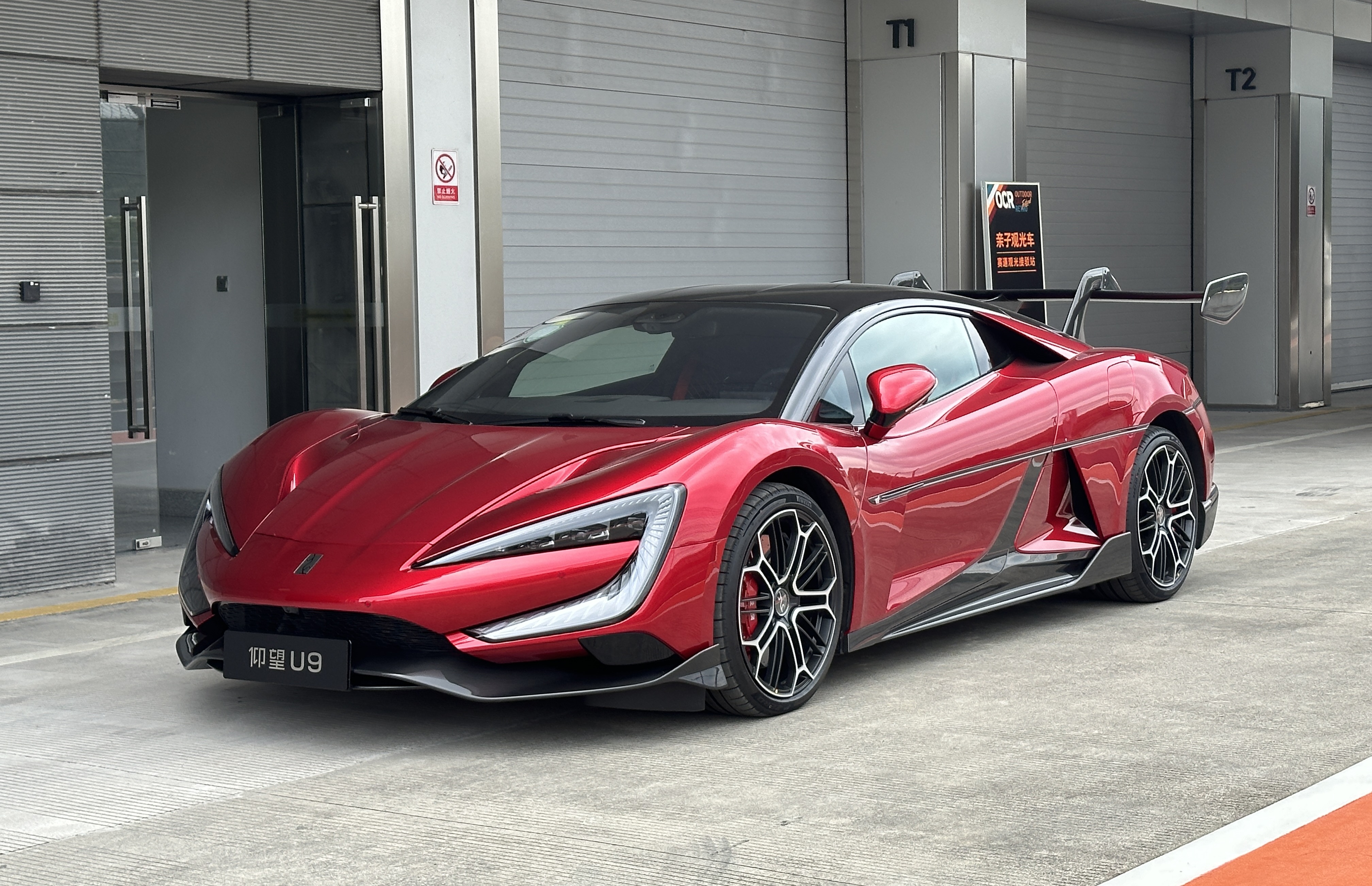
Yangwang’s four-motor U9 Xtreme electric hypercar reached 312.65 mph in Abu Dhabi, improving on the 308.4-mph benchmark the same car established in Germany last year. The Fédération Internationale de l’Automobile recognized the 503.17-km/h achievement, while Guinness World Records certified it as the highest speed by a production car and an electric production car in a single-direction run.

German racing driver Marc Basseng completed the record run on Nov. 1, 2026, on the Sheikh Khalifa Bin Zayed International Road in Abu Dhabi’s Al Dhafra Region. Basseng, an experienced endurance racer and former 24 Hours of Le Mans winner, also drove the U9X during its previous 496.22-km/h, or approximately 308.4-mph, run at Germany’s Automotive Testing Papenburg facility in September 2025.
The latest result raised that benchmark by 6.95 km/h and made the U9X the first production car recognized as exceeding 500 km/h. It also pushed an electric vehicle beyond a speed threshold that, until recently, belonged largely to projections for combustion-powered hypercars.
A public road became a controlled test environment
The setting was a public desert road, but the attempt did not occur under ordinary road conditions. Local authorities closed a 10-kilometer section, including a seven-kilometer straight used for the high-speed runs. Roughly six miles of road were swept to remove sand, debris and fluids contamination that could compromise tire grip or disturb the car at extreme speed.
The attempt unfolded over two days. Two runs on Oct. 31 reached a maximum of 490 km/h. Engineers then adjusted the car’s aerodynamics, suspension settings and tire pressures before two further runs on Nov. 1. The second of those produced the final 503.17-km/h result.
The vehicle reportedly remained largely in its previous configuration, but the targeted changes addressed the realities of using a road rather than a purpose-built high-speed oval. Yangwang revised the adaptive-damper software to increase rebound damping, helping the car manage undulations after its suspension compressed. Engineers also raised the rear wing to increase downforce.
Those changes illustrate the central compromise in top-speed development. More downforce can improve stability and tire loading, but it usually increases aerodynamic drag. At more than 300 mph, engineers must find enough stability to keep the car controlled without consuming an excessive share of the available power in aerodynamic resistance.
Four motors, high voltage and tightly managed stability
The U9X uses four independently controlled electric motors, each described as producing about 738 brake horsepower and reaching 30,000 rpm. Combined output is listed as 2,959 brake horsepower, with Yangwang claiming a 2.36-second acceleration time from zero to 62 mph.
Its 1,200-volt electrical architecture supports the high power demanded from the traction system while helping engineers manage current, heat and component packaging. The car also uses a BYD Blade battery, torque vectoring and active suspension. At record speed, these systems must operate as an integrated package: propulsion supplies the acceleration, while motor control, suspension, aerodynamics, tires and thermal management preserve stability long enough to complete the run.
The tires are especially consequential. The FIA says the U9X used specialized high-performance tires developed with Giti Tire, and tire pressures were among the variables adjusted between attempts. Rotational loading and heat rise sharply at these speeds, making tire validation part of the record system rather than a peripheral component choice.
Recognition depends on the record category
The certifications apply specifically to a single-direction run. That wording is important because production-car speed claims have not always used identical procedures. Some record formats use the average of runs in opposite directions to reduce the influence of wind and road gradient. Here, the FIA recognized the speed achievement, and Guinness awarded records in the stated single-direction category.
“Production car” also describes an exceptionally narrow production commitment in this case. Yangwang plans to build only 30 U9X units, and no UK introduction has been announced. The car therefore demonstrates what a road-derived electric platform can achieve under controlled conditions, rather than signaling that 300-mph capability is approaching ordinary EV production.
The U9X’s progression shows how rapidly that controlled envelope has expanded: from 472.41 km/h in August 2025 to 496.22 km/h one month later, and then 503.17 km/h in November 2026. Crossing 500 km/h required nearly 3,000 horsepower, a prepared and closed road, specialized tires and carefully revised chassis and aerodynamic settings all for a car limited to 30 examples.
| More aerospace and engineering stories, right in your MSN feed. Follow AMI on MSN |
By Thomas Caldwell — AMI’s senior editor for mechanical and mobility engineering, covering vehicle electronics, systems integration, electrification, chassis systems, propulsion, and safety policy.