Poland Says Ukraine Agreed to Counter-Drone Technology as Two MiG-29s Deal Nears
Ukraine has agreed to provide Poland with counter-drone technology, but the linked transfer of two Polish MiG-29 fighters to Ukraine has not been finalized. The proposed arrangement ties a small number of recognizable combat aircraft to a broader exchange of drone expertise, giving each country a different readiness benefit.

Polish Deputy Defense Minister Cezary Tomczyk announced the development during a visit to Kyiv on November 10. Ukraine has agreed to transfer to Poland the necessary counter-drone technologies, he said, according to Polish broadcaster RMF24. Tomczyk said the wider agreement was close to completion while negotiators continued settling its details.
The aircraft should therefore be treated as part of an unfinished negotiation, not a completed delivery. Poland and Ukraine are discussing the possible transfer of two Polish MiG-29s in return for access to Ukrainian drone technology and countermeasures. No transfer date, aircraft identities or detailed list of technologies has been disclosed.
A fighter transfer built around a technology exchange
The structure of the proposal is more significant than its aircraft count. Two fighters would represent a limited addition for Ukraine, while Poland is seeking knowledge and systems relevant to an expanding drone-defense requirement. The arrangement effectively places near-term aircraft availability on one side and access to rapidly evolving unmanned-systems technology on the other.
Tomczyk traveled to Kyiv with General Karol Domanowski, first deputy chief of the General Staff of the Polish Armed Forces. Their talks covered military cooperation, industrial cooperation and technology transfer. Tomczyk also announced an agreement establishing joint working groups on drone and counter-drone technologies, according to a November 10 account of the negotiations.
The revived talks follow an earlier interruption. Polish officials first proposed exchanging MiG-29s for Ukrainian drone technology in December 2025, but the arrangement stalled in June 2026 after Poland said Ukraine had stepped back from the technology-sharing commitment. The latest announcement indicates that the technology component has moved forward, although the final terms governing the fighters remain unresolved.
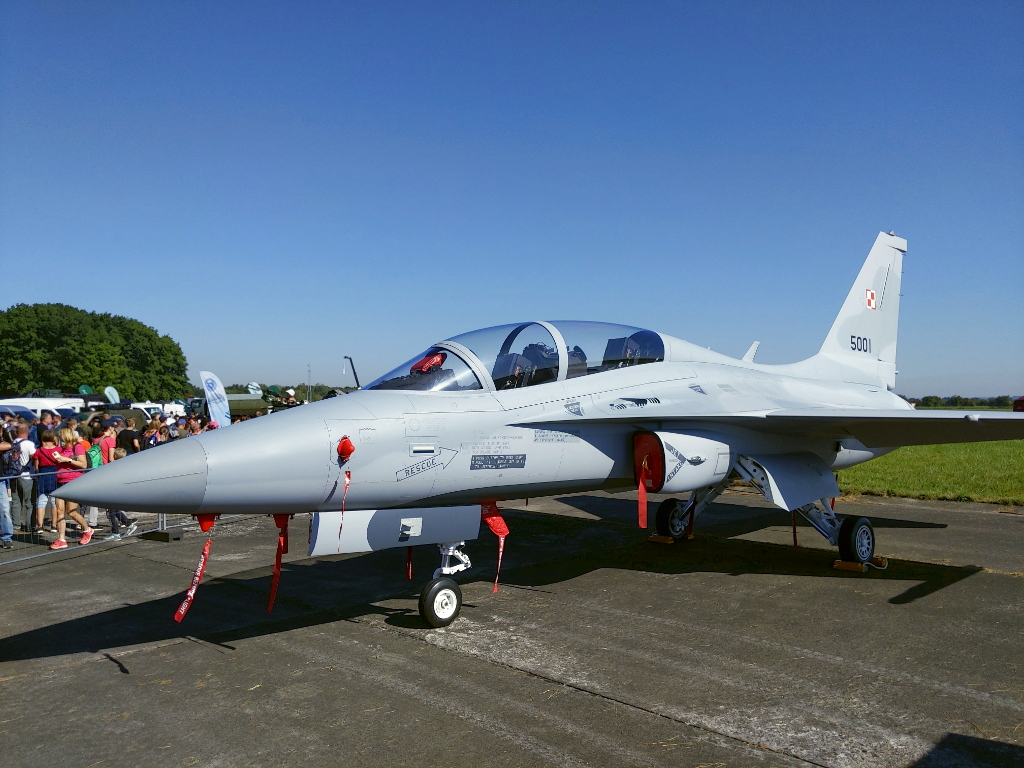
Poland has operated the MiG-29 since 1989 and is phasing out the type as it brings FA-50 and F-35 aircraft into service alongside its F-16 fleet. That transition creates an opening to transfer older fighters, but retirement does not make an aircraft immediately transferable. Any handover still depends on negotiated terms and the practical work required to release specific airframes from Polish service.
Poland previously transferred 14 MiG-29s to Ukraine in spring 2023. The current proposal is much smaller, and its distinctive feature is the explicit link to drone and counter-drone cooperation rather than aircraft aid alone. Poland had also been preparing another military-aid package expected to include two MiG-29s and ammunition, but no schedule has been announced.
Counter-drone access has a wider European context
Poland’s interest extends beyond this bilateral negotiation. The European Commission’s 2026 Action Plan on Drone and Counter-Drone Security calls for closer EU cooperation with Ukraine, expanded testing, common performance standards and greater production capacity. It describes counter-drone effectiveness as a combination of detection, identification, command-and-control software and multiple response options rather than a single piece of equipment.
That systems-level requirement helps explain why access to Ukrainian technology could have value beyond acquiring individual devices. Counter-drone capability must keep pace with changing drone designs, operating patterns and electronic environments. The specific Ukrainian technologies under discussion have not been identified, leaving their scope and integration demands unknown.
The Kyiv talks separately addressed cooperation in an anti-ballistic coalition involving Ukraine, Poland and other European countries. Poland is prepared to participate with P-18PL radar systems, which have a claimed range of up to 2,000 kilometers, while coalition members are considering missiles intended to intercept ballistic targets. Those discussions are separate from the proposed MiG-29 exchange but reflect the same emphasis on shared air-defense technology.
The next decisive step is a final agreement defining what Poland will receive, how the technology cooperation will operate and when the two fighters could be released. Until those terms are settled, Ukraine’s reported counter-drone commitment is the confirmed movement; the MiG-29 transfer remains the unfinished half of the deal.
| More aerospace and engineering stories, right in your MSN feed. Follow AMI on MSN |
By David Whitaker — Associate editor for AMI’s aerospace and drone systems desk, translating flight systems, aircraft programs, spaceflight, and UAV developments into accessible technical stories.