FAA Investigates Router Failure After Four-Hour US Ground Stop
A router problem that spread instability through the US air traffic communications network prompted a four-hour nationwide ground stop on Friday, disrupting more than 15,000 flights and affecting an estimated 1.5 million passengers. The Federal Aviation Administration’s preliminary account traces excessive network traffic to two potential locations, but the precise equipment or contractor failure remains under investigation.
Transportation Secretary Sean Duffy said the shutdown followed a technical issue during work by contractor L3Harris to replace obsolete copper telecommunications lines with fiber-optic connections. Officials had initially attributed the disruption to outdated equipment. Investigators are now examining whether the immediate problem involved the wire-replacement process, faulty router equipment or what Duffy described as possible contractor “incompetence.”
Duffy called the underlying network “an incredibly old telecommunications system.” The copper wire had to be replaced, he said, because “it was being discontinued.” That creates the central difficulty facing the investigation: the maintenance was necessary, but an apparent problem during the transition destabilized systems supporting national flight operations.
How one network problem spread
The FAA said its legacy equipment became unstable when data began flooding its telecommunications network at a rate of 1,000 connection attempts every four to five seconds. Instability appeared at 17 of the agency’s 22 centers responsible for managing aircraft between airports, then spread into several facilities handling traffic closer to airports.
The agency identified a radar site in Amarillo, Texas, and a radio communications site in El Dorado, Arkansas, as two potential origins of the excessive traffic. L3Harris had been working at the El Dorado site, including deploying a new router. Blocking those two locations stabilized the network, according to the FAA. Officials also disabled the broadcasting function on the new routers and, as a precaution, turned off the same function on approximately 60 similar units.
The disruption was serious but not a complete loss of air traffic control communications. Some radio frequencies and radar feeds remained reliable, allowing controllers to communicate with and track aircraft already airborne. Approximately 3,500 aircraft landed safely, while critical medical, law-enforcement and military flights continued. Departures were stopped because officials could not initially isolate the source of the instability or be certain the wider network would remain dependable.
The ground stop began at 3:54 p.m. Eastern Time and air traffic resumed at 8:15 p.m., after officials kept the system under observation to confirm it was stable. It was the longest nationwide US aviation shutdown since the September 11, 2001 attacks.
The investigation has not assigned fault
The FAA’s preliminary position is that instability in its legacy time-division-multiplexing system caused the outage, while Duffy has said investigators still need to determine whether L3Harris made an installation or user error, or whether the router itself was faulty. L3Harris said it had completed more than 70% of its assigned conversion work before the incident and was supporting the FAA investigation.
FAA Administrator Bryan Bedford said officials had found zero evidence of anything nefarious and zero evidence of anything AI related. The inquiry is therefore centered on the behavior of the equipment, the installation work and the interaction between new routers and the legacy network not malicious activity.
The FAA also plans to reconsider when routine replacement work is performed. Maintenance at major facilities is typically scheduled at night, when traffic is lighter, but the work involved here was at a remote site where similar daytime replacements had been performed for decades without comparable disruption.
Why flights remained disrupted after the network recovered
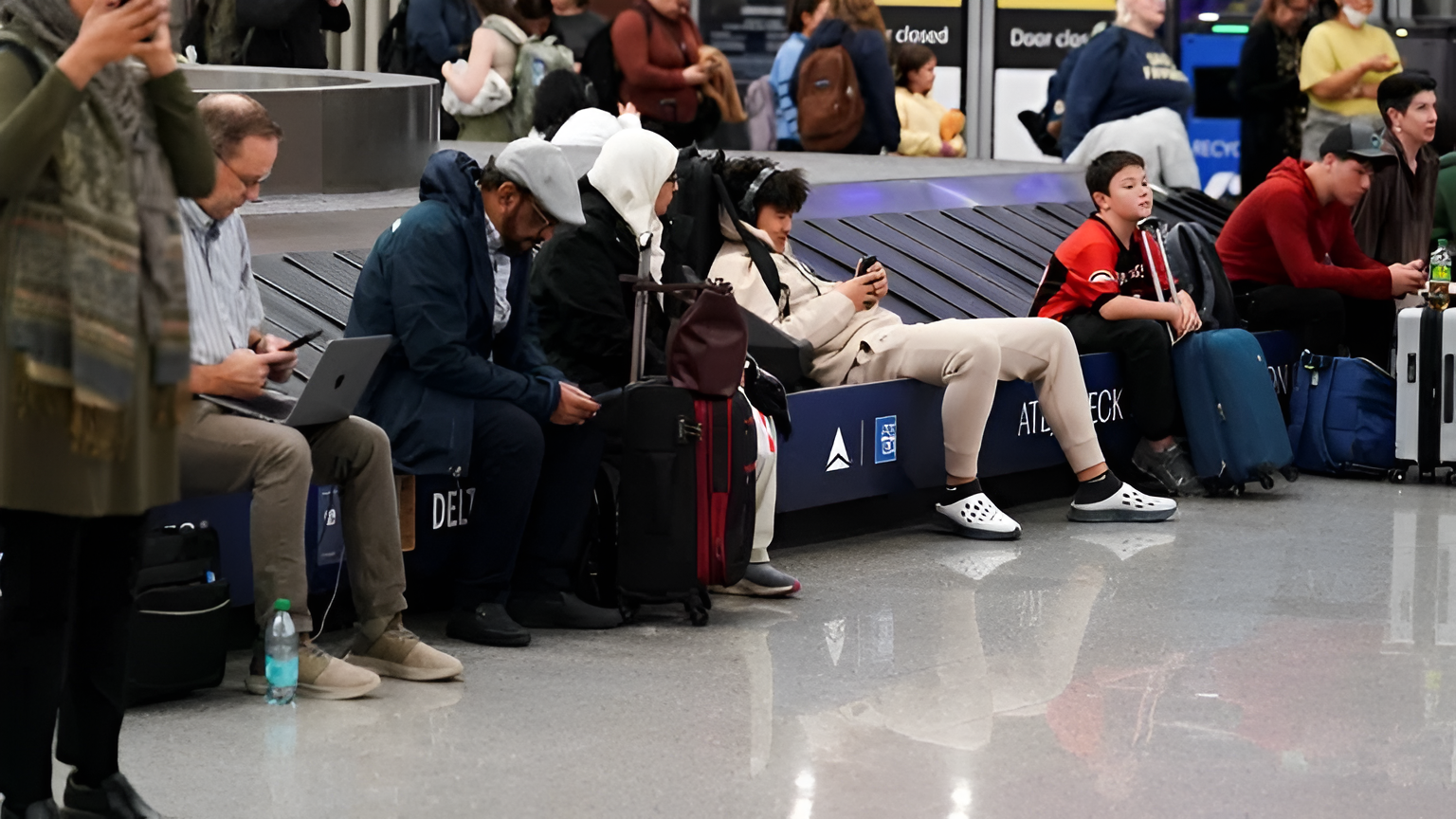
Lifting a ground stop does not instantly restore an airline schedule. Aircraft, crews and passengers are left out of position, while airport gates and departure queues fill unevenly. More than 5,900 flights were cancelled and 7,000 delayed on Saturday as carriers worked through the backlog. Some passengers had been held aboard aircraft on the tarmac, and the effects reached international services departing the UK and Europe.
The incident also exceeded the duration of the 2023 nationwide grounding caused by a failure of the Notice to Air Missions system. That earlier stop lasted one hour and 52 minutes, delayed about 9,500 flights and led to roughly 1,300 cancellations.
The immediate network response isolating the suspected locations and disabling the relevant router function restored stability. The unresolved issue is whether that action addresses a defective component, an installation mistake or a deeper incompatibility encountered while retiring obsolete copper infrastructure. Until investigators establish that root cause, the same modernization program intended to strengthen air traffic communications must proceed with tighter controls against another network-wide propagation event.
| More aerospace and engineering stories, right in your MSN feed. Follow AMI on MSN |
By David Whitaker — Associate editor for AMI’s aerospace and drone systems desk, translating flight systems, aircraft programs, spaceflight, and UAV developments into accessible technical stories.