French Tourist Faces Federal Complaint After DJI Mini 3 Pentagon Flight
A vacation camera flight allegedly brought a French tourist into one of the most restrictive operating environments a consumer-drone pilot could encounter. Federal authorities say Alexandre Antoine Rene Colombari flew a DJI Mini 3 at the Pentagon Reservation in Arlington, Virginia, prompting officers to seize the aircraft and pursue criminal allegations involving pilot certification and national-defense airspace rules.

The account comes from an eight-page affidavit filed November 6, 2026, in support of a criminal complaint and arrest warrant. Pentagon Force Protection Agency Special Agent Kyle Bush wrote that probable cause existed to believe federal aviation statutes had been violated. The allegations remain unproven, and the filing does not accuse Colombari of espionage, terrorism, carrying explosives or intending to compromise Pentagon security.
What investigators allege happened
Pentagon security systems detected drone activity at the reservation on October 29. According to the affidavit, Colombari and five other French nationals had arrived in the Pentagon’s South Parking area in a recreational vehicle before Pentagon Police Division officers responded.
Officers identified Colombari through his French passport and driver’s license. A significant language barrier reportedly led them to use Google Translate during preliminary questioning. Colombari allegedly acknowledged operating the drone and showed officers material recorded on its video-capable remote controller. He reportedly said he did not know the flight violated U.S. law and wanted vacation images of himself and his friends.
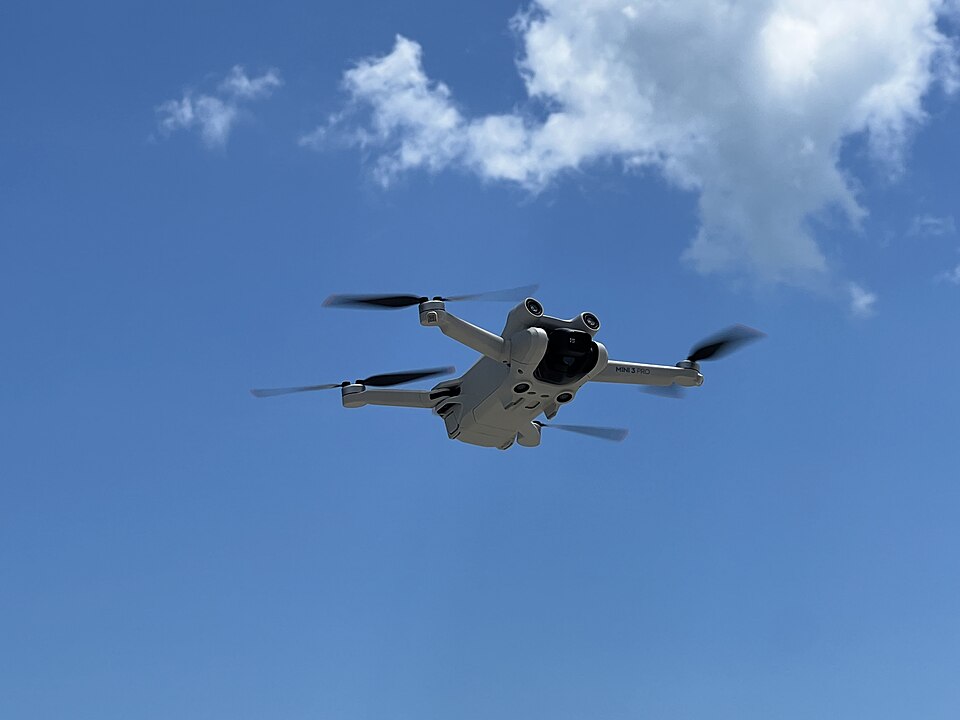
Officers seized what investigators identified as a DJI Mini 3 camera drone, along with its removable memory card and controller. Investigators alleged that Colombari lacked both an FAA Part 107 Remote Pilot Certificate and authorization to operate in the restricted airspace. The complaint consequently alleges operation without a required certificate and a violation of national-defense airspace restrictions.
A small drone is still an aircraft
The Mini 3 belongs to a lightweight consumer-drone class, but low mass does not create blanket permission to fly. Weight can affect requirements such as registration and certain operations over people; location, purpose and airspace authorization remain separate regulatory questions.
The FAA’s guidance for recreational flyers says visitors from other countries face additional steps and that recreational pilots must complete the agency’s safety test, carry proof and follow airspace restrictions. Although drones weighing less than 250 grams may avoid the recreational registration requirement in some circumstances, that threshold does not override restrictions around protected federal property.
Flight purpose also determines which operating framework applies. Part 107 is the default rule for most nonrecreational small-drone operations, and pilots operating under it generally need a remote-pilot certificate or direct supervision from a qualified pilot. Congress created a limited exception for flights conducted purely for recreation, but an operator must satisfy all conditions of that exception rather than merely describe a flight as personal or unpaid.
The affidavit’s certification allegation therefore raises an issue that the available filing summary does not fully resolve: why investigators concluded that the alleged flight required Part 107 credentials despite Colombari’s reported explanation that he was recording a vacation. The location-based allegation is more direct. Federal drone rules prohibit operations in prohibited or restricted areas without permission from the agency controlling that airspace.
What the filing leaves unanswered
The complaint establishes the government’s probable-cause theory, not a final determination of Colombari’s intent or legal responsibility. The record described here does not provide a judicial ruling, a defense response or a final disposition of the requested arrest warrant. It also does not allege that the drone carried a dangerous payload or that the flight caused injury or property damage.
Federal agencies separately announced expanded coordination on unauthorized drones on November 9. That initiative covers the evaluation and deployment of systems used to detect, track and safely address unauthorized aircraft, but officials did not identify the Pentagon episode as its cause. No direct connection between the two developments has been established.
The immediate consequence in this case came through detection and conventional enforcement: officers located the alleged operator, examined identifying documents and seized the aircraft. For recreational pilots, particularly international visitors, the case illustrates why a drone’s portability and modest size can be misleading. A consumer camera platform remains part of the national airspace system, and an allegedly uninformed launch near the Pentagon can progress from vacation filming to a federal criminal complaint.
| More aerospace and engineering stories, right in your MSN feed. Follow AMI on MSN |
By Stephen Wallace — Editor for AMI’s aerospace integration and unmanned mobility coverage, focused on drone manufacturing, VTOL systems, autonomous networks, and air-ground mobility links.