Ukraine’s President Says Frequent F-16 Repairs Leave Too Few Flying
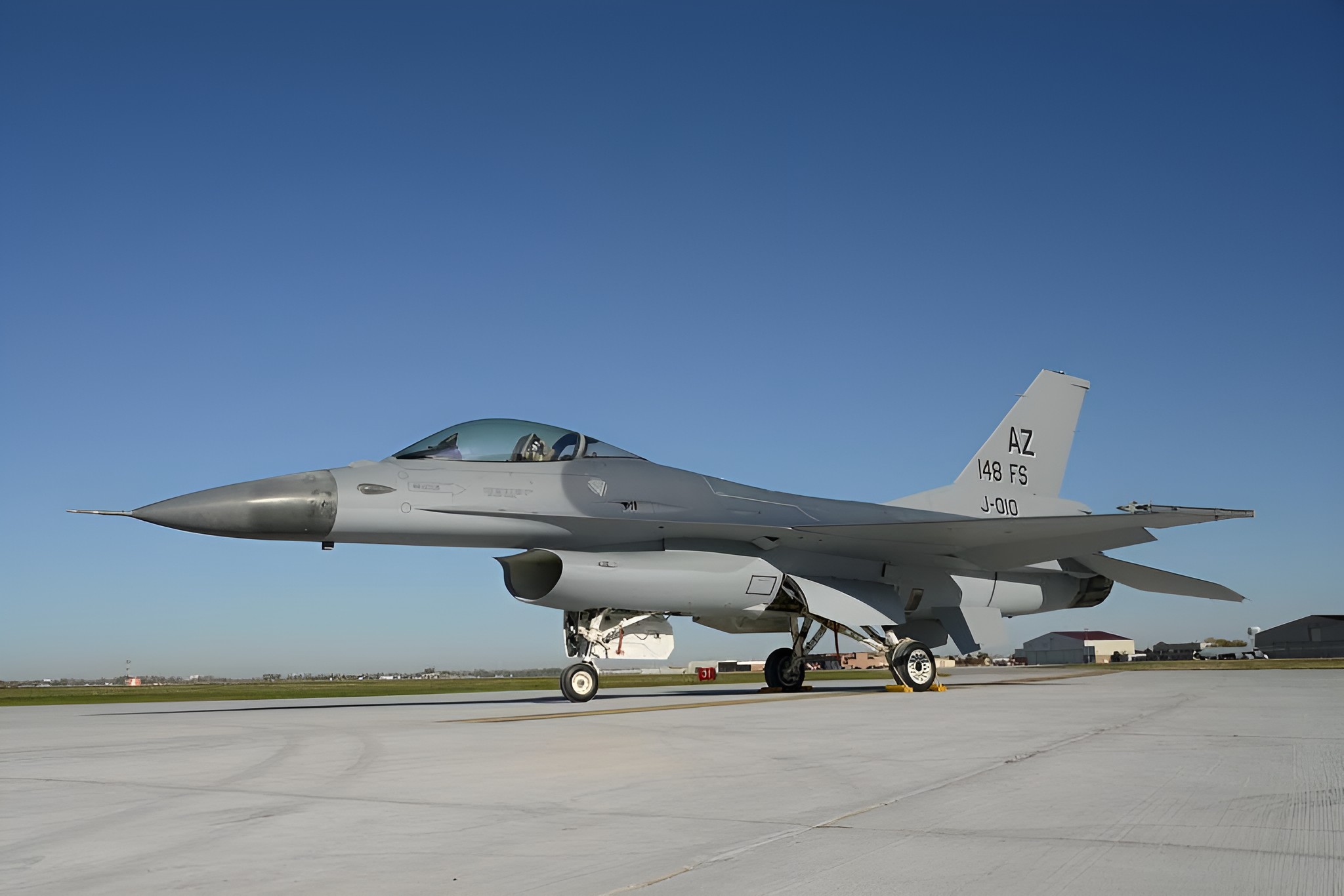
An F-16 can be formally transferred, listed as available and still spend much of its time on the ground. Ukrainian President Volodymyr Zelensky says that gap is constraining Ukraine’s Western-supplied fighter fleet: the older aircraft frequently require repairs, leaving too few ready for the country’s military missions.

In remarks attributed to Ukrainian outlet Suspilne News, Zelensky said the F-16s are barely being used in combat operations because they spend so much time undergoing repairs. He attributed the maintenance burden to their age and technical condition, noting that the donated fighters are not new. He also said Ukraine needs 2.5 times as many aircraft airborne simultaneously as it currently deploys.
No fleet-wide availability rate, aircraft count or maintenance record was provided with that assessment. Those missing figures are important because “available” can describe several different states. A transferred aircraft may be in the recipient’s inventory without being ready to fly, while a flyable aircraft may still lack the condition, configuration or completed maintenance needed for a particular mission.
Transferred aircraft do not equal flying aircraft
The delivery pipeline adds another layer. Six F-16s pledged by Norway and officially transferred to Ukrainian ownership reportedly remained physically in Belgium as of April 2026. No explanation for their location or delivery timetable was provided. Ownership therefore did not translate immediately into aircraft present with the operating fleet.
Together, repair downtime and incomplete physical delivery can create a substantial difference between the number announced or assigned and the number available on a given day. That does not require every aircraft to have a major defect. Routine inspections, replacement parts, engineering work and unscheduled findings can each keep an older fighter off the flight line.
The broader F-16 record supports the basic maintenance concern, though it does not independently establish the condition of Ukraine’s individual jets. A Government Accountability Office assessment covering U.S. military aircraft from fiscal 2011 through 2019 found that the F-16 fleet failed to meet its mission-capable goals throughout that period. The watchdog linked the shortfall partly to fleet age and associated supply and maintenance challenges, according to a summary of the findings.
That review also illustrates why raw aircraft totals can mislead. The U.S. F-16 fleet came close to an 80% mission-capable target in fiscal 2019, but its C and D models recorded rates of about 73% and 70.4%, respectively. Those figures describe a much larger and differently supported fleet, so they are not a proxy for Ukraine’s availability. They do show that even an established operator with mature maintenance infrastructure does not expect every fighter to be ready at once.
Maintenance capacity is part of the fleet
Keeping F-16s flying requires more than airframes. Technicians must be trained for the aircraft and local operating environment, parts must arrive when needed, inspections must be completed and unexpected work must be absorbed without creating a growing queue. A U.S. Air Force F-16 crew-chief program, for example, uses six weeks of intensive instruction, including substantial hands-on flight-line training. The course structure reflects how maintenance personnel are an operational resource rather than an accessory to the aircraft.
Unplanned work can also make nominal maintenance schedules unreliable. A separate GAO finding reported in May 2026 said the share of U.S. Air Force aircraft missing their original depot-maintenance target dates increased from 31% in 2019 to 74% in 2024. The watchdog identified unexpected work, parts delays and engineering reviews among the complications obscured when completion targets were revised.
For Ukraine’s F-16 fleet, the most useful verification would therefore go beyond how many aircraft donors have pledged or legally transferred. It would establish how many have physically arrived, how many are flyable, how many meet mission requirements, and how long aircraft remain unavailable while awaiting maintenance, parts or engineering decisions.
Until those figures are available, Zelensky’s 2.5-times requirement is best understood as an operational demand statement rather than a disclosed fleet calculation. His complaint nevertheless identifies the central constraint clearly: a fighter counted on paper contributes little to daily capacity while it remains under repair or in another country.
| More aerospace and engineering stories, right in your MSN feed. Follow AMI on MSN |
By David Whitaker — Associate editor for AMI’s aerospace and drone systems desk, translating flight systems, aircraft programs, spaceflight, and UAV developments into accessible technical stories.