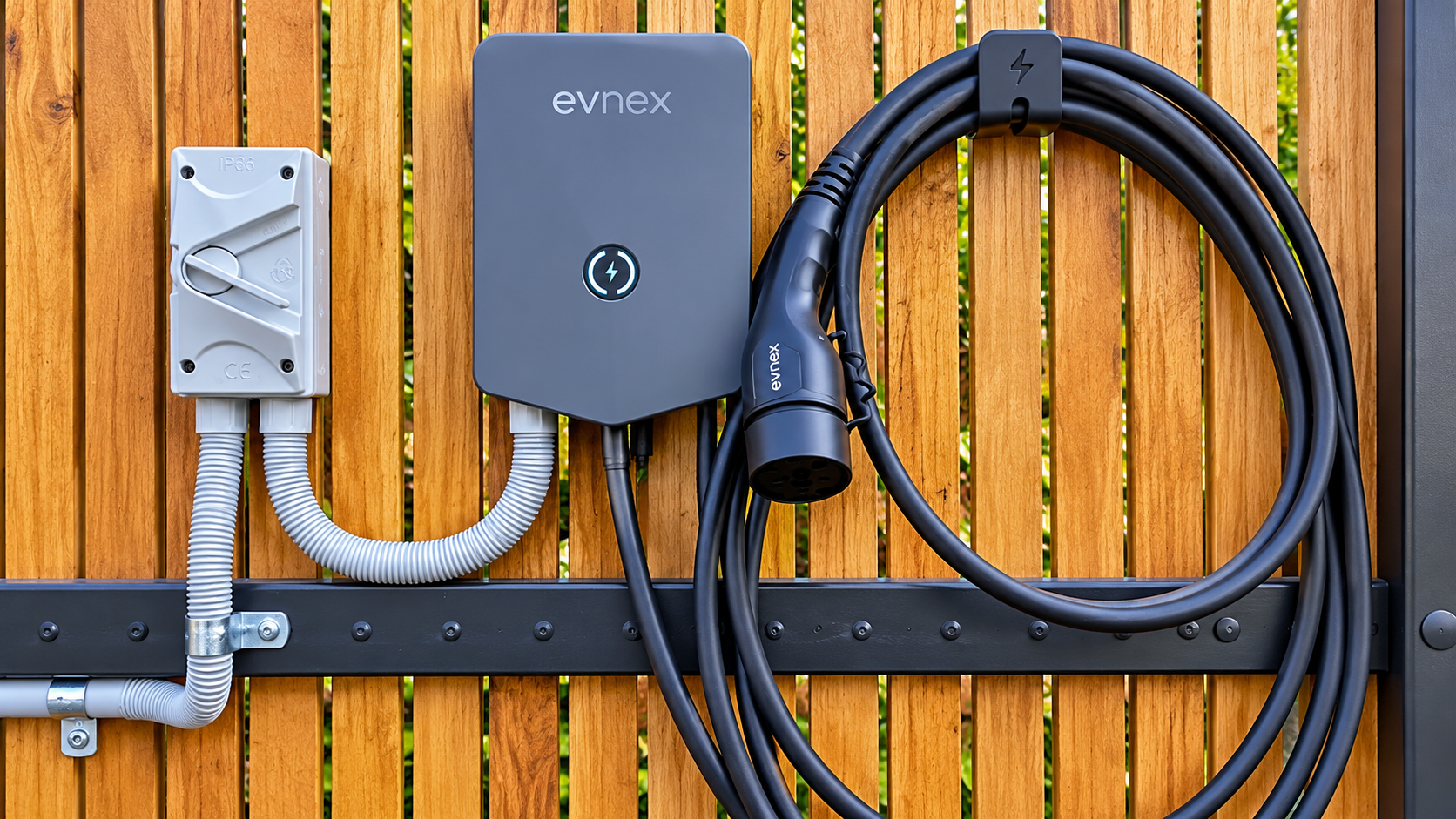
Evnex Says Peak EV Charging Can Cost Australians $600 Extra Annually
Two Australian households can drive the same electric vehicle the same distance yet face sharply different charging costs. In its 2026 modelling, smart-charger maker Evnex estimates that charging entirely during peak-demand periods could add as much as $600 a year, depending on the state. Peak-only charging was also estimated to cost $320 more annually than using a smart schedule.
The comparison rests on timing rather than reduced vehicle use. Evnex founder and CEO Ed Harvey said a typical EV consumes about 2,000 kilowatt-hours of electricity each year. Buying that energy at 30 cents per kilowatt-hour produces a $600 bill; at 15 cents, the same amount costs $300. The car, distance driven and total energy consumption remain unchanged.
Why an EV is a flexible household load
Many large residential loads are tied closely to human routines. Cooking and evening heating cannot always be postponed for several hours. A parked EV is different because it may remain connected much longer than it needs to draw power.
That gap between connection time and required charging time gives software room to move the load. A smart charger can wait for a lower-priced period and then supply the energy needed before the driver’s planned departure. Evnex reports that approximately 80% of charging across its network of more than 20,000 home devices already occurs during off-peak periods.
The function can be as basic as following a preset schedule or more active, with charging controlled in response to tariff, building or grid conditions. An Australian Renewable Energy Agency-backed Origin Energy trial, for example, uses remotely monitored and software-controlled chargers to study driver behaviour, incentives and integration with a distributed-energy management platform.
Automation is important because a low rate has little value if the owner must remember to start charging manually every day. The charger effectively turns a flexible parking period into an operating window, moving a substantial load without changing the mobility service the vehicle provides.
Free electricity does not mean a cheaper overall plan
Lower-cost periods often occur around the middle of the day, when abundant solar generation can make electricity cheaper. The federal government’s Solar Sharer Offer began on July 1 and, according to the program description cited by Evnex, requires retailers to provide at least one plan offering three free hours of electricity each day.
That free window is only one part of a household tariff. Evnex advises owners to examine the daily supply charge and the rates applied outside the free period before changing plans. A household that moves EV charging into a zero-cost window could still pay more elsewhere if the plan carries higher fixed charges or more expensive electricity during the hours when other appliances operate.
The size of the benefit also depends on the state’s tariffs, the amount of energy the vehicle uses and how much charging can actually be shifted. Evnex’s figures describe its modelled comparisons, not a guaranteed result for every Australian EV owner.
Scheduling can move a peak rather than remove it
Smart charging also has a system-level boundary. If thousands of chargers follow the same simple timer and switch on together as soon as a cheap period begins, demand can become concentrated at a new time. A Canadian Climate Institute analysis of managed charging warns that synchronized starts can create another peak on local distribution networks.
Coordinated control can address that problem by staggering start times or adjusting charging power while still delivering the required energy before departure. This is the distinction between merely delaying every vehicle to one advertised hour and managing a fleet as a flexible electrical load.
For households, the immediate calculation remains the complete tariff applied to roughly 2,000 kilowatt-hours of movable annual demand. For the grid, the longer-term engineering task is ensuring that automated charging spreads that load into genuinely lower-demand periods rather than directing every connected car toward the same three-hour window.
| More aerospace and engineering stories, right in your MSN feed. Follow AMI on MSN |
By Thomas Caldwell — AMI’s senior editor for mechanical and mobility engineering, covering vehicle electronics, systems integration, electrification, chassis systems, propulsion, and safety policy.