Oldsmobile Built Just 264 W-30 Convertibles With Red Plastic Inner Fenders
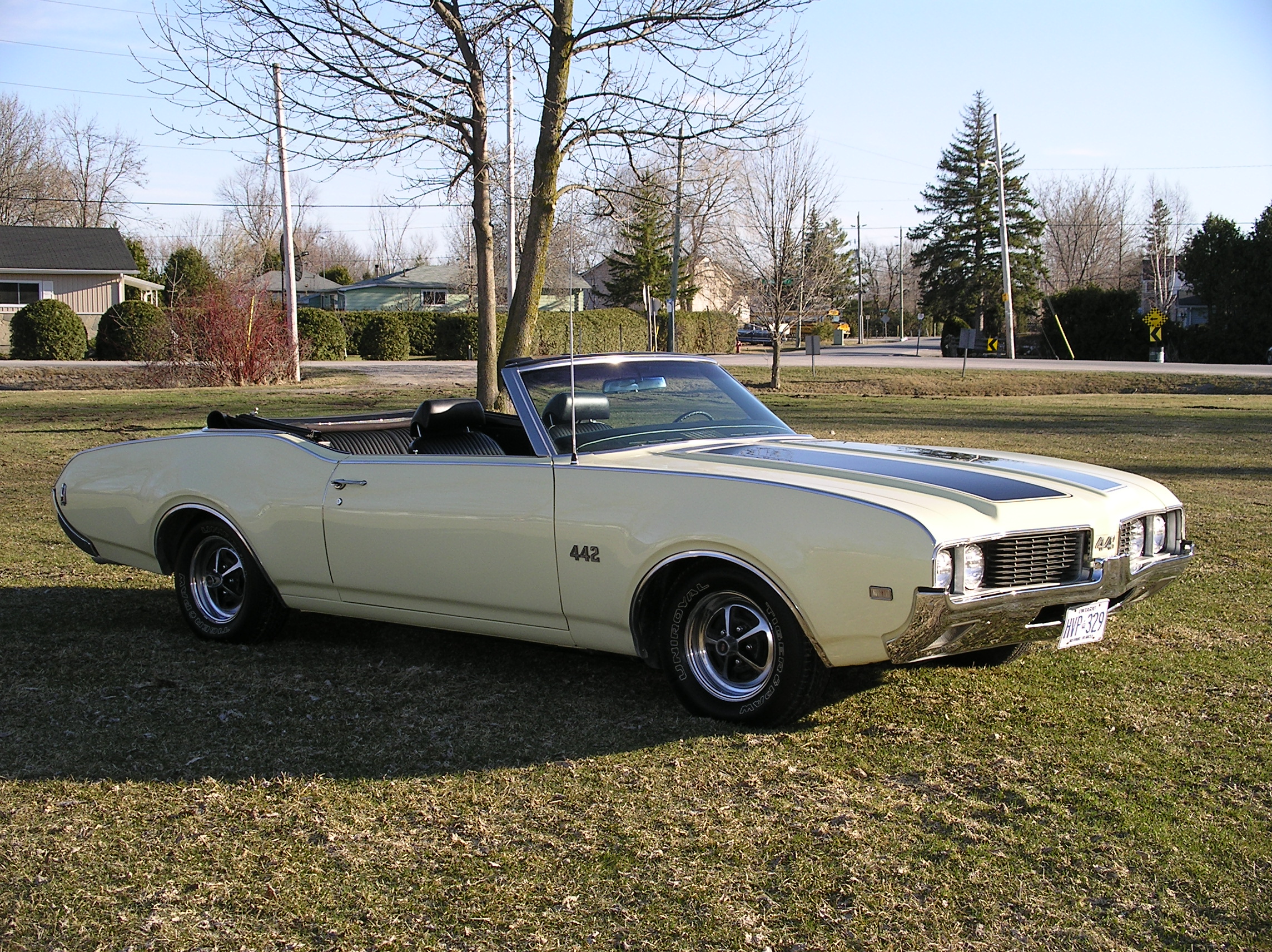
Open the hood of a 1970 Oldsmobile 4-4-2 W-30 convertible and one of its most conspicuous components is also one of its most easily misunderstood: a pair of red plastic inner-fender liners. They can look like decorative pieces, but they belonged to a broader factory performance package that substituted lighter materials and removed some insulation around a 455-cubic-inch V8.

The liners did not transform the car by themselves. Their importance comes from how they fit into a coordinated program that also used a dual-intake fiberglass hood, an aluminum intake manifold, aluminum differential components and less sound-deadening material. Oldsmobile applied those incremental reductions even though the convertible’s reinforced frame kept it heavier than the coupes.
A collection of small weight reductions
The fiberglass hood reportedly removed 18 pounds compared with the standard steel part. It also carried dual air intakes for the W-30’s outside-air induction system, combining a weight-saving substitution with a functional airflow feature. The red inner-fender liners reinforced that induction package’s visual identity while replacing conventional material with plastic.
Aluminum appeared in the intake manifold and in the differential carrier and cover. Reducing mass in several separate assemblies was a more realistic approach than expecting one component to offset the structural penalty of an open body. The W-30 package also cut sound deadening, trading some isolation from noise for another modest reduction in vehicle mass.
That tradeoff is particularly clear in the convertible. Factory shipping weights cited for the W-30 put the open car 68 to 78 pounds above the coupes because its frame needed additional reinforcement. The fiberglass, aluminum, plastic and reduced insulation therefore did not make the convertible lighter than its fixed-roof siblings. They limited how much heavier the reinforced version became while supporting the performance objective across the W-30 range.
The 455 supplied the central performance gain
Every 1970 4-4-2 W-30 used a 455-cubic-inch V8 rated at 370 gross horsepower and 500 pound-feet of torque. The standard 455 was rated at 365 gross horsepower with the same stated torque, but the W-30 package went beyond the five-horsepower difference. It included outside-air induction, a performance-calibrated four-barrel carburetor, a hotter camshaft and a freer-flowing exhaust.
The word “gross” is important when reading those figures. Pre-1972 American horsepower ratings generally came from an engine tested under conditions that did not represent a fully installed modern powertrain with its normal accessories and exhaust restrictions. The 370-horsepower number consequently should not be compared directly with today’s net ratings. It remains useful for distinguishing the W-30 from the standard engine under the period’s measurement convention.
Transmission selection further divided the already small convertible run. Of the 264 W-30 convertibles built for 1970, 96 received the close-ratio M21 four-speed manual and 168 used a specially prepared Turbo-Hydramatic 400 three-speed automatic. A console-mounted Hurst Dual-Gate shifter was available with the automatic.
Rarity came from the body style, not the liners alone
The production imbalance was substantial. Oldsmobile built 2,574 W-30 Holiday coupes and 262 pillared Sports Coupes, for 2,836 fixed-roof cars in total. That was nearly 11 times the convertible production. The detailed totals are also documented in a Hemmings profile of the 1970 W-30.
The convertible started at $3,567 before options, compared with $3,376 for the Holiday hardtop. It also received a prominent public role when a 4-4-2 convertible served as the 1970 Indianapolis 500 pace car, driven by two-time race winner Rodger Ward.
For collectors, the red liners are best understood as one visible clue within a complete mechanical and material package not as a stand-alone explanation for authenticity or value. Production configuration, drivetrain and the other W-30 equipment remain part of that assessment. What makes the liners notable is their context: Oldsmobile accepted the structural mass required by a convertible, then pursued pounds wherever practical through fiberglass, aluminum, plastic and reduced insulation. Only 264 open-top W-30s emerged from that compromise.
| More aerospace and engineering stories, right in your MSN feed. Follow AMI on MSN |
By Thomas Caldwell — AMI’s senior editor for mechanical and mobility engineering, covering vehicle electronics, systems integration, electrification, chassis systems, propulsion, and safety policy.