Elecbrakes Patches Bluetooth Flaw That Let Nearby Devices Brake Trailers
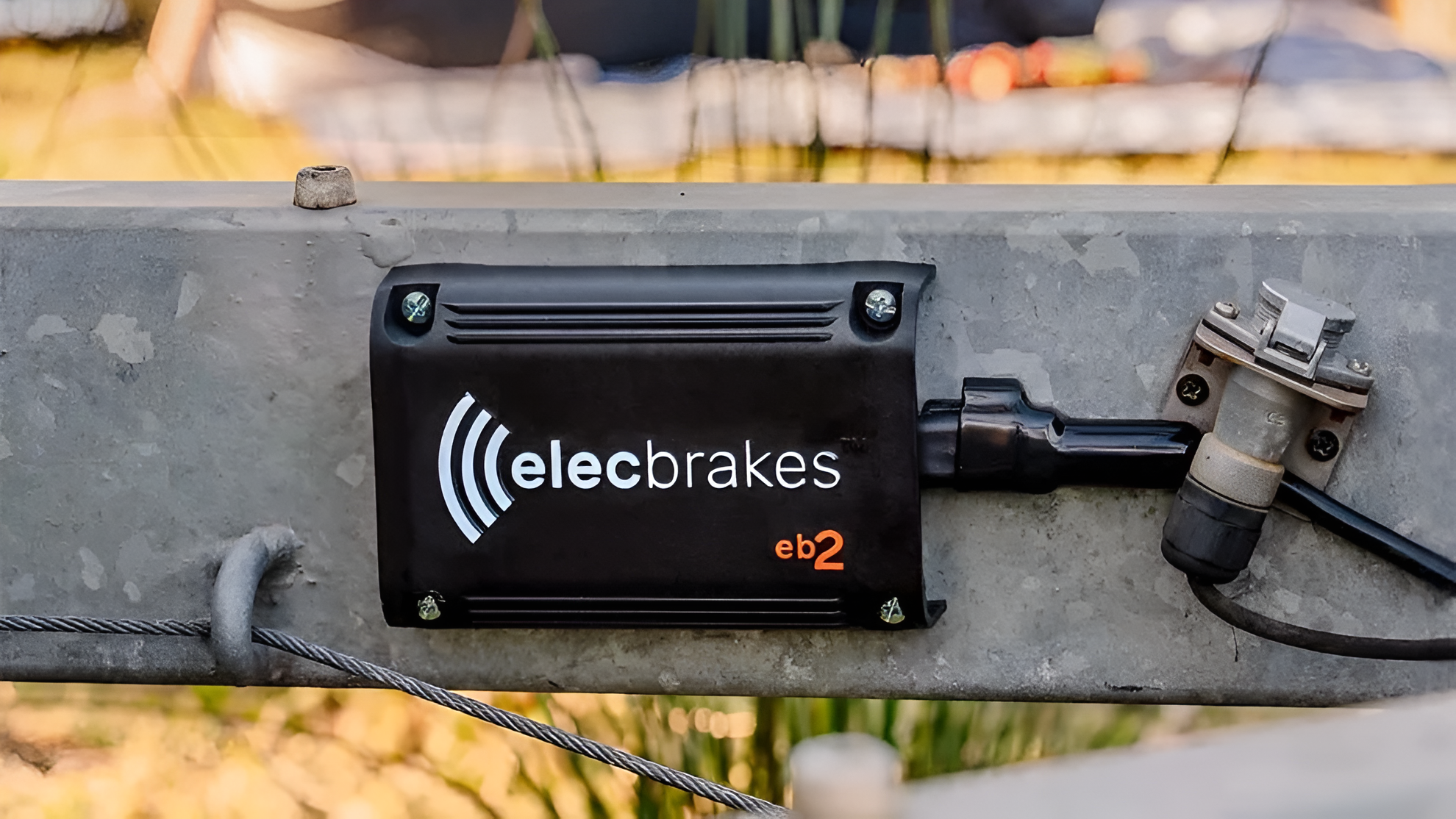
Elecbrakes has released firmware patches for two trailer brake controllers after researchers found that any unauthenticated Bluetooth device within an estimated 10 to 100 metres could command un-updated units to apply full braking force. The flaw affected a safety-critical mechanical function without requiring Bluetooth pairing, creating a risk of trailer jackknifing or loss of vehicle control. A CISA security advisory identifies the affected products as the Elecbrakes EB2, VM1 and discontinued ELBC 2000.
The researchers, Patrick Forck and Jeremy McCarthy of Element Digital, reported that the brakes release when the unauthorized Bluetooth connection ends. A device that remains within range, however, could keep the brakes applied. Elecbrakes said it knew of no reported damage or injury, and CISA said no known public exploitation specifically targeting the vulnerabilities had been reported.
The discovery began with an accidental connection rather than a laboratory test. Forck said his in-car Elecbrakes remote connected to another party’s trailer without displaying a pairing prompt. He encountered the unexpected connections most often around Sensys Gatso speed-camera trailers operated for the Tasmanian government. That prompted an investigation into why one controller could reach equipment it did not own.
The most serious issue, tracked as CVE-2026-96805, allowed an in-range Bluetooth device to send brake commands without authentication or pairing. A second flaw, CVE-2026-125273, involved the absence of protections that distinguish a fresh command from one captured earlier. Both received critical CVSS scores of 9.6 out of 10.
From a mechanical-systems perspective, the unusual risk comes from the direct path between a wireless command and brake torque. A compromised entertainment or information system primarily threatens data or availability; a trailer brake controller changes forces acting on a moving combination. Sudden trailer-only braking can destabilize the tow vehicle and trailer, particularly when the trailer is loaded or the combination is already cornering or descending.
“This one outputs torque to a wheel on a public road,” Forck said. “The impact isn’t measured in records exposed.” He described the physical consequences in terms of “stopping distances, jackknife angles, and boat ramps.”
Two controllers have patches, but installation is manual
Element Digital notified Elecbrakes on May 18, 2026. Elecbrakes released EB2 firmware version 3.0.4.4.3 and VM1 firmware version 1.3.4.2.1 on July 6. CISA lists EB2 versions through 3.0.4.2.0 and VM1 versions earlier than 1.3.4.2.1 as affected.
Owners must open the Elecbrakes app and initiate the firmware installation themselves. Elecbrakes said the process takes one to two minutes, but that small manual step is now the main deployment constraint: producing a patch does not remove the road risk until owners install it.
The company said 60 to 70 percent of controllers connecting each day were already running current firmware and that adoption continued to rise. It reported sending an initial notification to 39,843 app users, with 23,775 prompts delivered to users whose controllers had older firmware. Those figures describe connected units and delivered prompts, not confirmation that every affected controller has been updated.
A third vulnerability, CVE-2026-124281, concerns the firmware-update channel and carries a score of 6.1. Elecbrakes said its current remediation addresses the critical problem at another layer rather than adding firmware signing. The company plans further protection for over-the-air updates in its next app release.
The older ELBC remains unresolved
The discontinued ELBC 2000 presents the harder product-support problem. CISA lists all versions as affected and says no remediation is currently available while Elecbrakes determines how to address the older controller. Elecbrakes said active connection to the ELBC through its smartphone app or remote, as directed in the product instructions, provides an interim mitigation.
That leaves the product line split between current models with owner-installed fixes and legacy hardware awaiting a separate path. The EB2 and VM1 patches reduce the immediate exposure only after installation; every un-updated controller still combines a short-range wireless interface with authority over a trailer’s brakes. For the ELBC 2000, the central engineering and support question remains how Elecbrakes will secure discontinued hardware that is still operating on public roads.
| More aerospace and engineering stories, right in your MSN feed. Follow AMI on MSN |
By Robert McKinney — Editor-in-Chief for AMI’s automotive and mobility coverage, with a mechanical engineering background and a decade reporting on powertrain systems, EV innovation, and global vehicle manufacturing.