Federal Watchdog Audits FAA Oversight After Boeing 737 MAX Bolts Went Missing
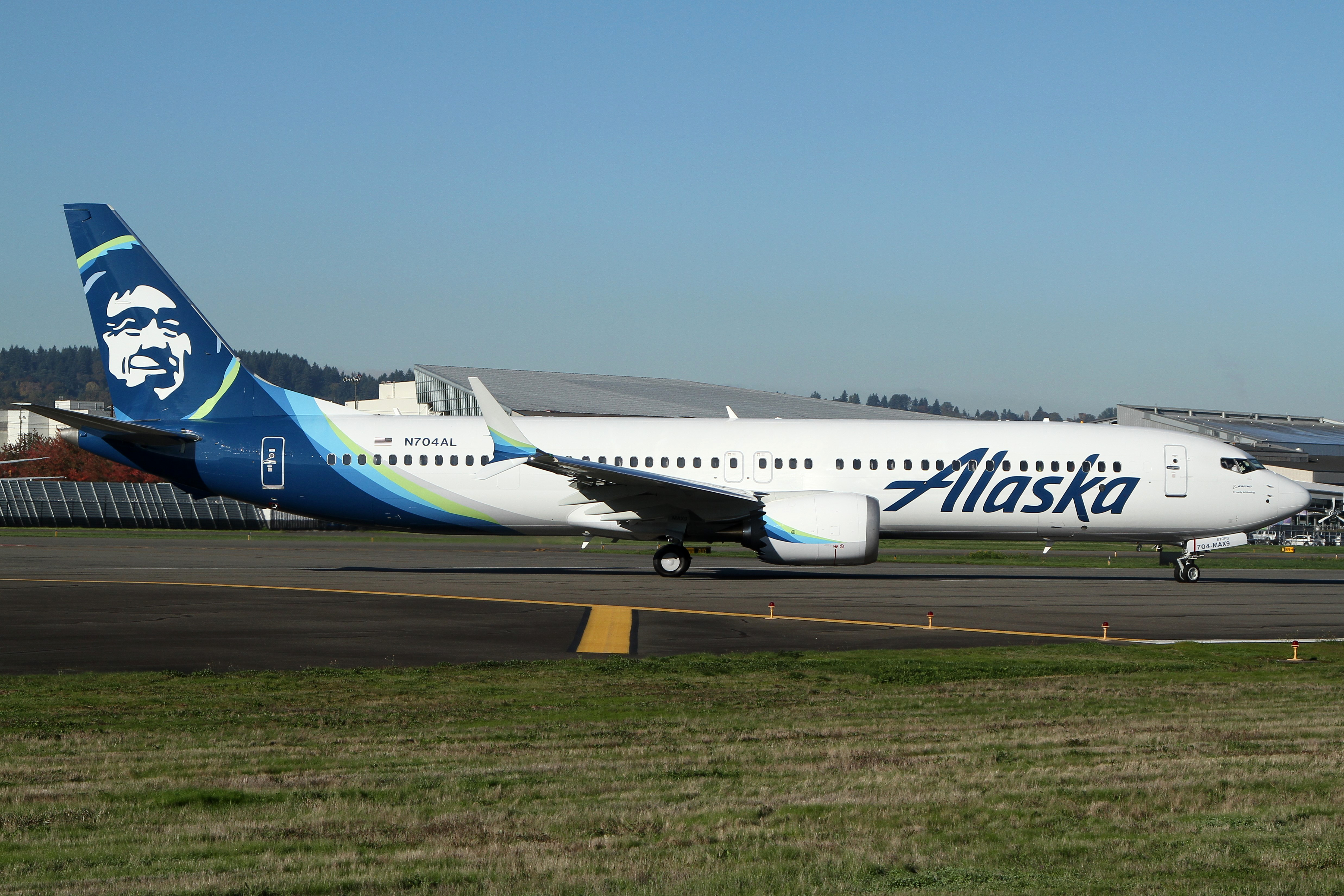
The U.S. Transportation Department’s Office of Inspector General is auditing how the Federal Aviation Administration supervised Boeing, other aircraft manufacturers and aerospace suppliers. The review follows official findings that four key bolts were missing from a new Alaska Airlines 737 MAX involved in a January 2024 cabin blowout. The FAA said it will cooperate fully.

The National Transportation Safety Board cited ineffective FAA oversight of Boeing, while separate FAA inspections found hundreds of quality-system violations at Boeing’s factory in Renton, Washington, and Spirit AeroSystems’ fuselage factory in Wichita, Kansas. Those inspections took place between September 2023 and February 2024. Spirit manufactures fuselage components for Boeing’s 737 program.
The audit’s significance extends beyond the missing hardware. It puts the structure of federal production oversight under examination: how the FAA identifies factory risks, supervises work delegated to manufacturers, monitors suppliers and decides whether completed aircraft satisfy airworthiness requirements.
Oversight depends on both regulators and manufacturers
The FAA does not directly perform every engineering approval, inspection or certification task within the U.S. aviation industry. Federal law allows it to delegate certain functions to qualified people and organizations. Through the Organization Designation Authorization program, manufacturers can be authorized to approve some design changes and perform other certification work that would otherwise require FAA action.
Delegation is intended to make a large, technically complex certification system workable. It also creates a systems-integration challenge: the regulator remains responsible for safety outcomes while relying on company personnel to complete some of the underlying work. According to the FAA’s description of the program, agency engineers and inspectors regularly oversee authorized organizations to ensure that they function properly and that their approvals meet federal safety standards.
The practical question is therefore not whether delegation exists, but whether the FAA has enough people, data and risk-based controls to supervise it effectively across manufacturers and their supply chains. Aircraft production distributes responsibility among final-assembly plants, major structural suppliers and many component producers. A quality failure at one point can arrive at another facility as accepted work unless inspection, documentation and corrective-action systems identify it.
An earlier audit identified staffing and supplier gaps
The inspector general has already documented weaknesses relevant to the new review. A previous audit of the FAA’s delegated-authorization oversight found that the agency lacked a comprehensive method for calculating the staffing needed to oversee participating organizations.
That earlier review found that the FAA’s staffing model did not include detailed information about workload drivers such as company size, location, project complexity and the type of work being performed. It also concluded that oversight was not fully systems- and risk-based, citing limited guidance, inadequate risk tools and insufficient analysis of program data. The inspector general further found that the FAA did not conduct enough oversight of delegated personnel doing certification work at companies that supply components to other manufacturers.
Those findings point to measurable areas for the current audit: whether inspector and engineer staffing corresponds to production complexity; whether supplier information is visible to regulators; whether recurring violations change the frequency or depth of surveillance; and whether corrective actions are verified across organizational boundaries. The audit’s scope covers Boeing but also the wider manufacturing and supplier base, making these institutional controls more consequential than the practices at any single factory.
Production and certification decisions carry competing costs
After the Alaska Airlines incident, the FAA prevented Boeing for 21 months from raising 737 MAX production above 38 aircraft per month. Boeing also paid a $3.1 million fine for a series of safety violations. The production restriction illustrates one tool available to regulators when quality controls are judged inadequate: limit output while the manufacturer works on compliance.
Such restrictions have tradeoffs. Slower production can delay the flow of aircraft to operators and increase pressure on manufacturers and suppliers, but allowing output to rise without adequate process control can increase inspection burdens and the risk that defects escape the factory. Passengers ultimately depend on that balance being set by verified manufacturing performance rather than delivery demand.
Airworthiness certification presents a related tension. The FAA later allowed Boeing to issue airworthiness certificates for all 737 MAX and 787 airplanes. An airworthiness certificate is an approval for an individual aircraft, while production oversight evaluates whether the manufacturing organization can repeatedly build conforming aircraft. Effective regulation has to connect those two levels: evidence from individual airplanes should inform scrutiny of the production system, and systemic factory findings should influence how much confidence regulators place in individual approvals.
The inspector general has not announced conclusions, and no regulatory changes or airline schedule effects have been identified as results of the audit. Its central test is whether FAA controls can reliably detect manufacturing and supplier-quality problems before a completed aircraft enters service. Four missing bolts made that oversight problem visible; the audit will examine whether the federal system is equipped to find less visible failures across an entire production network.
| More aerospace and engineering stories, right in your MSN feed. Follow AMI on MSN |
By Thomas Caldwell — AMI’s senior editor for mechanical and mobility engineering, covering vehicle electronics, systems integration, electrification, chassis systems, propulsion, and safety policy.