Helios Horizon Reaches 17,200 Feet With 64% Battery Remaining
Sixty-four percent was the number left on the battery after Helios Horizon founder and test pilot Miguel Iturmendi climbed the nonprofit initiative’s electric aircraft to 17,200 feet. The flight consumed just 36% of the available charge, according to a November 18 announcement from the University of North Dakota, which supported the test campaign through its John D. Odegard School of Aerospace Sciences.
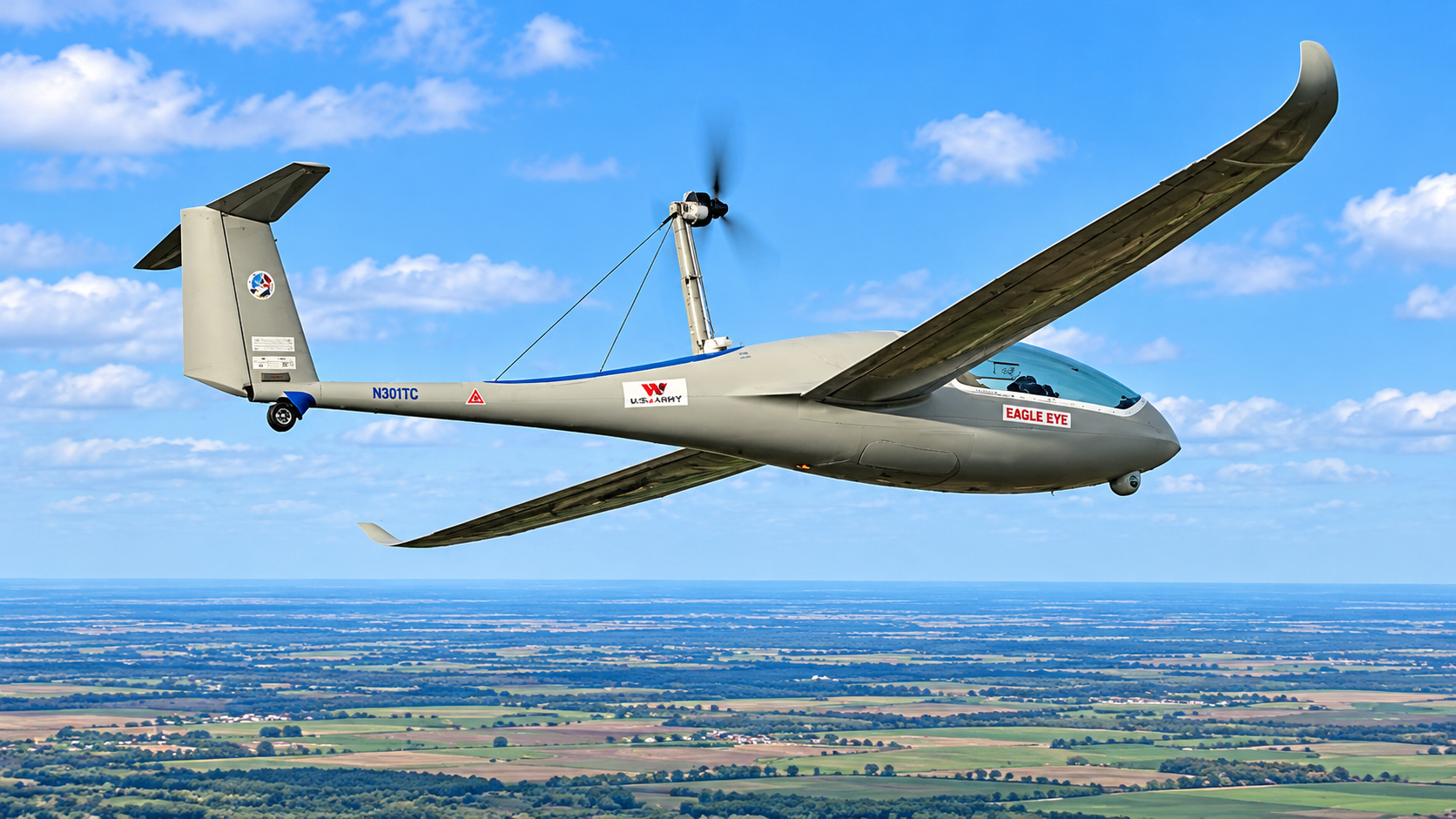
That reported reserve is notable because battery mass has sharply constrained the altitude, range and payload of electric aircraft. Helios Horizon used a heavily modified Pipistrel Taurus, a lightweight two-seat motorized glider with long wings and an airframe already suited to efficient flight. It is a favorable platform for testing whether higher-energy cells can push electric propulsion beyond short, low-altitude demonstrations.
Why the solid-state cells matter
The aircraft’s solid-state cells reportedly provide about 410 watt-hours per kilogram, compared with 260 watt-hours per kilogram for the lithium-ion batteries previously used by the team. That is an increase of roughly 60% at the cell level, potentially allowing an aircraft to carry more energy without a corresponding increase in cell mass.
The cell-level qualification is important. An installed aviation battery also needs structural containment, electrical connections, thermal control and a battery-management system. Those components add mass, so a complete pack delivers less energy per kilogram than its individual cells. Helios Horizon has not provided a pack-level figure here, preventing a direct comparison with complete battery installations in other aircraft.
Higher specific energy still addresses electric aviation’s central weight problem. Batteries remain at essentially the same mass throughout a flight, unlike liquid fuel, which becomes lighter as it is consumed. Every kilogram assigned to energy storage also competes with occupants, instruments and aircraft structure. The Taurus configuration helps by pairing the battery with an efficient glider airframe rather than asking the propulsion system to overcome the drag and weight of a conventional powered aircraft.
Altitude introduces its own demands. Lower temperatures can reduce battery power and capacity, while lower air density weakens convective cooling. Pressure changes also affect how cells, enclosures and thermal-management hardware must be designed. The completed campaign therefore provides more useful information than a laboratory energy-density number alone, although one flight does not establish service life, repeatability or certification readiness.
Three claimed records await validation
Helios Horizon says the campaign exceeded three records for electric aircraft weighing less than 500 kilograms, or 1,102 pounds: total altitude, altitude in horizontal flight and time to climb above 3,000 meters. Iturmendi reportedly passed 3,000 meters in 27 minutes.
An observer from the National Aeronautic Association witnessed the flights, and the results have been submitted to the World Air Sports Federation, known as FAI, for validation. Until that process is complete, the three marks remain team claims rather than certified world records. The team also described an earlier May flight as the first human-piloted aircraft flight powered exclusively by solid-state batteries.
The University of North Dakota contributed more than a name to the campaign. The aircraft carried an experimental atmospheric gas analyzer supplied by researcher Shawn Wagner, giving the flight a scientific payload as well as a propulsion test objective. Iturmendi also used the university’s hypobaric chamber to test a pressure suit and life-support equipment for future high-altitude operations.
That preparation draws on relevant experience. Iturmendi’s test background includes Solar Impulse 2, HondaJet, NASA programs and the Perlan Project. While flying with Perlan, he piloted an unpowered glider to 66,000 feet.
The next climb is much harder
Helios Horizon plans to refit the current aircraft with another set of solid-state batteries that it says will provide 25% greater energy density, followed by flights targeting 40,000 feet in early 2027. That would move the program into a substantially harsher environment for the pilot, battery, propulsion electronics and thermal-control system.
Iturmendi has also outlined a separate pressurized aircraft called Helios Horizon 2, intended to carry a pilot and two passengers, or an equivalent payload, at altitudes up to 80,000 feet. It remains a proposed commercial design, not a demonstrated aircraft. Reaching that target routinely would require far more than additional battery capacity: the pressure vessel, life-support equipment, high-altitude aerodynamics and added structural mass would all have to fit within the aircraft’s energy budget.
The immediate result is narrower but concrete. A lightweight electric aircraft climbed above 17,000 feet while retaining most of its reported charge. The next 40,000-foot campaign will test whether that reserve can translate into a repeatable stratospheric aircraft rather than a single favorable demonstration.
| More aerospace and engineering stories, right in your MSN feed. Follow AMI on MSN |
By David Whitaker — Associate editor for AMI’s aerospace and drone systems desk, translating flight systems, aircraft programs, spaceflight, and UAV developments into accessible technical stories.