Tesla Expands Supercharger Waitlist to 300 Sites, but Honor System Remains
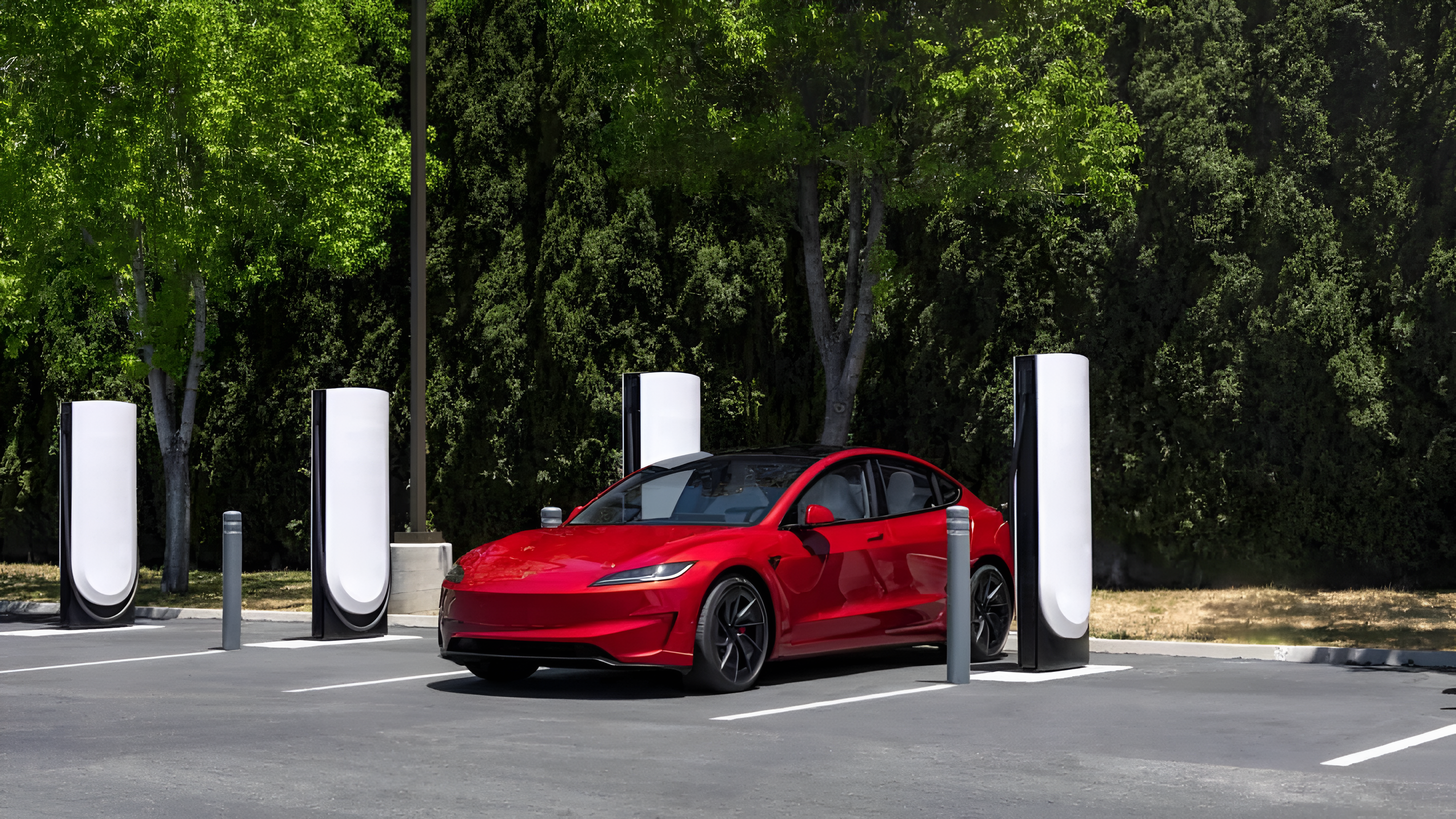
Tesla has expanded its digital Supercharger Waitlist from five pilot locations to 300 sites across the United States, giving drivers a clearer view of where they stand when every charging stall is occupied. The software can organize demand and estimate a wait, but it cannot stop a driver outside the digital queue from taking an open stall.
That creates the central tension in the rollout: Tesla has built the information layer for an orderly line without enforcing the line itself. Drivers may gain reassurance from seeing their position and estimated delay, yet the system still depends on everyone at the site honoring the queue.
Tesla Charging announced the expansion on November 19, 2026. It is a substantial increase from the five-site pilot launched in California and New York in May. All 300 locations covered by the announced rollout are in the United States.
How Tesla’s charging queue works
The waitlist becomes available when a participating Supercharger location is filling up. Tesla owners can enter through the Tesla app or their vehicle’s touchscreen. If a Tesla is navigating to the location, the vehicle may automatically add its driver to the queue as it approaches.
Compatible non-Tesla electric vehicles can also use the system, although their drivers must join through the Tesla app. The feature appears on the app’s home screen or through Find Chargers when an eligible location is nearing full use.
Software versions determine access. Drivers using the app need version 4.56.5 or later, while entry through a Tesla vehicle’s touchscreen requires vehicle software version 2026.14 or later. These requirements make the waitlist a coordinated vehicle, mobile-app and charging-network function rather than a feature located solely in the charging hardware.
Once enrolled, a driver can see a place in line and an estimated wait. When the system announces that a turn is available, the driver has three minutes to connect a vehicle. An additional 30 seconds can be added if needed.
The queue does not reserve or assign a particular charging stall. A Tesla driver can use whichever stall opens, while a compatible non-Tesla driver selects the available stall and starts the session through the app. Avoiding individual stall assignments gives the system flexibility when charging sessions end at different times, but it also leaves the final transfer from digital queue to physical charger dependent on driver behavior.
Queue management is not added charging capacity
The rollout changes how drivers manage a full site; it does not add charging ports or shorten the sessions already underway. Its immediate operational benefit is visibility. Instead of informally watching vehicles and trying to determine who arrived first, participating drivers receive a common queue position, an estimated delay and a defined period in which to claim a turn.
That information can reduce ambiguity around a busy charging location. It may also allow drivers to wait away from the stalls rather than forming an improvised physical line directly beside them. However, the quality of an estimated wait still depends on changing service conditions, including when current sessions finish and whether queued drivers remain available to connect.
Virtual queues are particularly useful in charging because vehicles cannot move through the system as quickly or uniformly as customers at a conventional checkout. Charging duration varies, and a driver who cannot begin immediately may wait elsewhere before returning. Tesla’s three-minute claim period is intended to keep an available stall from remaining unused for long, while the optional 30 seconds provides a narrow buffer.
The remaining enforcement gap
Tesla says the waitlist operates on the honor system. A person who has not joined the queue can still connect to a free charger, and neither the app nor the charger blocks that session on the basis of queue position. The announced information does not document queue-jumping; it establishes that the system lacks a mechanism to prevent it.
Software enforcement would require the network to determine which vehicle is entitled to start at a newly available stall and then reject or defer other connection attempts. Tesla’s current design stops short of that step. It favors broad compatibility and simple stall selection, but purchases that flexibility by leaving compliance voluntary.
The 300-site expansion therefore represents a major scaling of Tesla’s software-based congestion management, not a guarantee of an orderly physical line. Its practical success will depend on whether drivers treat the position shown in the app or touchscreen as the position that governs access when a charging cable becomes available.
| More aerospace and engineering stories, right in your MSN feed. Follow AMI on MSN |
By Thomas Caldwell — AMI’s senior editor for mechanical and mobility engineering, covering vehicle electronics, systems integration, electrification, chassis systems, propulsion, and safety policy.