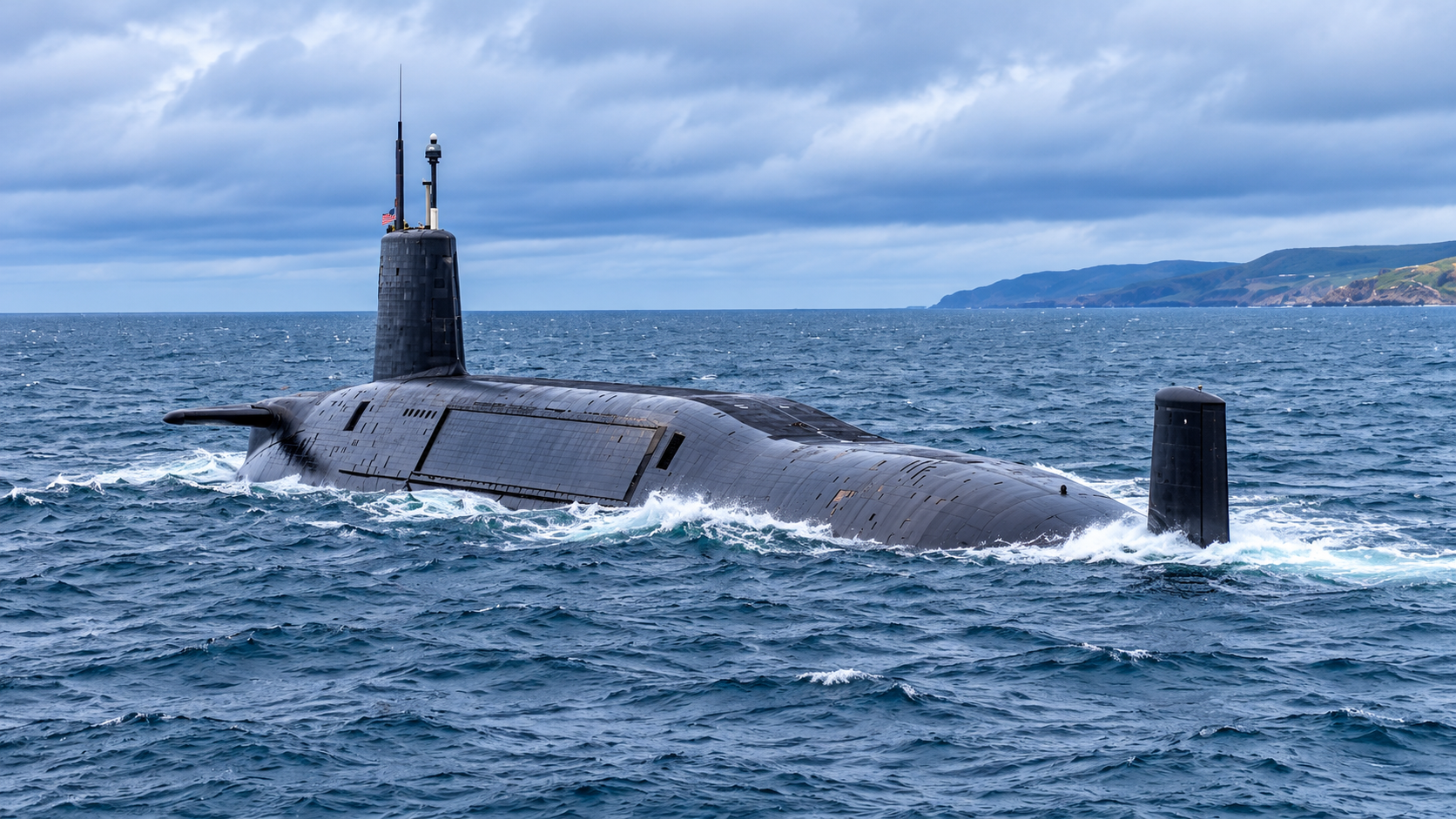
HMS Vengeance Returns After 217 Days Underwater Without Natural Daylight
For 217 continuous days, approximately 140 crew members aboard HMS Vengeance lived and worked without natural daylight. The Vanguard-class submarine has now returned to HM Naval Base Clyde at Faslane, Scotland, after a record patrol lasting more than seven months.

The submarine remained operational throughout that period, but machinery and supplies are only part of the endurance equation. A patrol of this length also places sustained demands on sleep, fitness, nutrition and recovery in a vessel where the crew works, eats and rests inside the same confined environment.
The available information does not identify medical conditions diagnosed among Vengeance’s crew. Instead, the patrol provides an unusually long case through which to examine the established human-factors pressures of submerged service and the measures that can help contain them.
Artificial light has to replace the sun’s timing signal
Natural light helps synchronize the body’s circadian clock, which governs sleep, alertness and other daily biological cycles. A submerged crew must instead rely on schedules and artificial lighting while working around watch rotations that may put sleep outside conventional nighttime hours.
A study of a 67-day military submarine mission recorded fragmented sleep of relatively short duration and small declines in cognitive performance over time. That mission was less than one-third as long as Vengeance’s patrol, so its findings cannot be assigned directly to this crew. They do show why lighting and watch design are readiness issues rather than simple comfort features.
Possible countermeasures include lamps that imitate daylight, blue-light glasses and consistent sleep opportunities. The U.S. Naval Submarine Medical Research Laboratory identifies personal light-treatment devices and fatigue-based schedule management among its research areas for undersea crew health.
Sunlight deprivation also affects vitamin D production. Tablets and fortified foods or drinks can help, but requirements vary. In one three-month observational study involving 13 submariners, vitamin D concentrations declined, while the researchers also recorded a loss of fat-free mass. Those results came from a small group on a different submarine deployment, not from HMS Vengeance.
Exercise becomes a space and scheduling problem
Submarine exercise is constrained by the platform itself. Equipment must compete with operational systems and stores for limited volume, while workouts have to fit around demanding work and sleep schedules. Dr. Lee Romer, a human and applied physiology specialist at Brunel University of London, described the practical response plainly: The reality is that submariners have to be quite creative about maintaining their fitness.
Exercise bikes, weights, press-ups and squats can help preserve cardiovascular capacity and muscle strength without requiring a conventional gym. The realistic objective during an extended patrol is often to limit deterioration, not to maximize athletic performance.
Research also shows that outcomes are not uniform. One observational study found reduced fat-free mass after three months, while another Royal Navy study covering patrols of six or 12 weeks found no adverse change in measured cardiometabolic-risk biomarkers. Vessel layout, individual activity, diet, schedule and patrol duration can all influence the result.
The confined environment creates other routine health-management demands. Dry air can contribute to dehydration and skin irritation, while cramped accommodation including beds described as six feet long aboard Vengeance can make muscular and joint discomfort harder to avoid. Submarine atmospheres are continuously managed, with oxygen, carbon dioxide and other compounds requiring monitoring during prolonged operations.
Recovery continues after the hatch opens
Returning to daylight does not instantly reverse seven months of adapted routines. Sleep timing may need to shift again, physical conditioning may require gradual rebuilding, and crew members must move from an intensely structured workplace back into family life.
Professor Neil Greenberg of King’s College London said submariners and their families may need support while reconnecting after such a long separation. He expected readjustment difficulties to dissipate within months for most people, while a smaller proportion could continue to experience problems. Peer support and continued monitoring before and after leave can help identify those who need additional assistance.
The patrol’s duration also carries an industrial implication. Maintenance challenges have increased demands on individual submarines and crews, with patrol lengths described as growing from roughly three months to seven. Extending platform availability can preserve the mission, but it transfers more of the endurance burden to the people inside.
Vengeance returned with barnacles, algae and visible rust on its exterior after 217 days away. Those marks were the obvious evidence of time at sea. The less visible maintenance task now belongs to its roughly 140 crew members: restoring normal sleep, movement and family routines after more than seven months without the sun.
| More aerospace and engineering stories, right in your MSN feed. Follow AMI on MSN |
By David Whitaker — Associate editor for AMI’s aerospace and drone systems desk, translating flight systems, aircraft programs, spaceflight, and UAV developments into accessible technical stories.