New York Blocks Subscription Charges for Built-In Car Hardware, but Connected Services Stay Exempt
A heated seat can operate entirely inside a vehicle, while live navigation may depend on remote servers, cellular data and continuing updates. New York has turned that engineering difference into a policy boundary: recurring fees are barred when they merely activate qualifying built-in hardware that buyers already paid for, but they remain possible when a provider continues supplying a service.
Governor Kathy Hochul signed S.9348A/A.10411A, which applies to vehicle manufacturers, dealers and third-party service providers. The law takes effect February 27, 2027, and covers qualifying vehicles bought or leased in New York. Its core restriction applies when a feature uses preinstalled components or hardware and creates no continuing cost or support obligation after activation.
That means the law is narrower than a general ban on automotive subscriptions. Heated seats, climate-control functions and key-fob remote start illustrate its intended target when those features operate locally: the heating elements, control modules, switches and radio hardware are already in the vehicle, and using them does not inherently require the manufacturer to maintain a network connection or deliver new information.
The dividing line is continuing provider cost
From a systems perspective, the law distinguishes a local function from a service architecture. A local function can be enabled by software but then perform its job using components already installed in the car. A connected service depends on resources beyond the vehicle, potentially including cellular networks, cloud servers, live databases, call centers, satellite content or an ongoing software-development program.
The distinction is important because software is involved on both sides. Modern heated seats and remote-start systems are controlled by code, but that alone does not make them continuing services. Conversely, a feature may use substantial onboard hardware while still requiring outside infrastructure. The practical question is not whether software activates the feature; it is whether the provider continues incurring costs or supplying support after activation.
The law therefore preserves exceptions for driver-assistance and automated-driving features, connected cellular services, in-car hotspots and satellite radio. Vehicle telematics, roadside assistance, navigation updates and infotainment are also exempt. Those categories can involve recurring communications charges, changing map or traffic information, remote monitoring, customer support or continuing development.
This framework leaves automakers room to charge for services whose value changes over time. A navigation service receiving revised maps and live traffic is materially different from a dormant heating element unlocked by a billing server. A roadside-assistance subscription also funds an availability network outside the car rather than merely switching on installed hardware.
Owners gain protection, but classification will matter
For buyers and lessees, the law limits the prospect of repeatedly paying to use certain physical capabilities included in a vehicle at delivery. For manufacturers, it preserves recurring revenue where connectivity, data delivery or development produces continuing expense. The tradeoff is that individual products may not always fit neatly into one category.
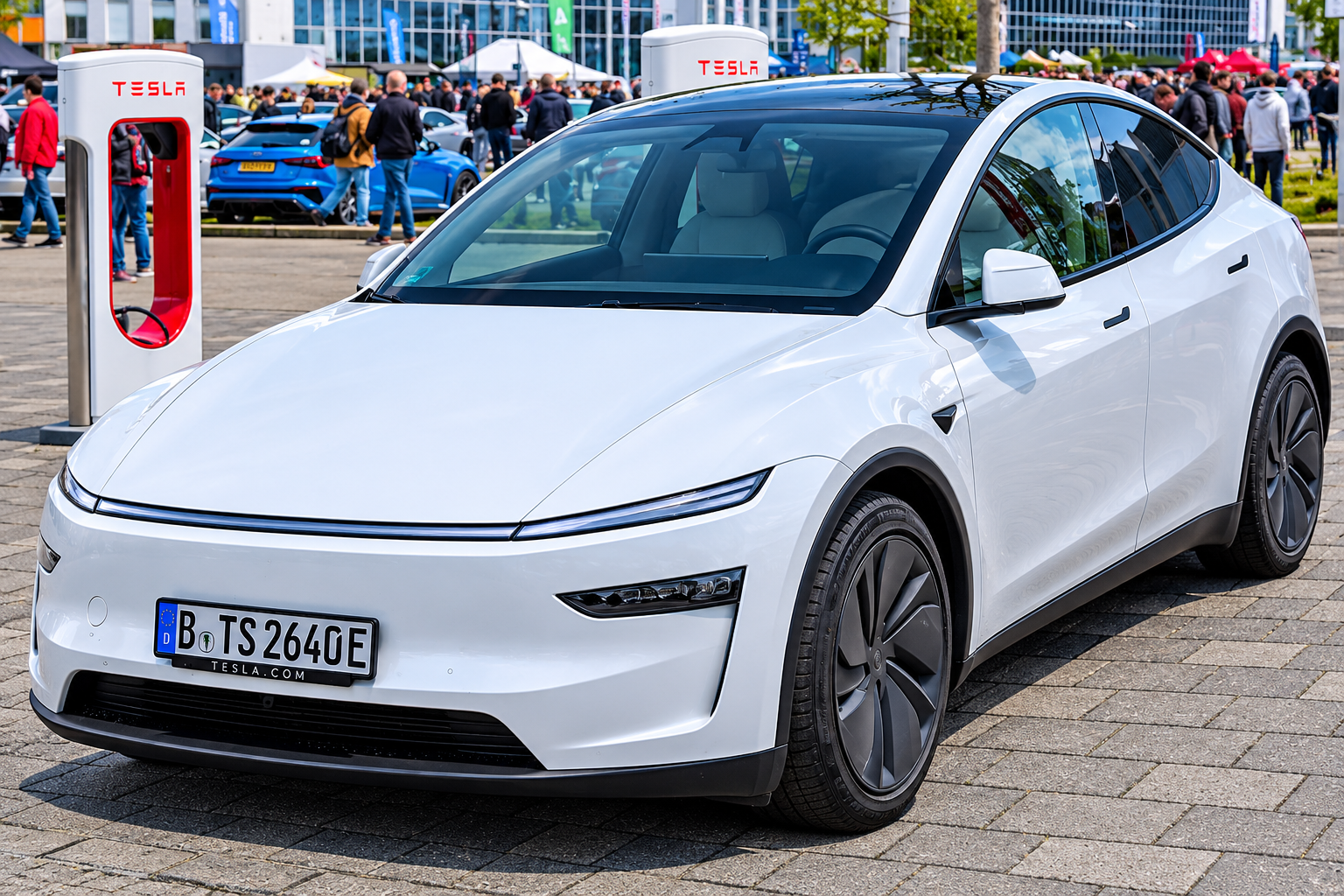
Tesla’s Full Self-Driving offering falls on the continuing-development side of the stated boundary because it receives over the air updates and belongs to the law’s exempted driver-assistance and automation category. The status of Tesla’s $2,000 Acceleration Boost is less settled. It has been described as a one-time software activation of vehicle performance, with no stated continuing maintenance requirement, but no official New York determination concerning that product has been provided.
That unresolved example illustrates the likely implementation challenge. Some vehicle capabilities are enabled locally but may also receive later calibration changes, compatibility work or software support. Regulators and providers will have to distinguish incidental updates from the kind of continuing service expense that justifies an exception. Product packaging and technical architecture could consequently affect how a feature is classified.
Consumer resistance helps explain the policy pressure. In a 2022 Cox Automotive survey of 217 prospective vehicle buyers, 92% said heated and cooled seats should be included in the purchase price, while 89% said the same about remote start. Respondents were less resistant to subscriptions for services such as in-vehicle Wi-Fi and stolen-vehicle tracking, which have a more visible continuing-service component.
New York’s rule formalizes a similar distinction without eliminating subscriptions across the vehicle. Beginning February 27, 2027, the critical issue will be whether a recurring payment funds connectivity, updates or continuing support or simply rents back access to qualifying hardware already installed and paid for.
| More aerospace and engineering stories, right in your MSN feed. Follow AMI on MSN |
By Thomas Caldwell — AMI’s senior editor for mechanical and mobility engineering, covering vehicle electronics, systems integration, electrification, chassis systems, propulsion, and safety policy.