


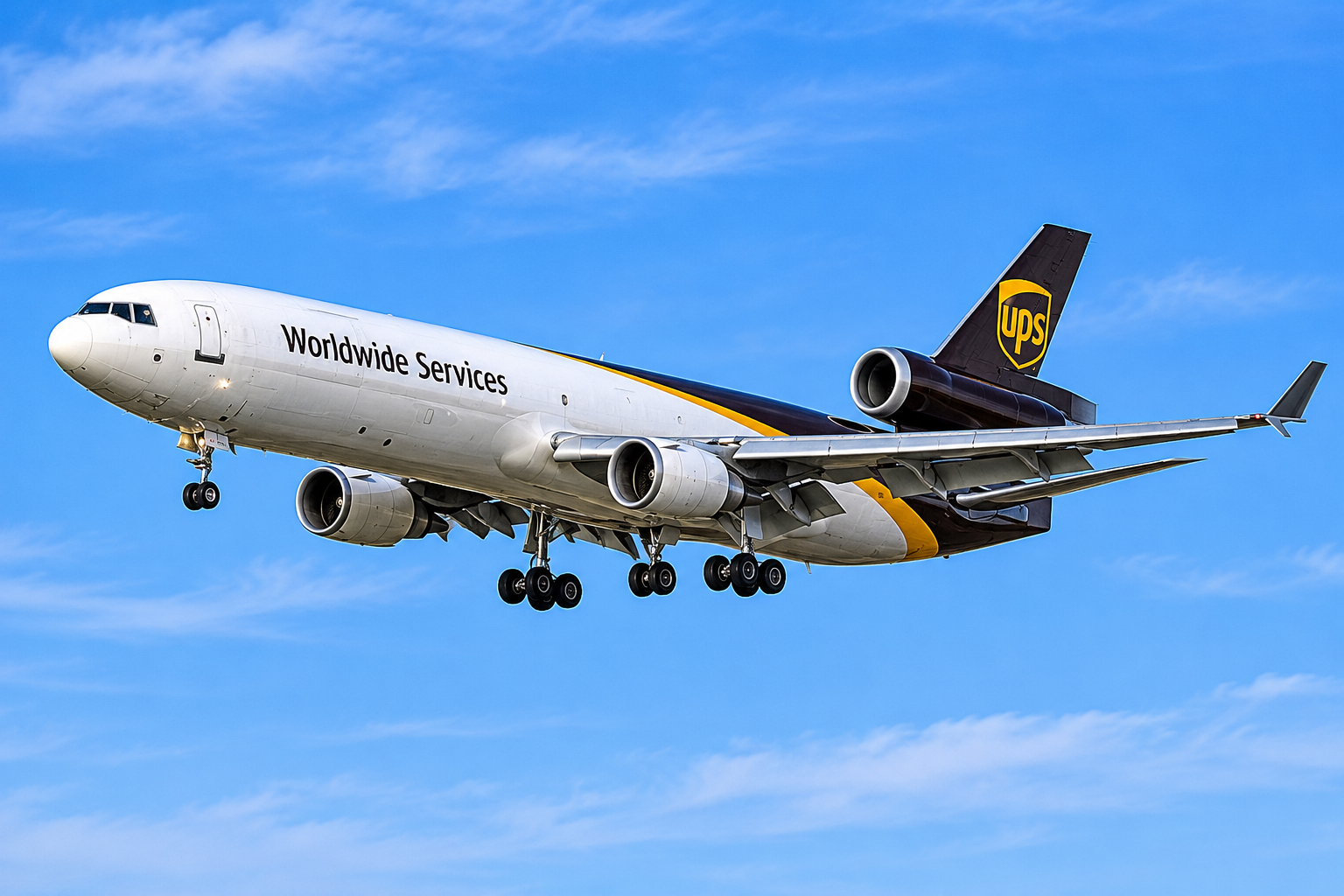
UPS Reports $33 Million Gain After $137 Million Jet Retirement Charge
UPS has now recovered some value from its retired MD-11 cargo aircraft, reporting a $33 million gain on the sale of MD-11 assets in its third-quarter 2026 results. The disposal gain is separate from the $137 million non-cash, after-tax charge UPS recorded when it permanently retired all 26 of the large freighters. It reduces the economic sting of the exit, but it does not reverse the retirement charge or restore the aircraft capacity removed from the network.

That distinction puts two different parts of the fleet transition into view. The $137 million charge recognized the impaired value of aircraft UPS no longer planned to operate. The later $33 million gain came from selling assets that had already been impaired. UPS said the gain involved previously impaired parts associated with the MD-11 aircraft, rather than a return of the jets to service.
The remaining cost is measured in carrying capacity
The harder operational problem is that UPS is replacing the MD-11 with a substantially smaller Boeing 767 freighter. Manufacturer figures cited for the MD-11BCF put maximum revenue payload at 184,700 pounds, rising to 194,700 pounds with an optional engine configuration. The 767-300F is rated for 115,700 pounds.
Using the standard MD-11BCF figure, the 767 gives up approximately 69,000 pounds of maximum payload per departure, a reduction of about 37%. Cargo-position counts show a similar, though less pronounced, difference. An MD-11F can accommodate 26 main-deck pallets and as many as 18 lower-deck LD-3 containers. A 767-300F provides 24 main-deck positions and 15 lower-deck positions.
Maximum payload is not the load carried on every flight. Package density, route distance, demand and aircraft assignment all influence usable capacity. Even so, the specifications explain why a one for one aircraft replacement cannot reproduce the MD-11 fleet’s carrying capability. More departures, different aircraft assignments or surface transportation may be needed where the retired jets previously operated near their weight or volume limits.
UPS planned to cover the shortfall by repositioning aircraft, moving more freight by truck and leasing capacity from partner airlines. It expected outside freight capacity to add approximately $50 million in expenses. That operating expense is also separate from both the original $137 million retirement charge and the subsequent $33 million asset-sale gain.
More 767s expand the fleet, not individual-aircraft capacity
At the end of 2025, UPS operated 99 Boeing 767-300 aircraft across three cargo variants: 89 factory-built 767-300Fs, six converted 767-300BCFs and four 767-300BDSFs. The carrier had another 18 Boeing 767s on order, with 15 reportedly scheduled to enter service during 2026. Delivery of all 18 would lift the combined 767-300 fleet to 117 aircraft.
Those additions can reduce the need for leased lift and provide more scheduling flexibility, but aircraft count alone is an incomplete capacity measure. Replacing fewer large freighters with more small ones can require additional crews, maintenance inputs, flight cycles and departure slots. Trucking can substitute for suitable ground segments, while leased aircraft can cover routes where road transport is too slow or geographically impractical. The transition therefore depends on coordinating airframes, partner capacity and ground operations rather than relying on the incoming 767s alone.
The retirement followed the November 4, 2025 crash of UPS Flight 2976 in Louisville, Kentucky. The Federal Aviation Administration subsequently issued an emergency airworthiness directive prohibiting MD-11 and MD-11F flights until inspections and any required corrective actions were completed. UPS chose permanent retirement rather than inspecting and returning its 26 aircraft to service.
The National Transportation Safety Board’s preliminary findings said the left engine and pylon separated from the wing shortly after rotation. Investigators found fatigue cracking and overstress damage in attachment lugs associated with the pylon’s aft mounting assembly. The precise accident cause remains under investigation.
The $33 million disposal gain closes one financial loop around the retired aircraft, but the network transition remains active. Its clearest near-term measure is whether the additional 767 deliveries reduce UPS’s reliance on approximately $50 million of outsourced capacity while each replacement jet offers about 69,000 pounds less maximum payload than the MD-11 it is helping replace.
| More aerospace and engineering stories, right in your MSN feed. Follow AMI on MSN |
By Thomas Caldwell — AMI’s senior editor for mechanical and mobility engineering, covering vehicle electronics, systems integration, electrification, chassis systems, propulsion, and safety policy.




