


NASA Adds New Research Jet While Blackbird Revival Needs Retired Experts
NASA has formally added a new route to expanded flight research while a far more difficult possibility remains unconfirmed: returning an SR-71 Blackbird to the air. The agency says its newly announced X-70 Fractal experimental aircraft is expected to make its first flight under the NASA banner within two years. That gives NASA a current platform for testing new technologies without first rebuilding the support system for an aircraft that last flew in 1999.

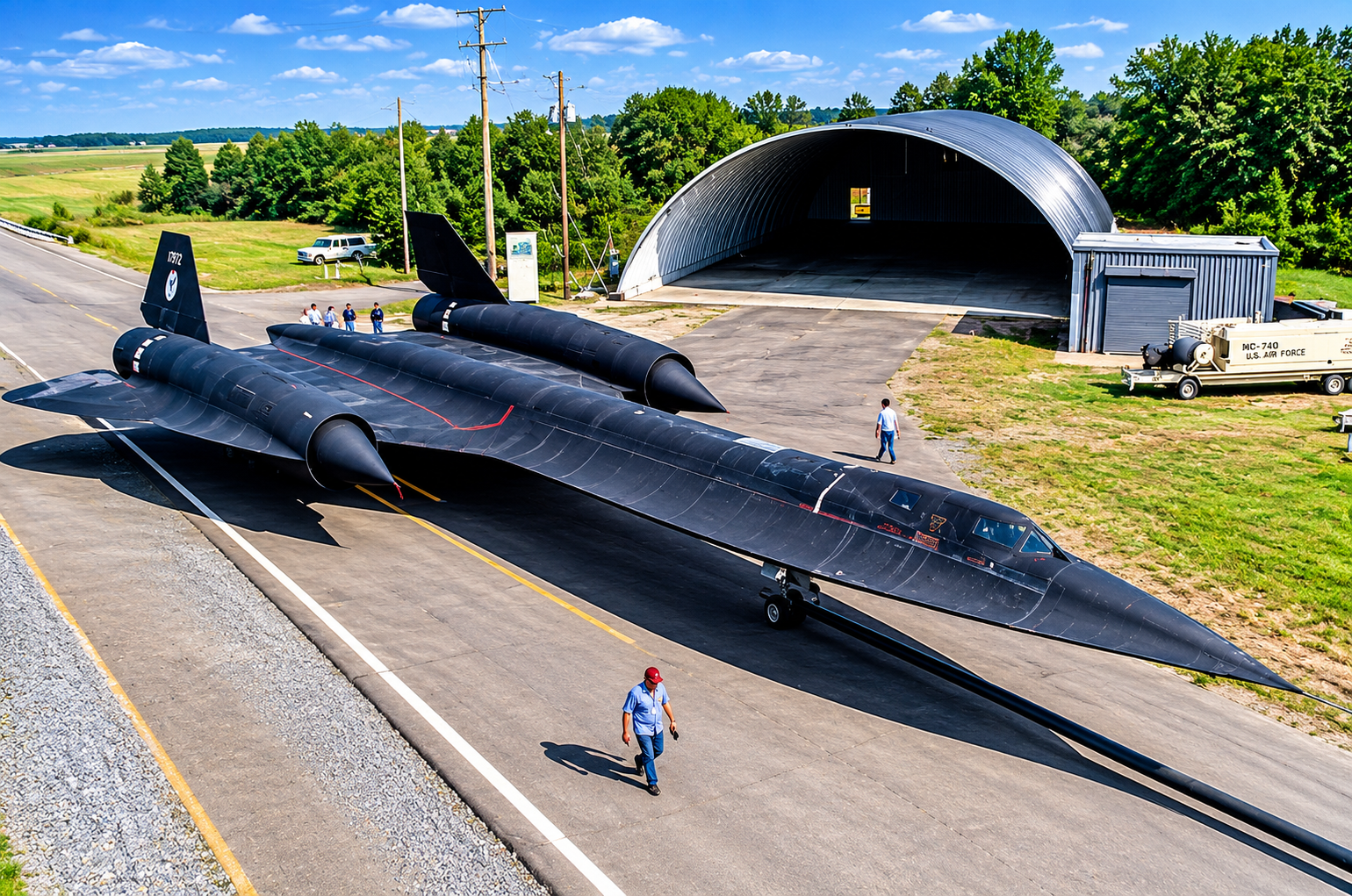
The X-70 announcement does not confirm or replace the reported Blackbird effort. Aviation Week reported that NASA moved SR-71A Tail No. 844 from its outdoor display at Armstrong Flight Research Center in California into the former space shuttle hangar and approached several former program specialists about returning it to flight. NASA has not publicly confirmed such a project, and no budget, approval, schedule or final mission has been announced.
Together, the two aircraft illustrate different ways of acquiring flight-test capacity. The X-70 is a crewed, rapidly reconfigurable research platform designed to carry as much as 2,000 pounds of experimental payload, cruise at Mach 0.75, reach 45,000 feet and cover more than 1,500 nautical miles. The SR-71 could provide a markedly different speed and altitude test environment, but recovering that capability would require much more than making an existing airframe mechanically functional.
The Blackbird is only one part of the system
Tail No. 844 is 59 years old and has not flown for nearly 27 years. Moving it indoors enables closer inspection and limits further environmental exposure, but an airworthiness assessment would have to address its structure, engines, seals, wiring, instruments and fluid systems after decades outside. Former personnel reportedly raised concerns about water and sand entering internal spaces and about the long-idle engines, including a spare stored with the aircraft.
During active operations, spare engines were periodically rotated, lubricated and run. Long storage introduces different uncertainties: corrosion can develop in concealed areas, elastomeric seals can age, fluids can become unavailable, and instruments or maintenance equipment can lose their documented calibration status. Each affected item would need an inspection standard and an acceptable disposition rather than an assumption based on outward appearance.
The harder problem extends beyond the airplane. The Blackbird depended on specialized fuel, ignition chemicals, oils, hydraulic fluids, spare components and purpose-built ground equipment. Some equipment used to remove engines, support major assemblies or service other systems reportedly no longer exists. A substantial inventory of Blackbird spares was destroyed in 2007, after another operational return appeared remote.
Reproducing those parts would involve more than copying their shapes. Engineers would need reliable records for materials, tolerances, heat treatment, surface finishing, inspection methods and allowable service life. Newly produced hardware would then require verification appropriate to its function. Where original tooling, suppliers or process records have disappeared, reconstructing an acceptable engineering basis can become harder than manufacturing the component itself.
NASA is also trying to recover human knowledge
The reported outreach to retired SR-71 test engineers shows why personnel continuity is a technical resource. Manuals may preserve formal procedures, but veteran maintainers and engineers can retain practical knowledge about inspection cues, servicing order and subsystem behavior. Two former test engineers said NASA offered them work connected with the effort, although both expressed concerns about whether the missing equipment and support structure could be reassembled.
NASA’s existing high-altitude fleets demonstrate the advantage of avoiding such a break. The agency operates two ER-2 flying laboratories acquired in 1981 and 1989, while its WB-57 aircraft have supported research missions since the early 1970s. Neither matches the Blackbird’s combination of speed and altitude, but recurring flights preserve trained crews, maintenance routines, facilities and supply relationships. The SR-71 has been separated from that operational continuity for decades.
The X-70 therefore provides a useful benchmark for any Blackbird decision. NASA has identified the new aircraft’s research purpose, payload capacity, performance targets and expected entry into agency service. For Tail No. 844, the key facts remain unresolved: what inspection has found, what mission requires its unusual flight envelope, and whether NASA will assign the funding, tooling, specialists and certification work needed to fly it safely. The Blackbird’s move into a hangar preserves the possibility; a documented airworthiness plan would turn that possibility into a program.
| More aerospace and engineering stories, right in your MSN feed. Follow AMI on MSN |
By Thomas Caldwell — AMI’s senior editor for mechanical and mobility engineering, covering vehicle electronics, systems integration, electrification, chassis systems, propulsion, and safety policy.




