


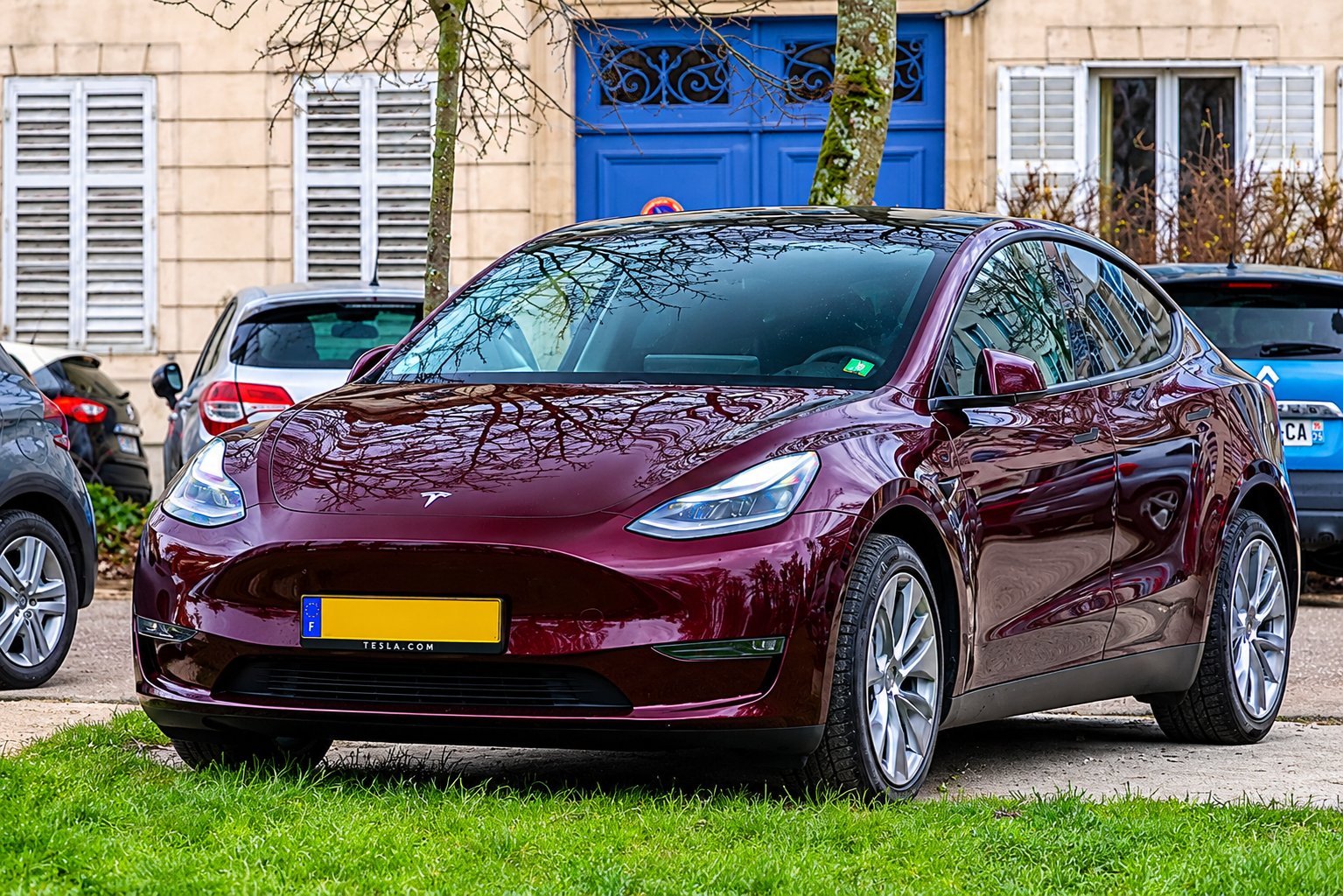
Tesla Model Y Records 18.5% Failure Rate in German Inspections
A Tesla Model Y was more than six times as likely to fail Germany’s mandatory roadworthiness inspection as the best-performing young electric vehicle in the latest model-level results. The Model Y recorded an 18.5% major-deficiency rate, compared with 3.0% for the Mazda MX-30, according to the TÜV Report 2027 findings released by TÜV SÜD on November 18.

The contrast is substantial because these were relatively young vehicles in the two to three-year old group. The Model Y had the highest failure rate among the cited electric models, followed by the MG 4 at 16% and the Tesla Model 3 at 12.5%. At the other end, the Audi Q8 e-tron recorded 3.2% and the Mini Cooper SE 3.3%, just behind the Mazda.
Inspection failure is not the same as a breakdown
Germany’s periodic technical inspection assesses whether a vehicle meets roadworthiness requirements at the time it is examined. It covers safety-related equipment including lights, signals, windshield wipers, brakes, steering, suspension and tires.
A failed inspection therefore means a significant or dangerous deficiency was identified. It does not mean the vehicle had broken down on the road, and it does not by itself establish how frequently that model leaves drivers stranded. The released model-level figures also do not identify all the components responsible for each vehicle’s overall failure rate, limiting any firm conclusion about an engineering cause.
There is no basis in these figures for attributing the Model Y result to its traction battery, motors or other electric-drive hardware. Battery condition is a separate issue from the conventional roadworthiness items covered by the reported failure rate. The inspection results are better understood as a measure of the condition in which vehicles arrived for examination.
Mileage complicates the model comparison
The three lowest-ranked young electric vehicles did not arrive with equal use. Model Ys in the data had traveled an average of 58,000 kilometers, while the Model 3 averaged 55,000 kilometers and the MG 4 averaged 37,000 kilometers. Greater distance generally creates more opportunities for wear, although mileage alone cannot explain why a particular vehicle failed.
The MG result is notable within that boundary. Its 16% failure rate was close to the Model Y’s despite an average recorded distance 21,000 kilometers lower. Without a complete component breakdown and controls for operating conditions, maintenance histories and vehicle mix, the figures cannot establish whether the difference came from design durability, upkeep, usage or a combination of factors.
The report’s 20.9% failure rate for passenger vehicles of all ages should not be used as a direct benchmark for these young EVs. That fleet-wide number includes vehicles across many age groups, with older cars generally exposed to more accumulated wear. It provides national context, but not an age-matched comparison.
Maintenance is a plausible factor, not a confirmed cause
TÜV SÜD suggested that Tesla’s lack of scheduled periodic maintenance could contribute to higher inspection-failure rates. The proposed mechanism is straightforward: when a vehicle does not routinely visit a workshop, correctable issues may remain unnoticed until the mandatory inspection.
That explanation remains a suggested contributor rather than a finding that maintenance policy caused the Model Y failures. A scheduled service visit can identify worn tires, lighting faults or developing brake and suspension problems, but the aggregate failure rate does not show how many vehicles would have passed after earlier inspection or repair.
The latest result also continues a pattern in the TÜV rankings. The Model Y finished last among three-year old vehicles in the previous report with a 17.3% failure rate. The Model 3 occupied the bottom position in the 2025 and 2024 results, at 14.2% and 14.7%, respectively. Tesla has therefore been at the bottom of the cited results for four consecutive years, although the model and rate have changed.
For owners, the practical implication is narrower than a verdict on EV reliability: low powertrain-maintenance requirements do not eliminate the need to monitor ordinary roadworthiness systems. The next useful disclosure would be a consistent component-level breakdown across models, allowing the striking 18.5% Model Y result to be separated into specific defects, wear patterns and potentially preventable maintenance items.
| More aerospace and engineering stories, right in your MSN feed. Follow AMI on MSN |
By Thomas Caldwell — AMI’s senior editor for mechanical and mobility engineering, covering vehicle electronics, systems integration, electrification, chassis systems, propulsion, and safety policy.



