Shape Memory Alloys Advance Silent Haptic Wearables
Haptic assistive devices for visually impaired people (VIP) have long relied on electromechanical actuators, typically vibration motors, to convey tactile information. While effective, these systems often suffer from drawbacks: they can be bulky, heavy, produce audible noise, and deliver feedback that becomes unpleasant with extended use. Shape memory alloys (SMAs) offer a promising alternative, combining thin, flexible, and lightweight form factors with the ability to produce natural-feeling tactile sensations.

SMAs exploit the shape memory effect, a property arising from martensite–austenite phase transformations in their crystal structure. When deformed at room temperature, they return to a programmed shape upon heating above a transition threshold. By calibrating this temperature during the training process, activation can be kept within skin-safe ranges. Common compositions include nickel–titanium (NiTi) and nickel–titanium–copper (NiTiCu), each with distinct mechanical characteristics.
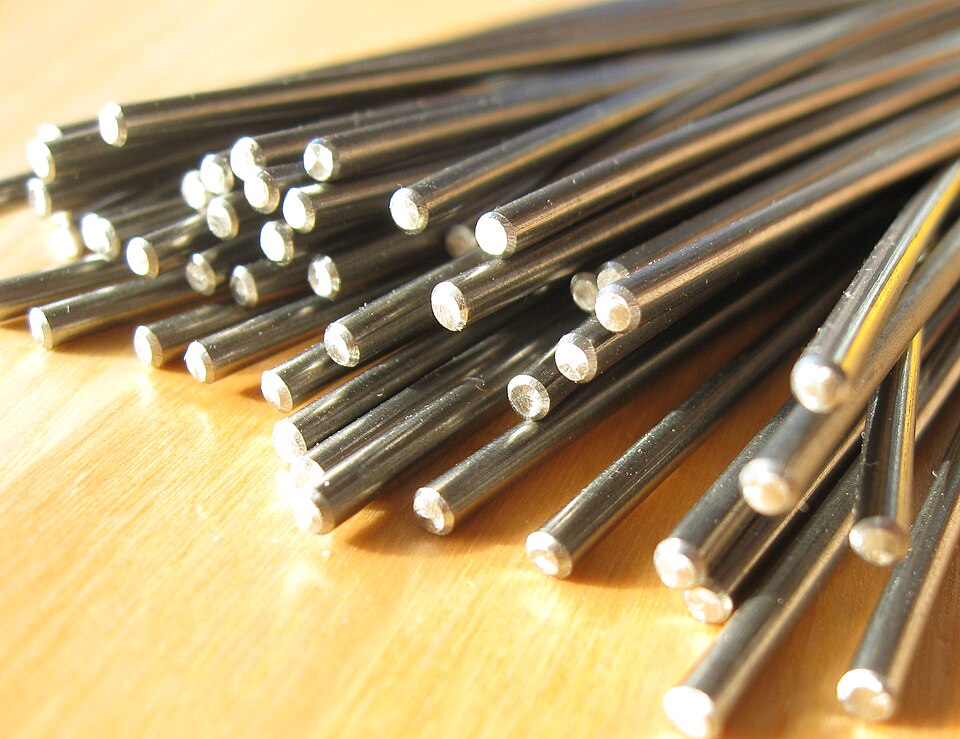
The research followed a material-driven design approach, emphasizing hands-on exploration to understand SMA properties and their integration into wearable haptic devices. Flexmet® SMA wires were formed into springs, annealed at 550°C for an hour, and cooled to remove oxide layers. Wire diameter proved critical: strain-controlled testing showed that increasing diameter from 0.20 mm to 0.50 mm boosted force output by a factor of 14.87, making thicker springs more suitable for perceptible haptic feedback.
Early prototypes integrated SMA wires with 3D-printed polylactic acid (PLA) and thermoplastic polyurethane (TPU) structures to produce sensations such as stroking, pinching, and squeezing. Longer wire lengths posed challenges, including excessive heat accumulation and insufficient actuation without secure fixation points. Designs using straight annealed wires on lycra bands generated squeezes but lacked sufficient force. More promising results came from spring-shaped SMAs moving an effector over the skin, with bias forces returning it to center. This configuration allowed multi-directional motion and varied tactile effects.
An interactive wearable prototype emerged from these explorations. SMA springs were isolated from the skin using kinesiology tape and silicone rubber as heat barriers, and mounted on a PVC ring for structural integrity. Flexinol NiTi springs with 0.50 mm diameter, 3.45 mm outer diameter, and 10 windings were selected for their pronounced motion. A chamfered PLA effector delivered smooth contact, while a Seeeduino Lotus board controlled each spring via push buttons, powered by a lithium polymer battery and voltage regulation modules.
Informal evaluation with design students led to refinements: focusing motion along the arm and adding a third spring for squeezing sensations. The improved prototype was tested with four VIP participants, whose vision ranged from none to partial. In sessions, springs produced stroking motions along the dorsal and ventral forearm and gentle squeezes. Participants described the stroking as “a wheel running along the arm,” “an animal walking along the arm,” and “like a finger running along the arm.” Sensations were more distinct on the dorsal side, consistent with its higher sensitivity to stroking.
Feedback was positive, with motion along the arm rated most pleasant and seen as viable for navigation and object guidance. Participants valued the silent operation, noting it preserved environmental sound awareness and kept information private. They discussed optimal placement, suggesting shoulders, wrists, belts, or necklaces depending on application. For obstacle avoidance, actuators on both arms could signal left–right hazards. One participant proposed combining SMA feedback with vibrotactile cues for richer, layered information.
The iterative design process underscored the importance of mastering SMA material properties—diameter, length, alloy composition, and training technique—alongside careful integration with supporting structures. Secure fixation during training was essential for reliable shape recovery and force output. While subtle sensations may suit certain contexts, VIP applications often demand stronger feedback. Designs enabling free movement of an effector over the skin proved most effective, and the prototype demonstrated that multiple tactile modalities can be delivered from a single SMA-based device.
Future work could benchmark SMA haptics against traditional electromechanical systems, focusing on perceptual qualities and application-specific advantages. Understanding the distinct design workflow for SMAs—shaping, training, and combining with structures—will aid engineers in leveraging these materials for wearable haptic solutions. The potential for silent, lightweight, and expressive tactile feedback makes SMAs a compelling technology for assistive devices and beyond.