Why Mars Cave Robots Are Shrinking Into Swarms
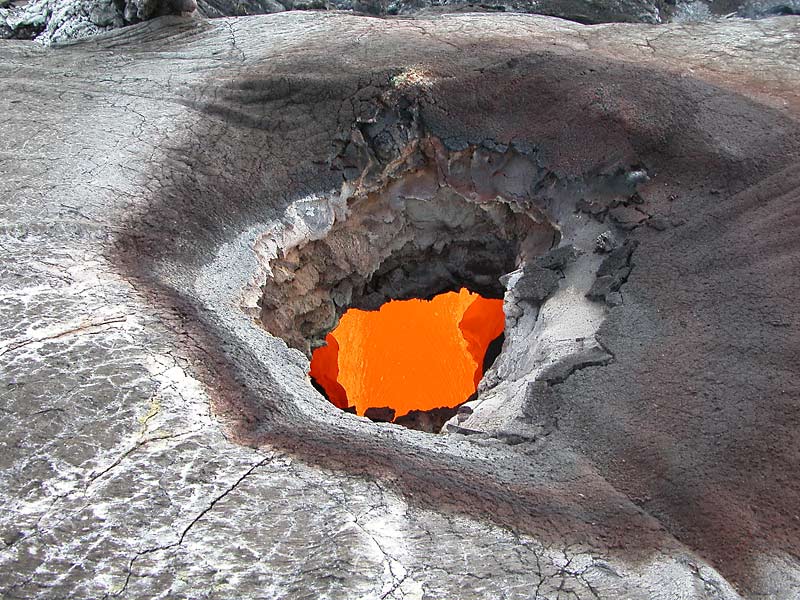
The rovers are the size of a school bus, Mostafa Hassanalian told Space.com. That’s why they can’t get in, she said. This is one reason why the exploration of Mars is heading towards smaller machines. The most interesting targets on the planet might not be open plains and rims of craters, but collapsed skylights filled with lava.Where would the large rovers reach to and where would ordinary aircraft land? Collapsed skylights filled with lava.

The Mars network of volcanic tunnels is also the largest in the solar system with over 1,200 km of tunnels. The subterranean passages are significant not only for geology. A milder thermal environment might remain preserved underground crucial for instruments and future crews and protection from radiation and dust important for future astronauts and protection of fragile chemical or biological remnants that might have been lost by the surface. The intersection of planetary science with astrobiology and habitat engineering is a rare finding at Martian caves. Hassanalian’s solution is unusual in its approach to the problem taking a biological route.
The concept does not result in a more capable rover design, but gets its inspiration from the pillbug-inspired “roly-poly” bot, dropped through the cave mouth. It would then be dropped to the ground where it would send out thousands of “dandelion drones” which would ride the flow of air in a cave, collecting radio temperature, the amount of humidity and mapping data. What the design is inspired by is nature, meaning it is based on a scale on which nature’s solutions are still effective. It also addresses the simplicity of the engineering problem of access, redundancy, and coverage for underground exploration on Mars.
There are many technical challenges. There is no GPS and no sunlight for approximate solar charging of an advance map inside of lava tubes. It must be stabilized in a thin atmosphere of Mars and it must not hit against walls, rubble or drop. However, in recent years along with mobility, autism has been studied and researched. One Mars drone study featured an inertial measurement unit (compass, gyroscope, accelerometer and magneto-metric sensors), along with a camera and laser rangefinder for navigation and for onboard image recognition geology studies involving finding and investigating lava-tube openings.
Yet another Mars cave analog study concluded that the two robots performed better at finding scientifically useful targets when exploring them than a single robot and that full autonomy was more efficient than low autonomy. Delayed Human Control (HHC) often isn’t easy in caves and it’s one of the mission chokepoints. That’s where swarm logic gets intriguing, no longer a contrived example of this or that, but something useful.
When one robot stumbles at one choke, a loss is declared. The addition of a cloud of microdrones to the equation decreases the risk and significantly increases the volume sampled. There can be Units lost but a Mission can return a Map. The same is experienced at test campaigns on earth. The engineers at CSIRO and DLR, in Lanzarote, conducted tests of autonomous navigation in a lava tube using a prototype of the SCOUT rover with the aim of testing perception, obstacle handling and navigation without human being in the loop. A land-based setting, but the issues were very Martian; isolation, clutter, darkness and limited communication.
Ingenuity is a successful mission for powered flight on Mars for NASA. The next step is blacker, smaller and much less tolerant. If these missions to Mars caves are successful, they likely will not involve one heroic robot, but many small, independent robots capable of getting into the most ancient holes.