



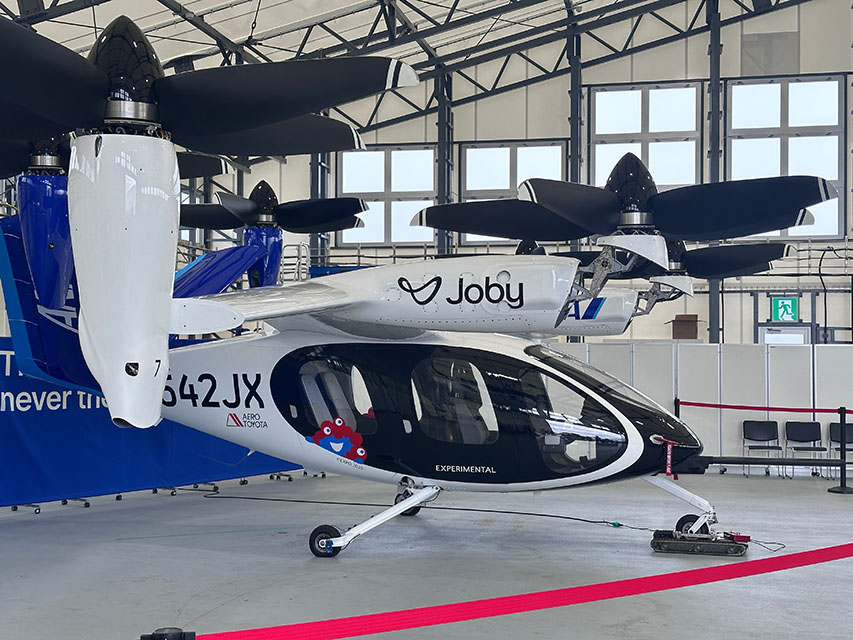
FAA, EASA Push Faster Alignment on Advanced Aviation Approvals
However, the recent messages hint at a more pragmatic stage of collaboration within advanced aviation: less conflicting approval processes, more safety data exchange and better coordination at the stage of transferring new technologies from R&D into operation.

And it is essential not only from the point of regulator diplomacy. From the perspective of U.S.-based manufacturers of aircraft, avionics, simulators, operators and certification experts, the problem is the friction of certification. When the FAA and EASA see emerging technologies differently, the duplicative efforts to test and certify them, additional paperwork and uncertainty regarding the assessment of the technologies during the operation arise. And that is the exact problem that the FAA-EASA cooperation pledge tries to resolve by concentrating on the harmonized approval paths for advanced aviation technologies and operations.
It came after the 2026 FAA-EASA International Aviation Safety Conference held in Chantilly, Virginia. As FAA Administrator Bryan Bedford put it, we live “one of the most innovative” periods in aviation and the exchange of information and enhanced safety dialogue assist the evolution of aviation technologies “safely and efficiently.” EASA Executive Director Florian Guillermet emphasized that cooperation is needed to ensure safety of aviation in the era of unprecedented changes and noted that collaborative approach may foster innovation and preserve public trust in safety.
From the engineer-political perspective, the important thing is not any particular new rule, but the decision to coordinate in multiple technical oversight domains at once. They include: harmonizing the process of approving advanced aviation technologies, accelerating the introduction of automated flight deck technologies, promoting the usage of portable electronic devices in the cockpit, modernizing simulator capability, developing safety management systems and improving risk communication on such topics as cybersecurity, conflict zones, GPS/GNSS interference and extreme weather.
All these issues are connected with regulation, operations and human factors. For example, the automated flight deck technology is not only the question of software. It is concerned with the workload of flight crews, interface design, training assumptions, simulator capability, approval of operation and its safe execution under normal and abnormal conditions. Such coordination in these questions will allow US-based developers to make systems that do not need any significant modification for different regulatory environment.
The modernization of simulators is also crucial. With increasing automation and datatization of aircraft systems, the competence of pilots is getting more and more dependent on the capability of training devices to reflect these automated environments. Thus, the modernization of simulator capability is not the marginal question. On the contrary, it is the part of the certification process. Regulators, therefore, recognize the fact that advanced cockpit technology cannot be assessed independently from training infrastructure.
The same system approach works in the case of portable electronic devices in the cockpit. In this case, the goal is to accelerate their adoption as the tool to facilitate operations based on real-time data. For operators and avionics stakeholders, it raises all familiar issues concerning integration: data integrity, human-machine interface design, procedure uniformity and accommodation of the new information tools into the workload management, not distractive from it. The importance of this issue is in the fact that both agencies consider cockpit digitalization as the issue of safety oversight, not just the convenience upgrade.
SMS provides another insight into the direction of FAA-EASA alignment. According to the FAA, SMS is the formalized, top-down approach to safety risk management and control across the entire organization. Practically, SMS is a convenient frame for regulators and the industry to have a common language in hazard identification, risk assessment, safety assurance and safety promotion. It makes SMS the convenient frame for discussion of advanced technologies that cross the boundary between design, manufacturing, training and operations.
The FAA has already started to implement SMS requirements in more areas of aviation industry, including some operators and certificate holders. This broader policy context allows us to conclude that the FAA-EASA initiative is more about the application of the data-driven, scalable model of oversight to advanced technologies and more complex organizations, than about the completely new safety model. It means that in the future, for US-based companies, success in the approval will depend not only on meeting particular hardware or software requirements, but also on effective risk management and feedback loops.
The same is true for the fact that the agencies have agreed to use more operational data in the process of rulemaking. It is an interesting trend. In the case of advanced aviation, prescriptive rules often lag behind technology. The data-driven rulemaking allows to make the process more adaptive, as the real world experience is accumulated in the cases of automation, advanced operational concepts and innovations in cockpit tools that do not fit into the existing categories.
Nevertheless, there are clear limitations. There is no implementation timeline, particular pathway or any rule change mentioned. The cooperation pledge does not promise the fast approvals themselves. It sets the goal to decrease friction in certain areas: approval paths, operational approvals, simulator modernization, flight deck automation and risk communication.
For the US market, it is the key insight. Advanced aviation will not become scalable because of some innovative hardware alone. It will become scalable when regulation, training, operations and safety management will become so well-coordinated that the innovation can be introduced without creating the new friction in the human-machine-regulator interface. This is exactly the system challenge that the FAA and EASA seem to tackle now jointly.
Thomas Caldwell – AMI’s senior editor for mechanical and mobility engineering, covering vehicle electronics, systems integration, electrification, chassis systems, propulsion and safety policy.