How Additive Manufacturing Is Changing UAV Airframes and Repairs
Although additive manufacturing has already played an integral part in the creation of drones, there is a new trend developing as this technology goes beyond creating prototypes and begins to transition into repeatable production. This is important in the UAV industry as engineers designing drones operate under certain constraints that conventional fabrication technologies do not accommodate shortened design periods, varying payload needs, strict mass limitations and maintaining the aircraft maintainable away from traditional factory facilities.
In particular, HP’s MultiJet Fusion, or MJF, is one such process that has found traction lately. This manufacturing method is attractive not for being novel, but rather because it fits production needs of UAVs. MJF allows printing thin-walled and complex in geometry polymer parts without any supporting structures which enables designing airframes that cannot be machined, molded and assembled in economical manner at low- to mid-volumes. Materials such as PA 12 and TPU are employed to achieve lightness and structural integrity as aircraft needs to withstand transportation, manipulation and actual use rather than be just a laboratory demonstration.
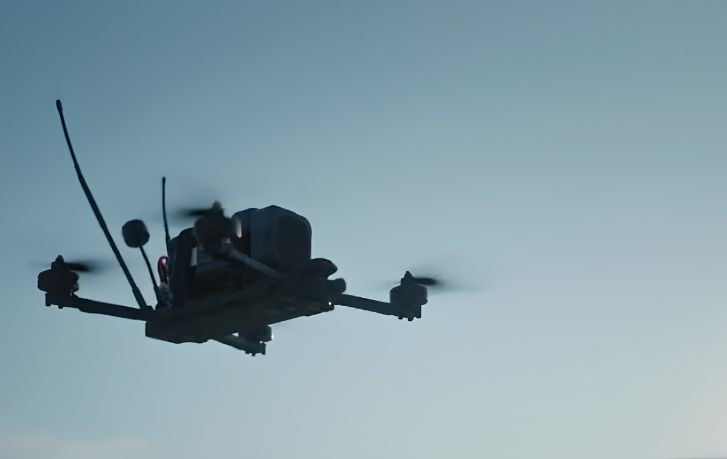
As a result of design freedom offered by additive manufacturing, part consolidation has become a common solution for many UAVs. For small UAV makers, reducing the number of brackets, covers, joints and other separate molded components may be as beneficial as weight saving. Unusual Machines’ Rotor Riot SkyLite FPV drone makes use of MJF-made TPU parts produced by Forecast 3D in San Diego. Several parts are printed in one run which improves consistency between them. From the viewpoint of a drone producer, that means practical advantages such as having fewer unique assembly steps, fewer tolerance stack-ups and simplified spares program.
Another interesting application is related to deployability of UAVs. Spain-based UAV Works designed a collapsible multirotor where 96% of the structure is made via 3D printing and relies on MJF ability to create very thin wall sections. In UAV design, folding structures tend to increase the manufacturing complexity quickly as hinges, latches and load paths fight for space and weight. Additive manufacturing may help integrating such functions into fewer structural elements which is particularly interesting in case of portable system that has to be packed into small space.
Blueflite from Michigan provides a good domestic example connected with airframe efficiency. The last-mile delivery platform uses tilting motor arms that prevent the aircraft fuselage from pitching and reportedly achieved 25% weight reduction among 48 printed parts via MJF. Cited parts include body panels, battery covers and landing gears. This aspect is important as weight saving in a UAV is not only structural but cascading, leading to endurance, payload capacity, power-system sizing and logistics. Even marginal weight savings become important when distributed among multiple parts.
Where additive manufacturing really shines is in providing UAV with better maintainability. Firestorm is reported to place MJF capabilities into mobile 20 feet manufacturing containers capable of producing drone components and spare parts in field conditions. The wider meaning of this is not just expeditionary manufacturing. It is also an opportunity to shift UAV sustainment from inventory-based stocking to digital inventory and local production of parts. For UAV operator, it might help in reducing downtime caused by low-volume structural spares that are difficult to manufacture via conventional technologies.
The best example here is provided by EyeAbove’s Bush Ranger, a drone developed for anti-poaching operations. According to founder Robert Miller, the drone had to feature several properties: long endurance, operation in windy, rainy and dusty conditions, field-repairable, easily transportable, minimal amount of moving parts and modularity for payload integration. These are precisely the properties that show the trade-offs between different conventional technologies such as composites, foams and additive manufacturing.
EyeAbove considered such technologies as composites, foams, SLA, FDM and other powder bed fusions before selecting MJF on HP’s 5600 series. Reasons cited by Robert Miller are interesting from engineering viewpoint. Composites require autoclaves and molds, making repairs impossible in the field. Foams degrade fast. SLA parts arrive broken in transportation. FDM parts of usable wall thickness lack the necessary robustness. 5600-series allowed to overcome tolerance and surface quality problems, making it possible to redesign the airframe from scratch.
As a result, the Bush Ranger airframe includes a self-supporting structure with uniform 0.8 mm wall sections throughout the skin, the geometry achievable due to lack of supporting structures in powder bed fusion. Airframe is described as being mostly 3D printed and fully modular, with damaged sections to be disconnected and replaced in the field. PA 12 durability allows repairing minor damages with super glue. All of these aspects thin walls, modularity and repairability are the main reasons why additive manufacturing becomes increasingly relevant in UAV structures: not all drones will be printed, but some missions will benefit from airframes designed to be maintained as much as to perform flights.
There are still limitations: additive manufacturing does not eliminate process control, repeatability and proper structural design. Large airframes still face build-volume restrictions and modularity introduces additional joints and interfaces to be considered. But for unmanned aircraft, particularly low-volume ones with evolving payload types and mission profiles, additive manufacturing increasingly proves its worth where geometry, part consolidation and repairability intersect.
This is the important message for American drone producers and operators. The most important point is not that 3D printing can be used to create UAV parts; it is that production-grade additive manufacturing starts to influence how UAV airframes are designed, assembled, maintained and repaired.
By Stephen Wallace – Editor for AMI’s aerospace integration and unmanned mobility coverage, focusing on drone manufacturing, VTOL systems, autonomous networks and air-ground mobility interconnections.