Why Starpipe Could Set Starship’s Real Launch Pace
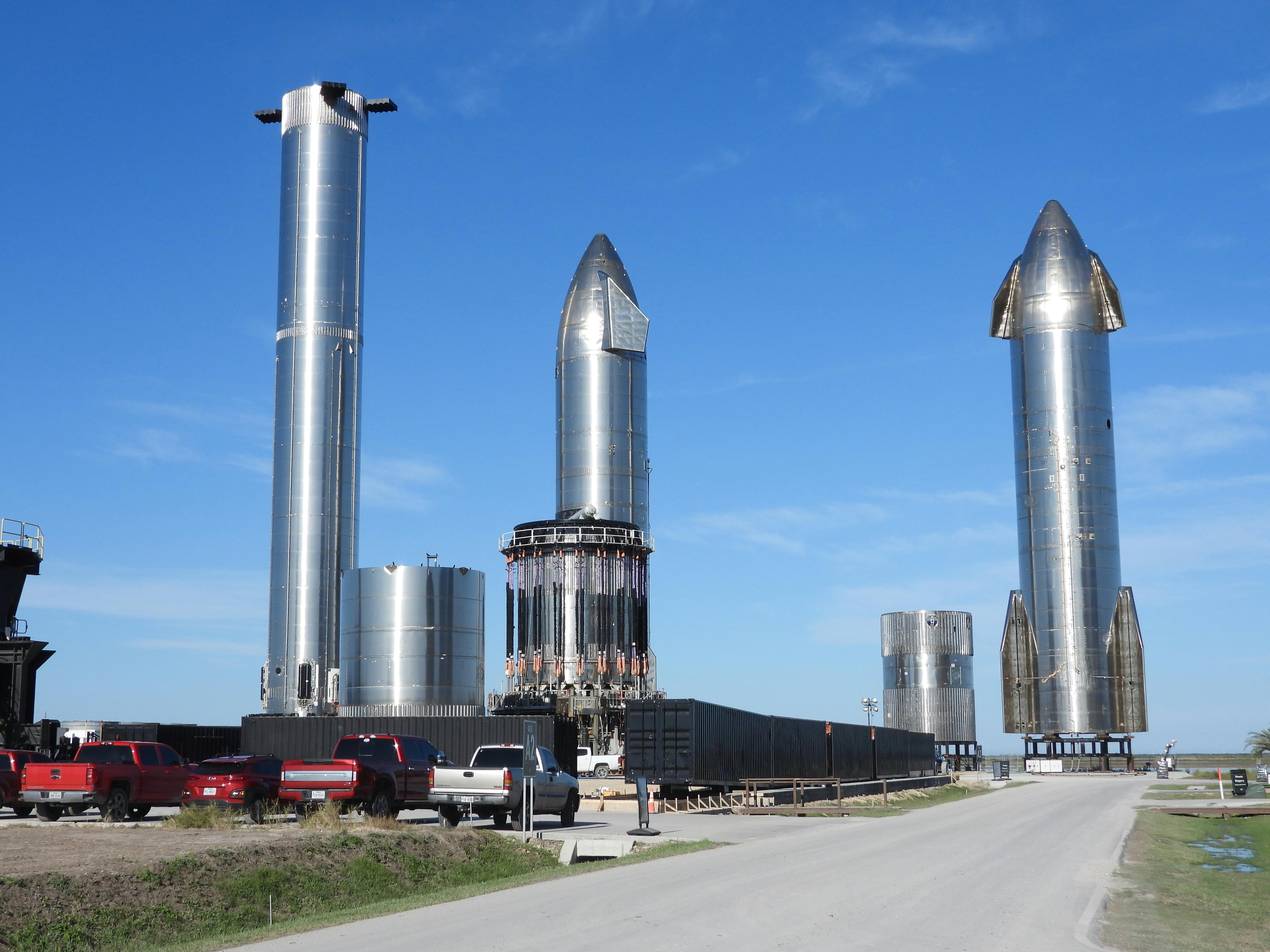
Starship’s future major bottleneck may not actually be in the rocket, but rather in the fuel systems behind it. Earlier this month, SpaceX announced that it will soon commence the construction of its eight-mile-long natural gas pipeline called Starpipe in Texas, with the operations scheduled to commence by January 26. This infrastructure is supposed to be used to supply fuel to the company’s Starbase facilities and allow a higher launch rate for Starship the company’s next-generation reusable super-heavy rocket. On the surface, this appears to be an energy project. In reality, this is more likely to turn out to be a launch operations project.

And the reason for that is the sheer scale involved. With every launch, Starship uses some 2.4 million liters of liquid methane. Right now, this fuel is supplied using hundreds of tanker trucks. This may work fine in case of testing activities or lower launch cadence, but once the company starts trying to ramp up its operations, this approach becomes a serious bottleneck. Trucks introduce scheduling complications, add road traffic, require additional time for loading and create dependencies on the external delivery schedules. For an operation that seeks to minimize turnaround times, this is not just an additional issue. This is the essential part of the launch architecture.
That is why Starpipe matters not just because of its mere length. The engineering designs show that SpaceX is going to construct the liquefaction plant at the Starbase facilities which would be able to convert piped natural gas into liquid methane. Taken together, this shows that the company is not merely improving its fuel delivery capabilities. It is transforming its fuel supply chain from a distributed logistic network into a fixed industrial process carried out at the launch facilities.
And this type of integration fundamentally shifts what the launch cadence is dependent on. Instead of asking whether the rocket is reusable, the operators are going to ask whether the site is able to repetitively fuel, cool, store and transport propellant at the required rate. Reusability of the rocket is only one side of the coin. The other one is whether the site is able to behave more like a production factory than a launch range.
This particular development is interesting because this is not really a usual aerospace project. Natural gas pipeline is quite unusual infrastructure for a rocket manufacturer. However, Starship is unusual too in the amount of methane it burns on every launch and in the future launch cadence SpaceX is planning to achieve. Current approved annual launch rate is 25 launches and it was reported that the diameter of the pipeline is 16 inches, suggesting that this is an infrastructure for exceeding this limit. Even without counting on the most aggressive launch rate ambitions, the choice of the infrastructure suggests that the propellant flow is already being treated as a fundamental capacity.
This is the important industrial lesson for space operations in the United States. Cadence of the launches is usually discussed in the context of engines, thermal protection, pad reconditioning, and permit issues. These are all legitimate concerns. However, the high-frequency reusable launches depend also on a lot of less sexy factors: commodities logistics, storage, transfer systems and on-site processing. When rockets become large and launches frequent enough, bulk fluids become as much a manufacturing problem as they are aerospace one.
However, this pipeline project fits the bigger picture of vertical integration strategy. Before, SpaceX had showed its interest in propellant processing and even natural gas drilling. Whether or not any of those long-term plans would ever see light of day, the short-term plan is obvious: bring the vital consumable closer to the launch site and eliminate the dependence on the truck deliveries. For the company seeking to scale the operations, the control over the interface point may be as crucial as improving the vehicle itself.
Of course, the pipeline is not the factor determining the launch cadence. Starship is still surrounded by the stack of limitations including permitting, readiness of the site, pad availability and review procedures. But fuel logistics is one of the few bottlenecks that can be solved with the help of fixed ground infrastructure. Once it is there, the pipeline and liquefaction system are able to facilitate the repetitive launches which the truck convoys are unable to do.
The more general conclusion is simple: reusable heavy launch is not just a rocket design problem. This is the entire site integration problem. Starpipe stands out due to its ability to make it clear. If Starship is supposed to launch frequently, the crucial engineering efforts will shift from the rocket to the pipelines, tanks and processing equipment.
By David Whitaker — Associate editor for AMI’s aerospace and drone systems desk, translating flight systems, aircraft programs, spaceflight, and UAV developments into accessible technical stories.