Nauticus Subsea Arm Enters Load Testing After Software-Control Validation
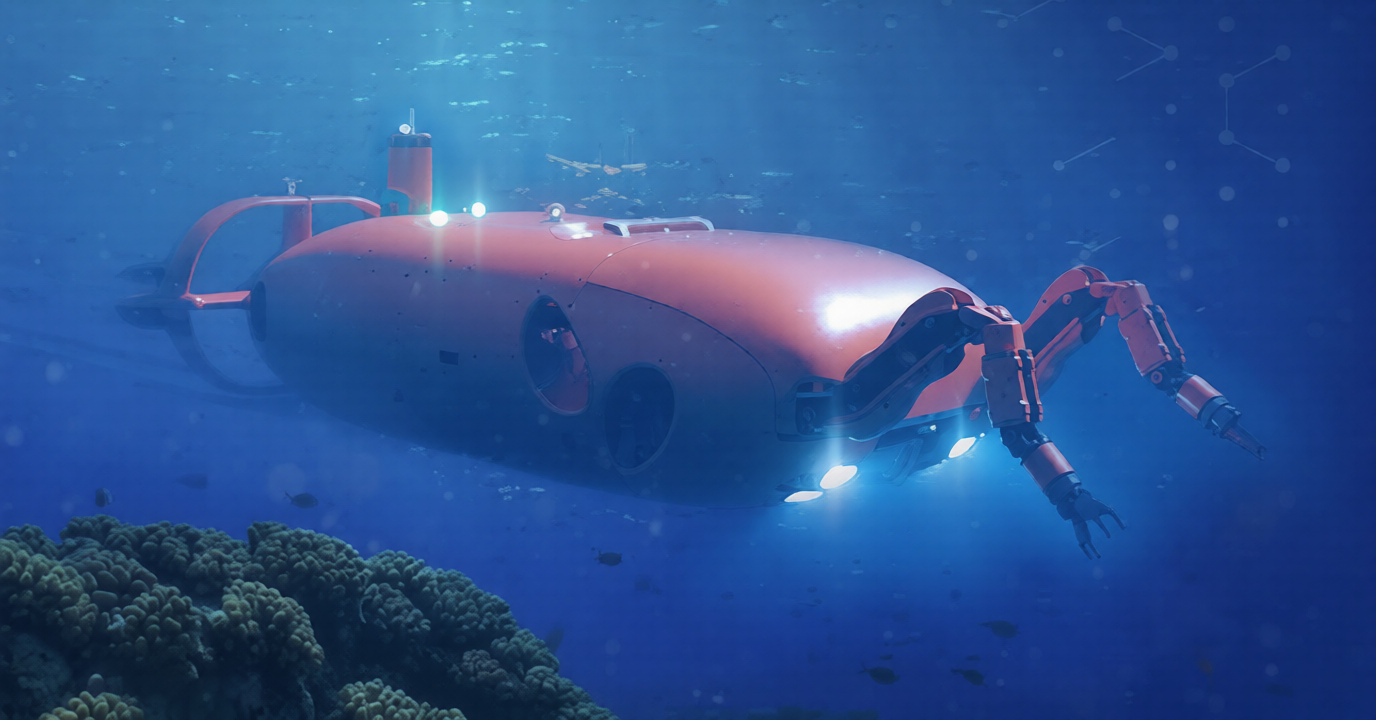
Nauticus Robotics completed its first three-joint prototype of a modular electric subsea manipulator during the first half of 2026 and began functional and load testing in July, the company announced on July 28. According to the official development update, Nauticus has also validated basic manipulator movement through its software-control architecture. That combination not merely assembling the arm, but commanding it through the intended control stack is the most consequential progress toward integration with the company’s Aquanaut autonomous underwater vehicle.
The prototype uses three electrically actuated joints and is intended as the foundation of a modular product family. Nauticus plans to build five-joint and seven-joint versions for more complex subsea work, but those variants have not been completed. The company will build and test additional three-joint prototypes through the remainder of 2026 while refining the hardware architecture.
Autonomous manipulation is a system-level controls problem
An underwater arm cannot operate autonomously simply because its joints can be moved by software. The vehicle must perceive the work site, determine the location of an intervention point, position itself, command the arm and compensate as underwater conditions change. Nauticus is developing that combined workflow through its ToolKITT software platform, which is intended to coordinate perception, vehicle positioning and manipulator control with less operator input.
Ameen Albadri, Nauticus vice president of engineering, said the hardware and software are being engineered together from the beginning for autonomous operations. That approach is significant because manipulator control and vehicle control are mechanically coupled. Arm movement can alter loads on the vehicle, while vehicle motion changes the arm’s position relative to the task. Precision intervention therefore depends on coordinated sensing, planning and actuation rather than isolated control of individual joints.
The completed milestone remains limited in scope. Nauticus has reported basic movement under software control, not autonomous completion of a subsea intervention task. It has not disclosed the prototype’s payload capacity, reach, depth rating, electrical demand, positional accuracy or applicable test standards. Without those figures, its suitability for particular inspection, handling or maintenance jobs cannot yet be assessed.
Electric actuation carries objectives that testing must verify
Nauticus positions the electric architecture as an alternative to conventional hydraulic manipulators. Its stated design objectives include lower maintenance complexity, improved reliability, less downtime and reduced operating cost. Those are not measured results at this stage: the company has supplied no comparative endurance, service-life, maintenance or cost data.
Functional testing should establish whether the assembled joints, actuators, sensors and controls perform as intended across their operating range. Load testing is the next important mechanical gate because movement without a representative load does not establish useful manipulation capability. The undisclosed load limits and test conditions will ultimately matter as much as successful motion, particularly if the architecture is to support longer arms with five or seven joints.
Modularity could give Nauticus a common mechanical and controls foundation for several levels of task complexity. It also creates integration work: each added joint increases the number of controlled axes and expands the motion-planning problem. The planned variants therefore should be treated as development goals rather than available systems.
Aquanaut integration is the next larger test
Aquanaut is planned as the initial vehicle for future autonomous field demonstrations, although Nauticus has not provided a demonstration date or commercialization schedule. Vehicle integration will be more revealing than bench movement because it must bring together the arm, onboard software, environmental sensing and vehicle-positioning controls in an underwater operating environment.
The company is separately developing its Olympic Arm electric manipulator with an unnamed industry partner for conventional remotely operated vehicles. That program addresses operator-controlled applications and should not be confused with completion of the autonomous manipulator now entering tests.
For the present, Nauticus has crossed a credible but early engineering boundary: a physical three-joint arm has moved under the intended software architecture and entered functional and load evaluation. The decisive milestones still lie ahead quantified mechanical performance, repeatable integrated control and an autonomous field demonstration on Aquanaut. In subsea robotics, useful autonomy will be measured not by whether an arm moves, but by whether sensing, vehicle control and loaded manipulation remain coordinated at the work site.
By Jonathan Barrett — Editor for AMI’s future mobility and autonomous systems section, with two decades covering robotics, e-mobility, drone-vehicle convergence, and transport mechanical systems.