Final Marine Osprey Delivery Makes Drivetrain Reliability the 2055 Priority
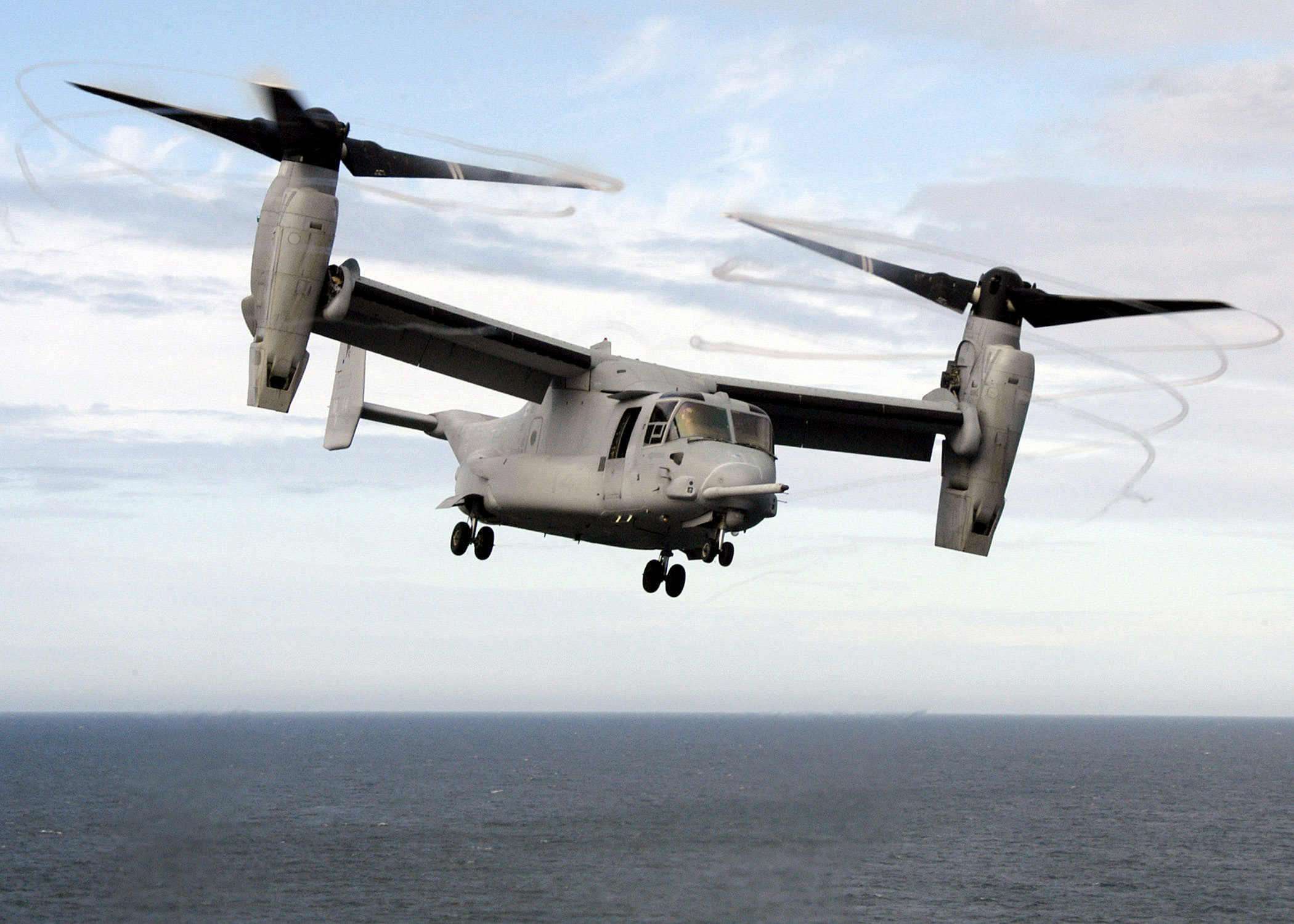
The U.S. Marine Corps received its 359th and final program-of-record MV-22B Osprey on Tuesday, July 28, completing aircraft fielding nearly two decades after the tiltrotor reached initial operational capability. The aircraft went to Marine Medium Tiltrotor Squadron 162 in North Carolina, while the Bell-Boeing announcement confirmed that sustainment and modernization will now carry the fleet toward its planned 2055 retirement horizon. That transition makes drivetrain reliability, maintenance demand and configuration control not delivery volume the program’s defining engineering measures.

The production milestone closes the Marine Corps’ procurement requirement, but it does not end Osprey manufacturing immediately. Bell and Boeing continue to build the Navy’s CMV-22 variant, with the final Navy delivery expected in fiscal 2028. For the Marine fleet, however, additional capacity must increasingly come from keeping existing aircraft available rather than adding new airframes.
That is a significant constraint for a platform that the Corps says supplies roughly 75% of its rotary-wing assault-support capability. The service operates 16 active-duty V-22 squadrons and two reserve-component squadrons. Since entering operational service in 2007, Marine Ospreys have accumulated more than 686,500 flight hours across 114 deployments.
Gearbox controls remain central
The most consequential sustainment work concerns the Osprey’s proprotor gearbox and associated input quill assembly. A hard clutch engagement associated with that drivetrain was implicated in a 2022 crash that killed five Marines. Following a later fleet grounding, Naval Air Systems Command returned the V-22 to flight in 2024 with guidance requiring maintainers to verify each proprotor gearbox’s accumulated flight hours before flight.
Aircraft with gearboxes below an undisclosed flight-hour threshold remain subject to risk-mitigation measures until the gearbox is upgraded or passes that threshold. Officials have withheld the number for security reasons. Consequently, the public record confirms the existence and purpose of the operating boundary, but not its value or how many Marine aircraft remain affected.
The Corps introduced a new proprotor gearbox in 2025 and is developing a redesigned input quill assembly. In the interim, the service continues to impose a flight-hour restriction on the existing input quill. Marine Corps spokesperson Capt. Jacob Sugg said the restriction, implemented in February 2023, has resulted in no further hard clutch engagements.
That is a meaningful result, but a restriction is not equivalent to a permanent redesign. It places continued importance on accurate component-hour tracking, maintenance planning and the pace at which upgraded hardware can move through the fleet. The unresolved public questions concern the redesigned input quill’s development status, installation schedule and fleetwide retrofit scope; none has been disclosed.
Maintainability now affects usable capacity
The modernization effort extends beyond the gearbox. Current initiatives include improving wiring inside the nacelles, reducing required maintenance hours, standardizing aircraft configurations and redesigning mechanical components. These are practical availability measures: fewer wiring faults and more common configurations can reduce troubleshooting time, simplify parts support and limit the number of aircraft-specific maintenance procedures technicians must manage.
That work matters against a broader readiness backdrop. Marine aviation was averaging a 62% to 64% mission-capable rate when Lt. Gen. William Swan spoke with reporters in April. That figure covers the aviation branch rather than the MV-22 alone, so it should not be read as an Osprey-specific rate. It does show why maintenance-hour reductions and sustainable component designs have operational value across the service.
Safety remains unavoidable context. Twenty military personnel have died in V-22 crashes since 2022, and Ospreys have continued to make emergency or precautionary landings. At the same time, the Corps reported that the MV-22’s 10-year Class A mishap rate was below the overall Marine aviation average earlier in 2026. Those fleet-level statistics do not resolve individual technical hazards, which must be addressed through component controls, inspections and verified design changes.
The final delivery therefore marks a handoff rather than a finish line. With no more Marine MV-22Bs entering the inventory and service planned through 2055, the program’s future rests on whether engineering upgrades can convert temporary drivetrain mitigations into durable hardware improvements while reducing maintenance demand. For a mature fleet carrying such a large share of Marine vertical-lift work, reliability and maintainability now determine how much capability 359 delivered aircraft can actually provide.
By David Whitaker — Associate editor for AMI’s aerospace and drone systems desk, translating flight systems, aircraft programs, spaceflight, and UAV developments into accessible technical stories.